Tips for a healthy lunchbox as school returns
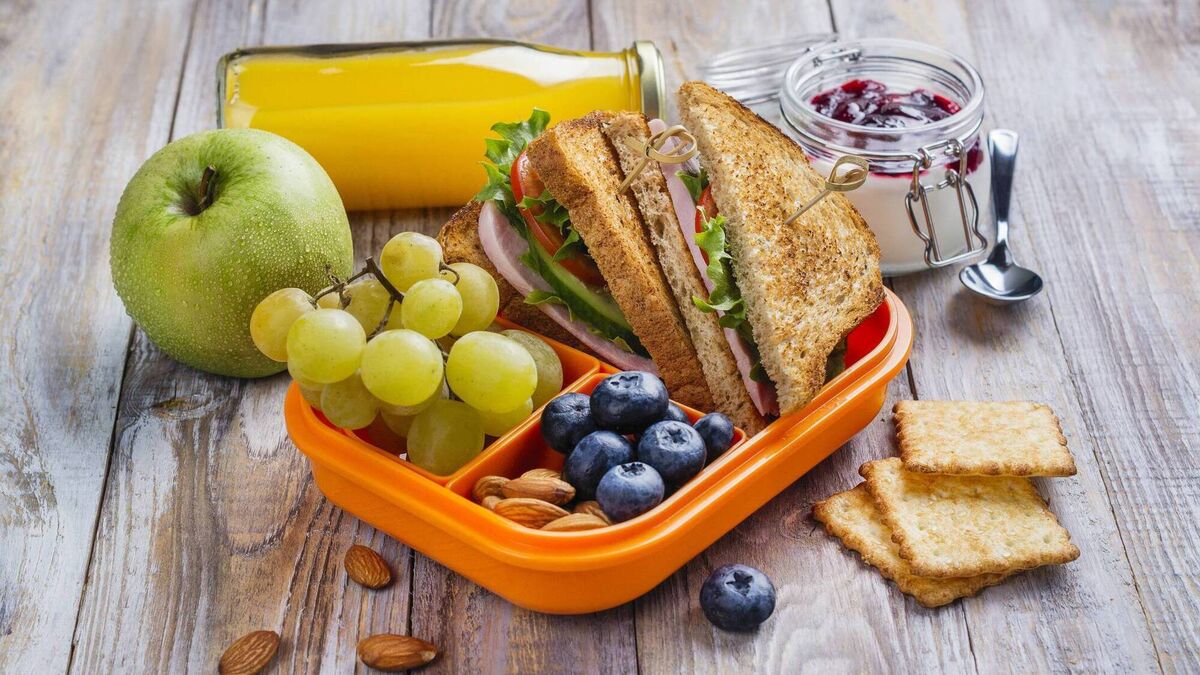
As children prepare to return for a new school year, Sheila King, HSE Senior Community Dietician, has some advice on how to ensure they eat well there
Tips for a healthy lunchbox as school returns

Choosing a healthy lunch for your child can be a challenge and a huge cause of stress for many parents. Picture: Stock

Nurturing your child is a natural instinct, getting it right does not come naturally. Choosing a healthy lunch for your child can be a challenge and a huge cause of stress for many parents.

As parents, we are faced with mixed messages on food value and important nutrients. Social media feeds are flooded with ‘Instagram perfect’ lunches; rather than balanced, nutritious lunches. As a parent myself, it’s a struggle to provide a healthy balanced lunch for my children while still being conscious that it ‘fits in’ with other lunches at school, to avoid risk of teasing - or even bullying.

Eating well at this stage establishes good eating habits for life. In terms of its impact on your child’s education, research has shown that good nutrition aids concentration. It also helps with disruptive behaviour and attendance at school.

So, within this maze of scientific facts and real life challenges - how can parents choose a healthy lunch? Using the Department of Health food pyramid guide to healthy eating (pictured right) is a useful starting point. This groups foods in shelves in accordance to the main nutrients they provide. Most food should be eaten from the bottom shelves of the pyramid and less from those at the top.

It is also useful to be familiar with the Nutrition Standards for Hot School Meals from the Department of Health, outlining standards that must be met by schools that provide hot meals.

As a guide, every hot school lunch should contain the following:

  • 2 servings of vegetables, fruit, or salad
  • 1 serving of wholemeal cereals, bread, potato, pasta, or rice
  • 1 serving of meat poultry, fish, eggs, beans, or nuts

Vegetables, fruit and salad provide children with Vitamins B and C - and are a good source of fibre. These are important for many body functions including a healthy immune system and bowel health.

All fruit and vegetables are healthy, but at school, children prefer easy-to-peel and quick-to-eat fruit, veg and salad. Popular options include bananas, mandarins, grapes, strawberries, blueberries and pre-prepared pieces of melon or pineapple.

Suitable vegetables and salads, if brought from home, include vegetable sticks made from carrot, celery and peppers. A dip can be offered with vegetable sticks e.g. hummus. Popular and healthy salad options include cherry tomatoes, corn, peppers, lettuce, or salad leaves.

Bread, cereals, potatoes, rice and pasta should be wholemeal varieties. These, when eaten, are broken down to glucose. They provide energy and glucose is a fuel used by the brain.

Wholemeal varieties are also an excellent source of fibre, which is important for bowel health. Chips, wedges and potato cubes should be limited to once per week. Rolls, ciabatta and baguettes can be excessive for young children to contend with at school.

Other good choices here are fresh chicken, beef, eggs, mixed beans or nuts (unless your child has a nut allergy, or your school has a policy in relation to nuts in the classroom/school). These provide protein, important for growth and development.

When selecting meat, consider fresh rather than processed. The latter should be limited to once per week maximum as they are excessively high in salt and not environmentally friendly. Processed meats include ham, sausages, bacon and pepperoni. Also included are chicken coated in breadcrumbs or batter.

Iron is also an important nutrient for a school-age child, as it maintains a healthy amount of red blood cells that supply oxygen to the brain. Iron is found in red meat such as beef, pork and lamb and should be included in school lunches. Examples of hot lunches that would be high in iron include roast beef, mash, vegetables and gravy; or meatballs, pasta and tomato sauce with vegetables.

Oily fish is a healthy choice to include in a school lunch at least once per week. This includes salmon, trout, herring, mackerel, or sardines. They can be tinned or fresh. Other good choices here are fresh chicken, beef, eggs, mixed beans or nuts.

Calcium is a very important nutrient for school-going children. Those up to nine years old are advised to have three servings daily and from age 9-18, this increases to five servings per day. The best sources of calcium are milk, yoghurt and cheese. Low fat or skimmed milk can be used from five years of age. It is best to avoid ‘dessert’ type products with added jam, chocolate, or sugar-coated cereal.

For those choosing plant-based milks, use unsweetened varieties with added calcium. The school milk scheme is available to schools to provide children with affordable milk at school.

Schools that have a written school nutrition policy help ‘normalise’ healthy eating within the school and make the healthy choices more acceptable. The HSE has a healthy eating nutrition policy toolkit available to support schools in the development of a policy.

The Health Promotion officers for schools and the Health Promotion dietitians in the Health Promotion and Improvement Department are also available to support schools in nutrition and healthy eating within the whole school environment.

For further information please see:

www.hse.ie/eng/about/who/healthwellbeing/our-priority-programmes/heal/healthy-eating-guidelines/

and

www.safefood.net/healthy-lunch

More in this section

Anger and shock: Cork man's 3-month visit to the West Bank Anger and shock: Cork man's 3-month visit to the West Bank
No Parking - Silver Car Manners, courtesy... so many now flout these basic life skills
Austria wins 69th Eurovision song contest with Wasted Love John Dolan: I’m new to this boycotting, am I allowed to watch Eurovision?

Sponsored Content

AF The College Green Hotel Dublin March 2026 The College Green Hotel: A refined address in the heart of Dublin
SETU and Glassworks set to accelerate innovation SETU and Glassworks set to accelerate innovation
Driving Growth in Munster: How property finance is powering Cork’s future Driving Growth in Munster: How property finance is powering Cork’s future
Contact Us Cookie Policy Privacy Policy Terms and Conditions

© Examiner Echo Group Limited

Add Echolive.ie to your home screen - easy access to Cork news, views, sport and more