We need to protect and preserve Cork's rich tapestry of coastal heritage
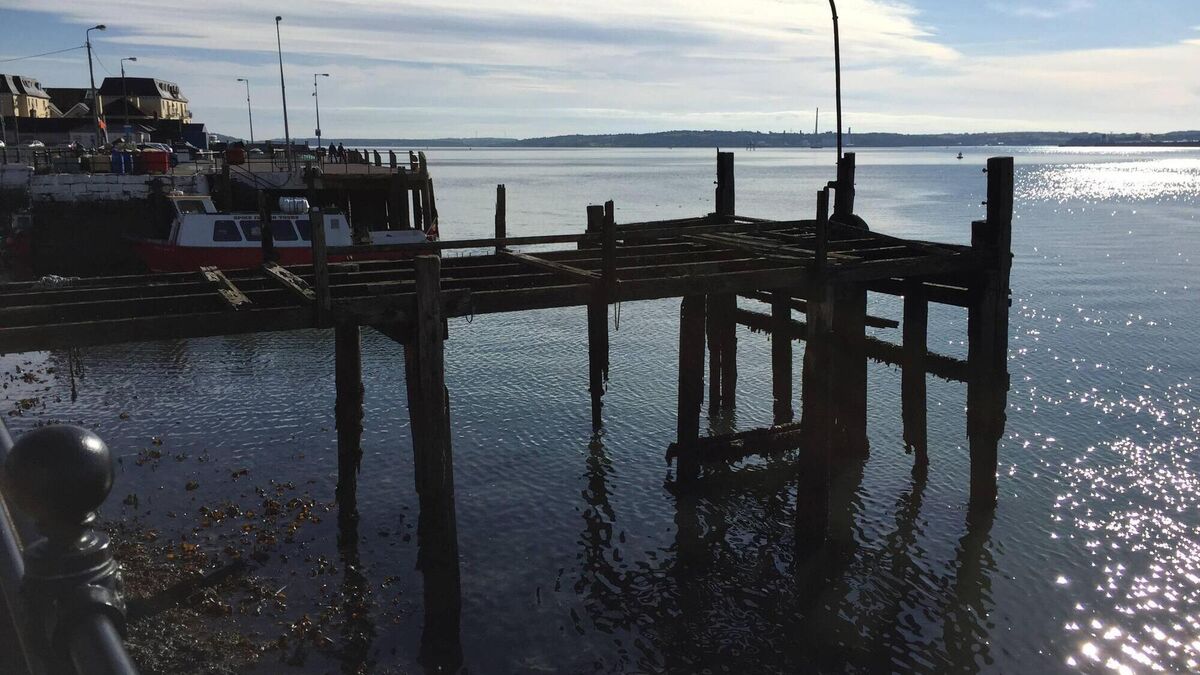
Heartbreak Pier in Cobh Picture: Dr MICHAEL O’SHEA
AS disputably the second largest natural harbour in the world with sea fortifications over 400 years old and home to the oldest yacht club, Cork Harbour has a wealth of marine infrastructural heritage, most of which is still operational today. From the quays of the inner city to the plethora of jetties that line the seafront of Passage West, Cobh and Ringaskiddy, the harbour is a smorgasbord of marine structures that gets even the most sedate of coastal engineers excited. However, keeping these assets operational is an expensive activity, the Port of Cork Company, the largest asset owner in the harbour, estimates it spends approx. €5million alone on the maintenance of its quay structures every five years. Considering most of the operational quays in the harbour are over 100 years old, this figure will rise significantly with the added threats that climate change brings.
While we are all very aware of the climate driven flooding vulnerability in Cork City, the impact on the integrity of our marine structures can sometimes be a hidden issue, that is until a sudden failure occurs. This is particularly pertinent when considering groundwater flooding risks, whereby the groundwater pressure builds from the inside of the quay walls and remains after the levels in the Lee have receded causing an imbalance until the wall bursts out into the river. Through funding from Geological Survey Ireland, we are currently developing methods to better understand the groundwater element of flooding in the city centre, and this will help identify potential hotspots for historic structures at risk.
Unfortunately, there are more climate change related risks to consider when assessing marine infrastructure.
Increased storminess being an obvious one, it is predicted that wave heights will increase over this century as will the frequency at which storms batter our coast. The larger the waves the greater the pressure on the structures and the more likely they are to fail. The climate change driven increases in wave impacts will be most keenly felt in the lower harbour and of vulnerability is the Cobh seafront with its historic masonry quays. Masonry (cut stone) was one of the most widely used forms of quay wall construction in Cork harbour during the 19th and early 20th centuries. Masonry quays to their credit are fairly resilient due to the flexible nature of the block work with lime mortar joints and gravel based back filling. This form enables the structures to move slightly and thus absorb loads from waves or water pressure build up without significant damage. Despite this inherent resilience, there have already been some failures of masonry in Cork in the recent past due in part to increased waves action and washing out of the joints. The likelihood of repeat failure can be inadvertently increased when these structures are “repaired” with concrete which in the short term seems adequate but in fact the rigid nature of concrete means the masonry loses its flexibility and it’s not uncommon to see further damage present on quay walls beside a repaired section. Further out the harbour, towards Roches point, the magnificent sentinels that stand watch over the entrance to the harbour, Fort Meagher and Fort Davis are unlikely to be impacted by the increased waves but the masonry piers that serve both these forts are going to be under much greater pressure as the 21st century progresses.
It’s not just our stone built marine heritage that’s at increasing risk, the steel and concrete structures built in the 20th Century such as Tivoli, Verolme Cock Dock Yard, Marino Point, and even newer terminals in Aghada and Whitegate are at increased risk.
The main threat to both steel and reinforced concrete durability is rust.
The chlorides in salt water react with the circular steel piles and sheet piles and over time the piles lose thickness and hence strength. In reinforced concrete, the steel reinforcement bars rust, expand and crack the concrete, this is a trickier issue to solve. These types of failure happen over a long period of time (30 – 50 years) but the issue is that as our seas warm up and water acidity increases due to climate change it is expected that corrosion will accelerate reducing the available time to react while also increasing the costs and number of structures to repair. At UCC we are currently researching new lower carbon footprint high corrosion resistance concretes for use in corrosive environments with potential uses as a repair for these types of marine structures.
There is another type of rust caused by microorganisms that actually eats steel called Accelerated Low Water Corrosion (ALWC) and it is much more aggressive than your norm marine rust. It has become a major problem in harbours globally and is present in pockets of Cork Harbour. It can reduce even the thickest of steel piles to paper in a matter of years. The fear with ALWC is that because it thrives in polluted waters, increased temperatures will acclerate an already aggressive mechanism of structural failure. It’s a key concern for the Jewel in the crown of marine hertiage in the harbour, the Spit Bank lighthouse located just off Cobh and Haulbowline. Built in the 1850’s, it was designed by blind engineer Alexander Mitchel who used cast iron screw piles to fix the lighthouse to the Spit Bank. It is still operational today thanks to significant refurbishment works in 2013, although given its location and its composition it is going to face both increase wave loads and corrosion risk in the coming decades.
It would be remiss not to mention the timber marine heritage structures we have remaining in the harbour.
The finest example being Heartbreak pier in Cobh, pictured above, a timber jetty that was for millions of people from the 1850s onwards the last step before heading to America or less fortunately the last pasengers to board the Titanic. While not a functional pier any longer the structure is of immense heritage value.
The increase in waves impacts will undoubtedly impact the stability of this and other timber marine structures. Another potential risk is that increasing water temperatures associated with climate change may lead to an increase in wood booring organsims that could crtically reduce the integrity of the timber casusing it to collapse.
In conclusion, there is a rich tapestry of coastal heritage infrastructure that will require increased and innovative protection if future generations are to enjoy and use it. For now, I would say get out on the harbour and appreciate them while we still can.
About the author
Dr Michael O’Shea is a Lecturer in Structural Engineering,School of Engineering and Architecture UCC and Researcher in MaREI, the SFI Research Centre for Energy, Climate and Marine coordinated by the Environmental Research (ERI) at University College Cork).




 App?
App?


