We need extra funds to fix roads of Cork
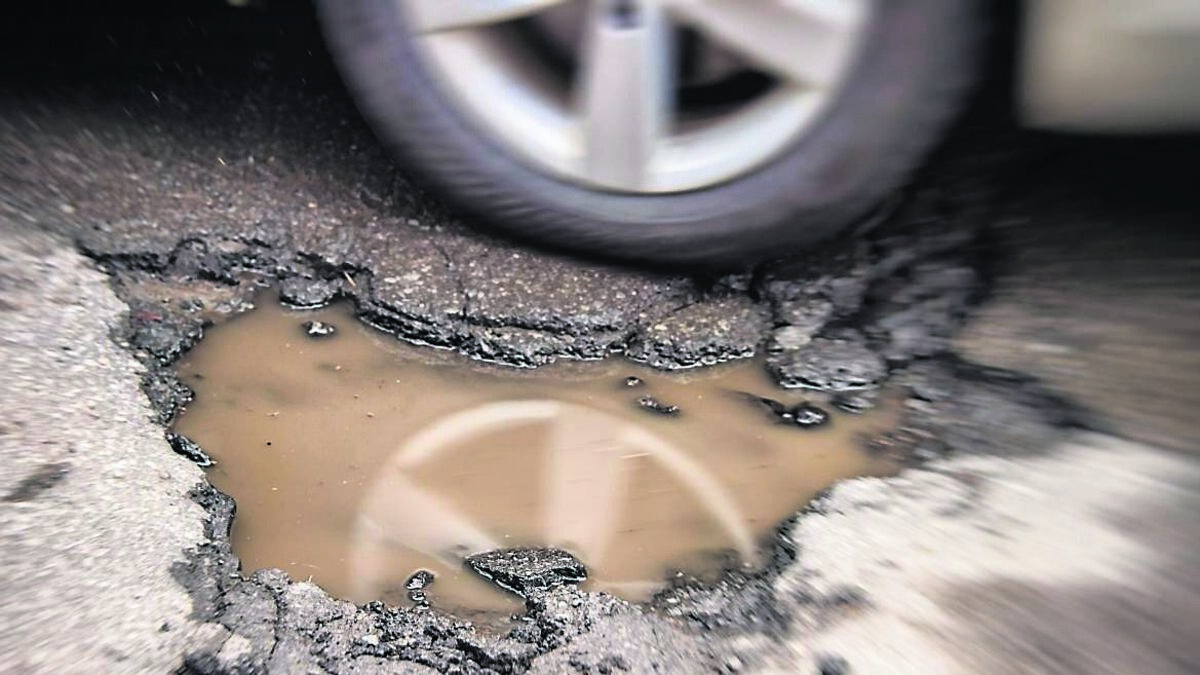
Cork County Council has the largest road network, but receives one of the lowest allocations per km
IF you’ve ever driven from Cork to Kinsale, you will have passed through Pewterhole Cross, an unremarkable rural crossroads like many others around County Cork.
It’s just outside the town where the main R600 Cork road meets the roads for Charles Fort and and the light industrial areas on the north side of Kinsale.
As Kinsale has grown, so has the traffic passing through the junction on a daily basis. Pewterhole Cross is no longer fit for purpose, the roads join at odd angles, making visibility difficult, the R600 curves through it and it’s also located on hilly terrain.
The crossroads was never designed, it just evolved where it is, but in 2024 this is one of the busiest junctions serving one of the fastest growing towns in the county.
By any reasonable analysis, Pewterhole Cross today would be described as a dangerous junction. It has been the site of numerous accidents, and for anyone who regularly passes through it, the next accident will not come as a surprise. That’s why, in 2022, Cork County Council applied to the Department of Transport for funding to redesign the junction to make it safer.
At a recent meeting of the County Council’s Western Division, councillors were told the funding application to advance the scheme at Pewterhole Cross had been refused.
The refusal was not a surprise, it was one of many proposed schemes to receive little or no money, there seems a sense of resignation that this is just the way it goes.
Marie O’Sullivan, a Fine Gael councillor in Kinsale, said: “It’s like we are firefighting all the time. Pewterhole Cross is a really big issue in Kinsale. A local GP told me recently that they had an elderly patient who is suffering from stress because they have to drive across it!”
There is nothing special about Pewterhole Cross, but it is indicative of the current state of road infrastructure spending in Cork.
Replying to a Dáil question about the junction, Minister for Transport Eamon Ryan said the 2008 recession resulted in the build-up of a substantial backlog of works across the country.
The estimated cost of the backlog is in excess of €5 billion and, for that reason, 90% of exchequer funding for regional and local roads is being directed to maintenance works.
In Cork, however, it’s not just new schemes that seem to be underfunded. According to Niall Healy, Director of Services for Roads, funding is historically low: “Funding has been particularly challenging for a number of years, but we have reached a crisis point now.
We have been applying band aid solutions but it is becoming increasingly difficult, we need to lobby hard for additional funding.
Mr Healy said Cork County Council has the largest road network of any local authority in the country, with more than 12,000km in total, but receives one of the lowest allocations per km for regional and local road maintenance.
With the local elections fast approaching in June, the state of the roads is among the top issues that candidates are encountering on the doorsteps. Skibbereen-based Joe Carroll, of Fianna Fáil, says it is the number one issue.
He said: “Funding is a disgrace and the state of the roads is the main thing we are getting on the doors, it’s what everybody is talking about. We have nine TDs in Cork County and they should all be knocking down the doors of Leinster House about this. People are asking where their motor tax is going.
“Kerry are getting over €10,000 per km and we’re getting €6,000, Limerick are getting over €11,000. If we were to get parity, we are not looking for anything extra, we should be getting €47 million more this year. This has to be discussed at Oireachtas level, the people of County Cork are being badly short-changed here and left in a right bad position.”
According to a report by the European Transport Safety Council in March, 60% of road deaths in Ireland occur on rural roads, yet in the largest county in the country, funding is insufficient to repair the roads that already exist.
According to the Department of Transport’s own guidelines, maintenance requirements for surface dressing required per year is about 5% of the network, and likewise the target for strengthening required per year is also about 5% of the network. Engineers in Cork County Council say at current funding levels they will be able to resurface roads once every 50 years.
The situation seems little better as regards national roads. In 2022, Transport Infrastructure Ireland (TII), the body responsible for the development and upkeep of the national road network, issued a document titled Briefing Note to the Department of Transport on the Consequences of the Funding Scenarios for 2023. This outlined TII’s concerns about the safety implications a lack of investment in national roads would have over a five-year period. The note outlined TII’s belief that a failure to invest properly in roads would lead to 77 additional deaths and 381 serious injuries.
Independent Dunmanway-based councillor Declan Hurley said there have been numerous attempts to set up a meeting with transport minister Eamon Ryan over the past three years, but he has not responded to councillors.
Mr Hurley said: “The Transport Minster has ignored numerous calls for us too meet him. It is a waste of time trying to meet the minister.”
A deputation has been arranged, however, to meet with junior minster Jack Chambers on April 24, led by County Mayor Frank O’Flynn.
Mr Hurley added: “We have to make the case in no uncertain terms that the situation we are dealing with here in Cork County, there has to be a change made. We have a duty of care to impress on the government and the Minister for Transport to get sufficient money for our road network.”







 App?
App?


