John Dolan: ‘Sinful, near-nudity, indecency’ - when jazz was all rage in Cork
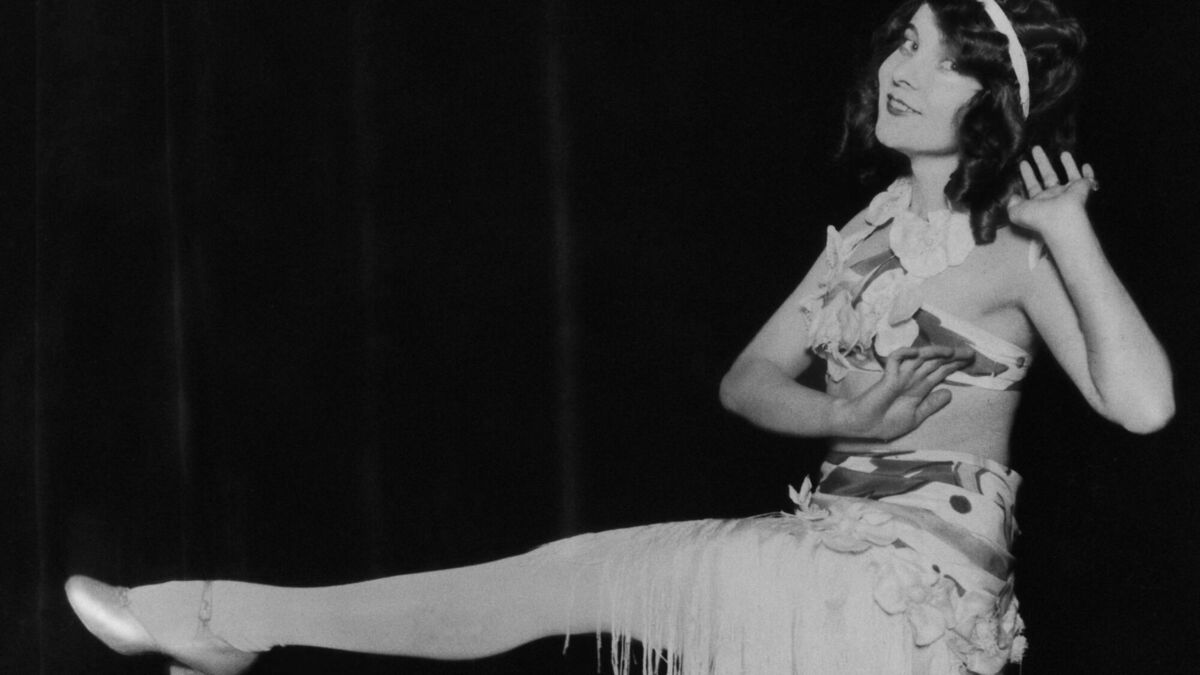
Miss Hardie, a dance endurance champion, who performed the Charleston for a record seven hours in the 1920s. The dance was hugely popular among jazz fans in the era
Such lurid descriptions are normally more suited to a wild week in Ibiza - the type of hedonistic fun which, alas, my creaking back (and cruel wife) prevent me from currently pursuing.
If I were to tell you that such words were being flung around in relation to your grandparents and great-grandparents in Cork, a century ago, you might feel I have taken leave of my senses.
But that’s the truth of it.
Let me start by spelling out that this weekend’s Guinness Cork Jazz Festival will be filled with the usual decorum, musical flair, and social buzz that befits the biggest annual event in the city’s social calendar.
The musical genre has endured for well over 100 years, and gained a modern reputation for being mellow, cool, if perhaps occasionally on the sassy side.
But in the early decades of the 20th century, jazz arrived in Ireland with a giddy bang - and in an Ireland that was a very different place...
Invented in the African-American communities of the southern U.S states in the early 1900s, it found its way to Ireland after the wars of the 1920s.
Commercial dance halls had started to spring up and the new jazz scene was an integral part of them. Young people adored this modern and sexy music, compared to their own parents’ staid times. No dancing at the crossroads for them!
It was assumed - hoped, in some conservative quarters - that it would be a fleeting craze, but by 1925 jazz dancing had almost eclipsed cinema in popularity, and the fears were illustrated by a poem in the that year.
A generation before Mick Jagger and his ilk were born, the devil already had all the best tunes.
in Cork, in January, 1925, remarked: “Ireland seems to be more than ever in the grip of jazz dancing. Dublin has had a surfeit of it and in the most remote parts of Ireland ‘jazzing’ holds the floor.”
For the Skibbereen Young Men’s Society annual dance in its town hall on February 14, 1925, publicity centred on the “London Havana Frisco Band of nine instruments… with full jazz effects”, while “the spacious maple dancing floor is undoubtedly one of the best in Munster”. Supper was provided.
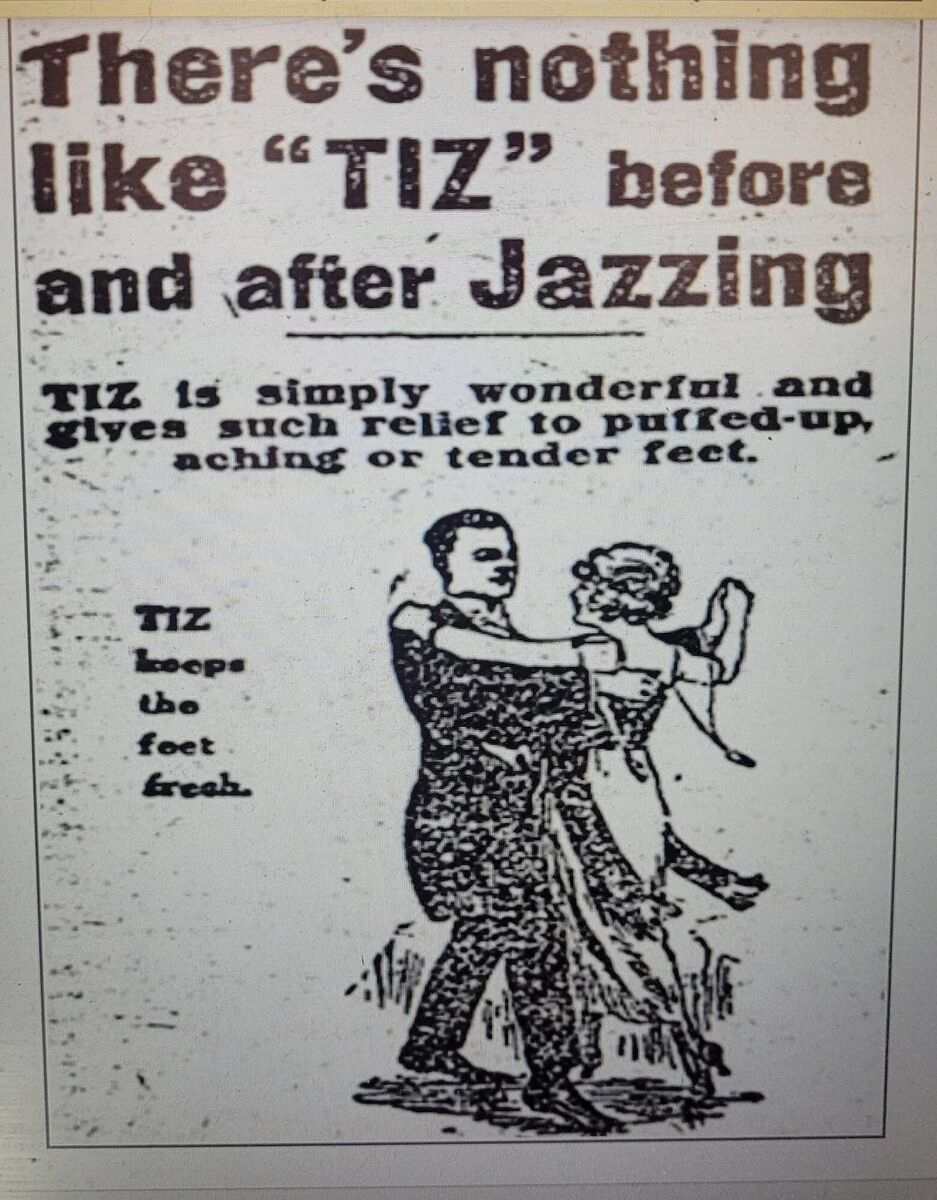
An ad in the even extolled the benefits of a foot cream called Tiz, to relieve “puffed-up, aching or tender feet” for jazz dancers.
However, wherever a good time was in those days, the beady, disapproving eyes of the Catholic Church were never far away. Its smouldering anger at this new craze spilled out in an astonishing attack at th start of Lent in 1935.
Bishop of Cloyne Robert Browne led the onslaught, describing jazz dancing as a kind of mania and a “great danger to modesty and decency”. The dance halls were hosting “promiscuous, ill-assorted dancing assemblies”.
Bishop James McNamee of Ardagh and Clonmacnoise joined the attack, referring to the practice of “devilish dancing”, and “incitements to sensuality and sinful passion”.
The Archbishop of Tuam, Thomas Gilmartin, called for the closure of dance halls in his diocese for Lent and urged young people to choose the “sweet air of the church” as opposed to the “fetid atmosphere” of jazz.
Dr Patrick Foley, Bishop of Kildare and Leighlin, was a real killjoy, criticising “dancing, cinema and general pursuit of pleasure”, and claimed that the women of Ireland sometimes appeared in dance halls “dressed to leave the body nearly nude”.
The bishop, however, clearly a firm advocate of celibacy, insisted the men of his diocese would resist this “indecency” by refusing to dance with any hussy “who presented herself in a costume more fit for the privacies of life than for a gathering of decent people”.
The bishops concluded their attack by rounding on “comfort-loving, pleasure-seeking, infidel excesses”.
In the mid-1930s, around 90% of the population attended weekly Mass, and the bishops’ flocks launched a series of Anti-Jazz Rallies along with the clergy to protest at this raunchy craze.
Sadly, they were in lock-step in this moral panic with the State, and a government led by the renowned conservative Éamon de Valera.
On January 1, 1934, a famous rally was held in the Leitrim town of Mohill, where 3,000 protesters urged the government to intervene against “all-night jazz parties”.
Thousands chanted “down with jazz” and “out with paganism”, claiming that foreign music and dances threatened Irish morality and identity, and urging Church and State to take action.
Archbishop of Armagh Cardinal MacRory backed the rally, referring to jazz dances as “a fruitful source of scandal and of ruin, spiritual and temporal”, and wondered for “how many poor, innocent, young girls have they not been the occasion of irreparable disgrace and life-long sorrow?”
Even the fledgling Radio Éireann came under fire for playing the occasional jazz ditty, while the ran a remarkable opinion piece in support of the rallies, stating: “We are with you in the fight against the imported slush. We can never be free until this is done.” After listing everyone from Henry VIII to the Black and Tans who had tried to destroy Irish “faith and nationality”, the article warned: “Let the pagan Saxon be told that we Irish Catholics do not want and will not have their dances and the music.”
Dev’s government responded by bringing in The Public Dance Halls Act in 1935, which decreed that “no place shall be used for public dancing unless a public dancing licence granted under this Act is in force”.
Aimed at killing “the mania for jazz”, the law had the unintended consequence of stopping all types of social gathering, and W. T. Wolfe, a solicitor in Bantry, spoke out against it while defending a man brought before the court.
“The traditional hospitality and time-honoured social intercourses of people in remote country districts were being ‘shallered’ by pseudo-virtuous Acts of Parliament,” he thundered. “Even the homely country dance was made to assume a criminal tinge.”
All of this may be giving you a negative vibe as the 2026 Guinness Cork Jazz Festival is in full swing.
So let’s end with a reminder of why the genre has survived for so long, why the Cork event has been roaring for 48 years, and why thousands will take to the streets of Leeside this bank holiday weekend,
A long-dead jazz fan in Cork wrote this back in the 1930s while still fresh from the giddy euphoria of a night on the tiles:
“I have but just returned from an all-night dance, I am still intoxicated with the mirth, music, and merriment of last night; I still feel the dazzling beauty and the bewildering brilliancy of the scene.”
Long live de jazz, boy!





 App?


