'I was overwhelmed with anxiety': Cork farmer shares story of how he turned business around
A new book tells the fascinating stories of Irish people’s lives, and includes the story of how Cork farmer Peter Twomey hit rock bottom before he turned his career and life around
'I was overwhelmed with anxiety': Cork farmer shares story of how he turned business around

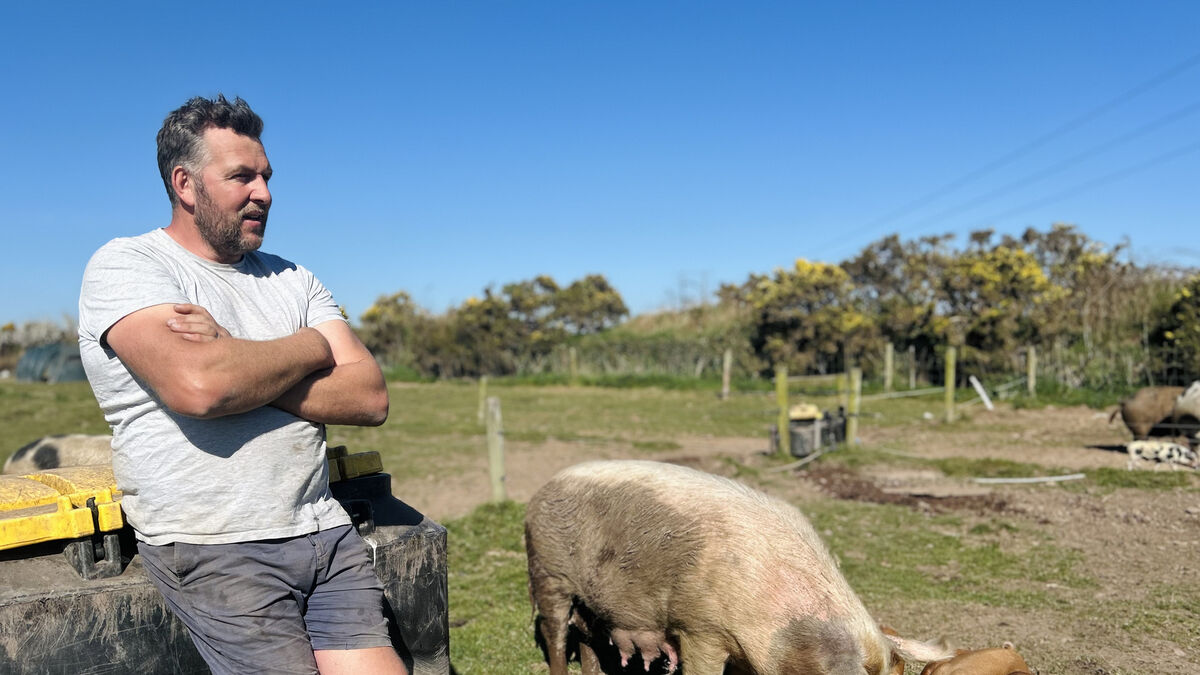
Peter Twomey with his pigs on Glenbrook Farm

A new book tells the fascinating stories of Irish people’s lives, and includes the story of how Cork farmer Peter Twomey hit rock bottom before he turned his career and life around

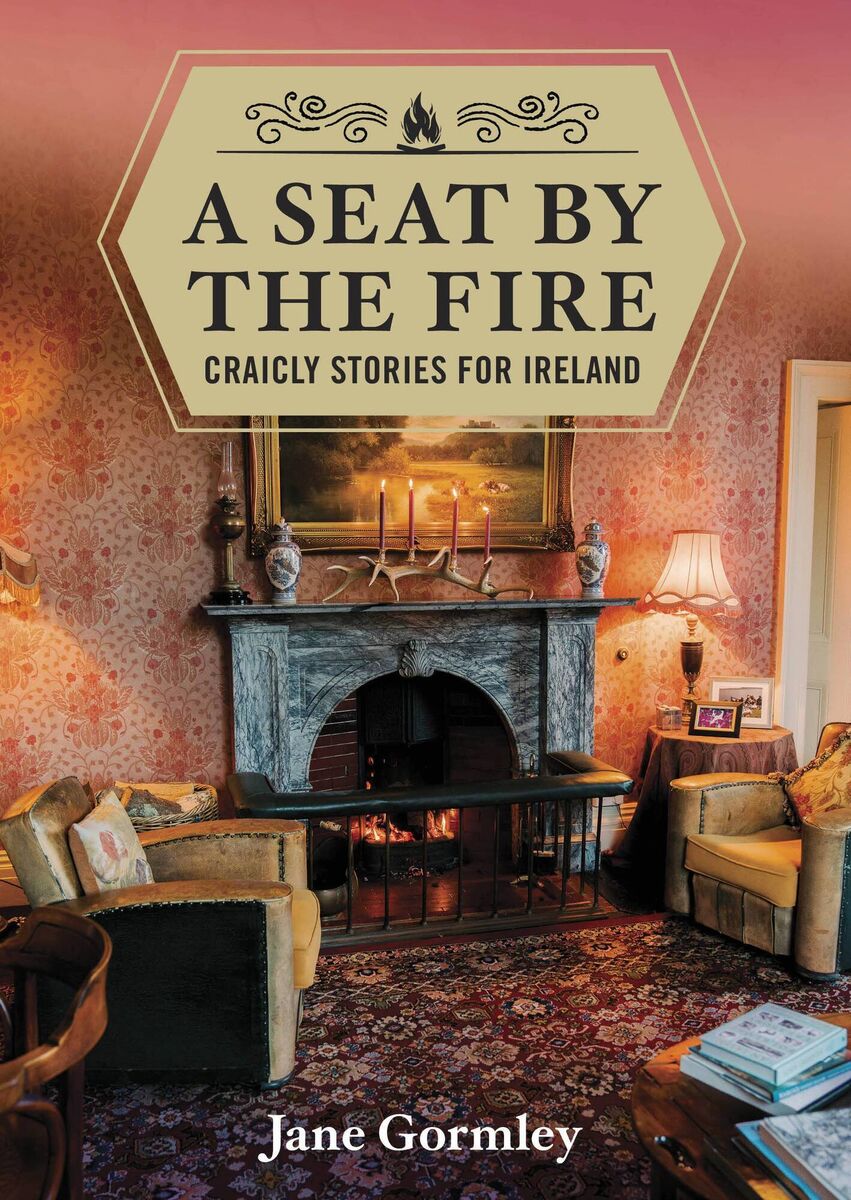
Part memoir, part manifesto, part celebration of the Irish gifts for oral storytelling and social gathering, a new book entitled A Seat By The Fire – Craicly Stories For Ireland contains inspiring stories told by Irish people.

The author Jane Gormley is the founder of Craicly Stories, a social storytelling movement that brings people together in some of Ireland’s most atmospheric and historic spaces, from farm shed to Púca Festival, from Ballyvolane House in Cork to the candlelit dining room of Stradbally Hall in Laois.

In this extract, Peter Twomey details his life on Glenbrook Farm in Whitescross, Cork.

******

I grew up on a dairy farm, and I idolised the farm. I just wanted to be that man working the farm.

I grew up with cows all my life. Then my dad sold the dairy cows in 1994. He went to beef for a year, then sold them and leased out the farm. I was 15 or 16, I think - just too young to take it over. But I always had such a strong desire to do it.

Fast-forward to 2001. After doing my Leaving Cert, finishing school and then doing three years in a farm apprenticeship, I took over Glenbrook Farm.

It was a rundown, derelict farm - grass that had never been reseeded. So, basically, very single-mindedly, I went about getting ready for cows, and built up the herd from nothing to 98 cows by 2018.

That was the year the whole dream-versus-reality thing started hitting home. It was a drought year. At this point we’d invested probably €500,000 or €600,000. Between the infrastructure, the land, the animals. All of it, just to be a dairy farmer. And to still have so very little money from it. And now a drought.

I believed, all the time that I was reinvesting into this business, or this facility, or whatever, that everything on the farm was needed in order for the cows to have grass. Every blade of grass was needed.

There was no opportunity to do anything with any other part of the land because we were always tight for grass. So, from the cows, to the grass, to the actual - the mechanism, the machine that is dairy farming - it needed all the money, all of the time.

There was always something depreciating faster than something else. I suppose between weather volatility, price volatility, and then in 2018 - a drought -I started looking at it differently.

I was absolutely overwhelmed with anxiety. We had no grass. All I thought about was grass. And, I think, it’s like - you know, I have a wife and children. I’m responsible for them too. And I saw myself as irresponsible. Irresponsible in having this business that was draining everything out of me.

A Seat By The Fire – Craicly Stories For Ireland, by Jane Gormley

I found it very hard to leave it outside the door. Always stressing about it. It wasn’t always straightforward. You know, if you’ve no grass and you’ve got 98 cows - there’s no rain, so no growth, and it’s the summer and all the cows are already eating your winter feed - it’s very hard to compartmentalise it.

How to separate that from your thoughts. Especially when you’re living on the farm as well. Looking at the situation all of the time.

So, I suppose, only for my wife and family, I think I might have stayed at that stress level.

My wife is a businesswoman, and isn’t from a farming background, she was well able to highlight things to me on numerous occasions. Not just during that particular year. What was it all for? All the work, all the time, all the energy. And also: did we have a lavish lifestyle? No. Did we want one? Not really.

But, you know, everything was so difficult financially. While we had a massive turnover, there was very little to show for us in the house, or anywhere else. So I suppose I kind of started looking differently at the whole thing.

My eldest daughter is Annie-May. She is now 15, but during this terribly difficult year she was just seven. One day we were together in the car, going to our ‘Fodder Crisis Clinic’ - this was a Teagasc service established during that time, to inform us how screwed we all were, basically, for food for the stock.

She started asking me where we were going, and so, as we were driving there, I explained it to her in a way I thought she’d understand.

And she just said, ‘Dad, why don’t you just milk less cows? Why don’t you just sell some cows, milk less cows, and if less cows have more grass, then maybe they’ll have more milk. And maybe, you know, it’ll only last for a year or two, because then if they all have female calves, if they all have heifers, then we can go back up in numbers again. And maybe you just don’t have to feed that many cows.’

I almost turned the car around at that very moment - because when you’re overwhelmed and anxious, and you’re being given formal advice that’s adding seemingly never-ending pressure, you just don’t see solutions. And then here’s a seven-year-old giving it to me.

And that’s what we ultimately did.

We dropped 10% or more in numbers every year, and we finished on 60 cows. We dropped as low as that because we had to have something sustainable. We had to be able to feed them for the summer and the winter.

I knew that farmers used to be able to keep a cow on one acre before, and why weren’t we able to do it now?

I think the combination of factors - getting really good at dairy farming, and also getting just too intensive for the land, and all of our cows calving together and all that - is one thing; and that our ground is probably too sensitive for it.

In reducing the cows, this little bit of space we made on our farm led us to start housing a very small number of pigs. When they arrived, I immediately saw changes in front of my eyes. The family came out of the house and looked at them. Everyone enjoyed them, and wanted to be involved with the pigs.

The farm was ours again. And it was the responsibility of being a father and a husband that made me decide, in 2023, that the cows had to go altogether.

The pigs were now the Glenbrook Farm brand, which was starting to grow. It was getting a bit of attention, and we were starting to meet people. And I like meeting people. And I never met anyone in the milking parlour, in 24 years.

I was kind of starting to enjoy it, and I could see everything was going to fail if I stayed on the track of what we’d been doing until then.

If we kept on going with the cows, if we kept doing the same thing, if we kept getting the same results, and the same stresses at different times.

So, after a month of no sleep, in May, 2023, I came to the conclusion that if we were making a million quid profit a day from the cows, I didn’t want to do it any more, because there was so much uncertainty in it for me. There was too much volatility.

And once I said those words to myself out loud, I went about planning an exit strategy. They had to go, because I’d lost the love for the system, and I didn’t want to lose the love for the animals.

So we sold the parlour and the dairy cows on December 8, 2023. And at that time, we didn’t know whether we could actually run a free-range pig farm or not. We didn’t know if the system would work, because it was still a dream more than a business model.

Immediately, we leased out 60 acres of the farm to the Cork Rooftop Farm, who now grow vegetables on it, and that took a bit of the risk out of the bank loan that we were, of course, still repaying.

Then I started working for them also, and that maybe took a little bit of risk out of income, and it took a bit of pressure off the pigs to perform as a business right away.

I remember when we began getting messages - on Instagram or WhatsApp, or a text from someone, as word spread about what we were doing with the pigs - and they were interested in buying pork. I might nearly lose my life with excitement!

The pork business, I think, will work. The early signs are positive.

Financially, there are still a lot of unknowns and uncertainties that time will hold the answers to. But there are immediate gains.

Our family has gained something more. We are all involved now, and there’s room for us all. There’s room for romance. There’s room for our own ideas. There’s room for potential. The farm is ours again.

A Seat By The Fire – Craicly Stories For Ireland, by Jane Gormley, is published by Mercier Press.
More in this section

TV: Cork family in frame for fitness title TV: Cork family in frame for fitness title
Cork entrepreneur and northside project feature on TV shows Cork entrepreneur and northside project feature on TV shows
The Cork war hero who used to live in my old stone house The Cork war hero who used to live in my old stone house

Sponsored Content

How hormonal changes during perimenopause and menopause affect desire, relationships and sex How hormonal changes during perimenopause and menopause affect desire, relationships and sex
Aisling Walsh, customer and strategy manager at ESB Networks More than 50,000 households are being rewarded for flexible electricity use
The office worker presents a document to the client across the desk. Pensions become part of the talent equation
Contact Us Cookie Policy Privacy Policy Terms and Conditions

© Examiner Echo Group Limited

Add Echolive.ie to your home screen - easy access to Cork news, views, sport and more