WoW Bites!: An ode to the women making black pudding in Cork
In this month’s WoW Bites!, KATE RYAN looks back at the history of black pudding, the stories of the women tasked with making them, and the women who continue the legacy of the traditional food today.
WoW Bites!: An ode to the women making black pudding in Cork

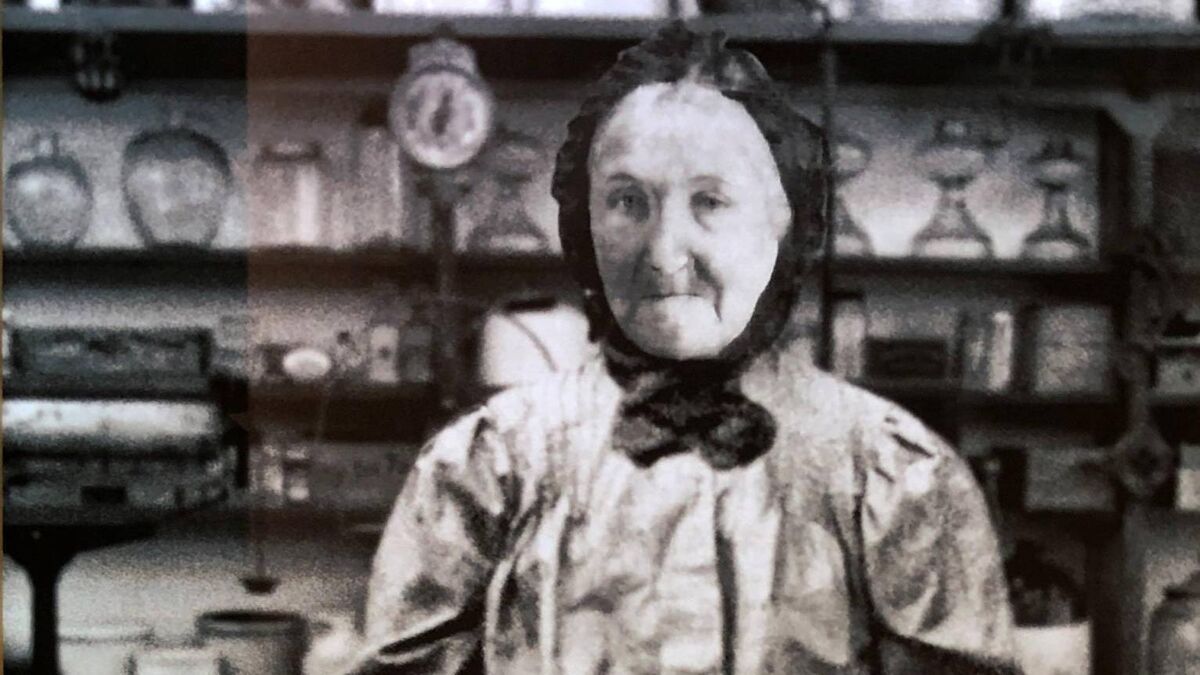
Johanna O’Brien is the woman credited with developing the recipe behind what later became Clonakilty Black Pudding.
Black pudding: the moody mélange of blood and guts that completes the quintessential breakfast fry is one of our most treasured and oldest foods.

It was also a food that, for centuries, was solely the domain of the women of Ireland. Up and down the island, in homes and farms where subsistence living was the norm rather than the exception, women were the pudding makers.

Before commercial shops, supermarkets and factories took over pudding making, it was women who carried pails of fresh blood and scrubbed pig, cow and sheep intestines until they were so clean they were a pinkish translucence.

Pudding making was once a seasonal event, synonymous with the late autumn custom of the annual pig and cow kill. Imagine; black pudding as a seasonal food! Today, the opposite is true, with our constant year-round supply of them.

Cows, raised primarily for milk, were much longer-lived in times gone by and only killed when no longer able to produce calves and therefore milk. Pigs, on the other hand, were only ever raised for their meat, fattened on summer pasture, food scraps, leftover whey, grains, and autumn forage such as tree and ground nuts, crab apples and berries.

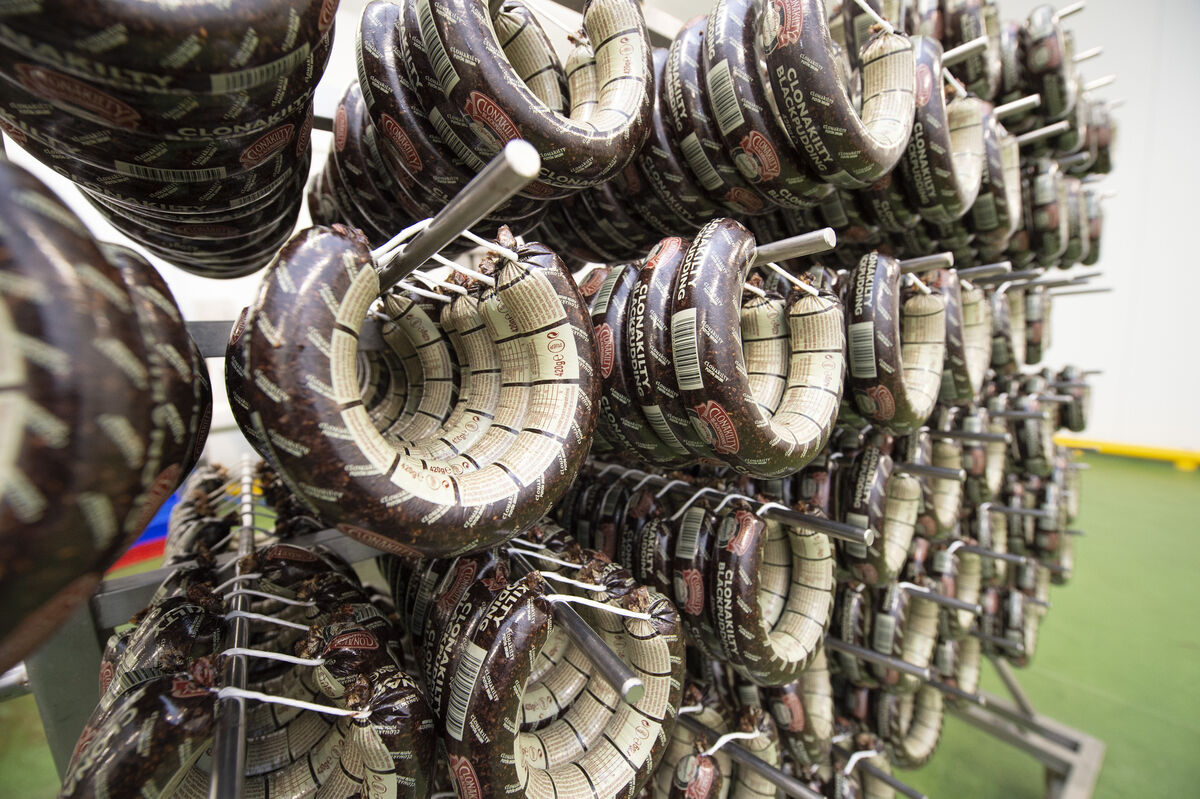
Clonakilty pudding at the Clonakilty Food Company Factory in Clonakilty, West Cork. Picture Dan Linehan

After the heat of summer had passed and animals were sufficiently fattened, a decision would be made as to which were worth overwintering and which would be put to better use as winter food stores of salted meat.
Decision made, and the animal identified, work would begin in earnest in preparation for killing day – and everyone had a job.

The list of jobs for women centred on cleaning - from the stall an animal would be housed in before slaughter, to scrubbing utensils, pans and pails used for catching the blood, separating offal, mixing and cooking the puddings.

Salt was essential, not just for flavouring but also for cleaning. In my book, Blood, Guts & Black Pudding – Ireland’s Dying Art of Blood as Food, one account vividly recalls their mother cleaning the intestines:

“Cleaning the intestines was […] done meticulously, and she was always using salt. I can remember her dipping her finger into salt, cleaning them; she always had salt very close to herself. […] They were see-through now at this stage, there was a pink hue from them.”

It was also the job of the women to gather ingredients and other necessary equipment for making puddings, such as saving the good, strong string from the flour bags for tying off the ends of puddings.

Sourcing ingredients was a masterclass in resourcefulness. Fat, such as suet or back fat; stale bread from a local bakery for bulking out the mix or fetching onions; leeks and herbs from the garden for extra flavour. With money saved during the year, a special purchase of spices, flaked and pinhead oatmeal were also essential.

But what went into a pudding was always down to the maker’s preference. Often different house to house, the mix was made to a time-honoured recipe passed down the female line in a family, generation to generation. How to make puddings was learned by watching, listening and doing. In this way, recipes were not written down on paper but rather held instead in memory.

Pudding making day was one of enormous activity.

Were it not for the resourcefulness and industry of these women, ensuring nothing was wasted when the time came to kill an animal, ensuring every drop of precious blood was collected and used to make their seasonal delicacies, we would not have the wide variety of pudding types, styles and flavours we still see today.

One of our most famous of all is Clonakilty Blackpudding. Legend says the original recipe comes from Johanna O’Brien, a farmer’s wife, said to have made puddings of good renown.

In the 1880s, Johanna sold her black pudding recipe to Phillip Harrington, who owned a butcher’s shop on Pearse Street, Clonakilty, and continued to make the pudding to her recipe. It’s a tradition that continues to this day, as each successive owner of the shop receives the deeds and pudding recipe.

Only one person ever knows the recipe, helping to keep the myth and legend status of this pudding alive.

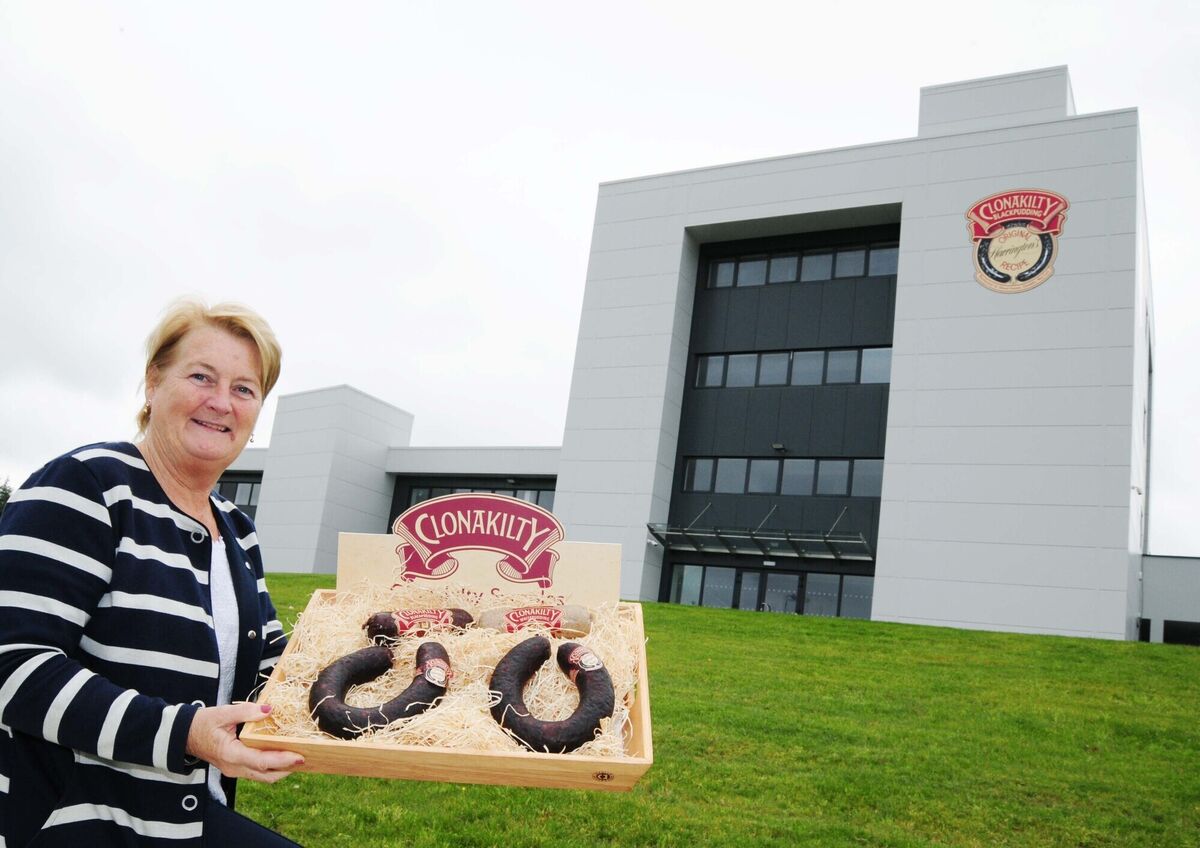
Today, the head of the company is Colette Twomey, who keeps the recipe under lock and key!

Colette Twomey, owner and managing director, Clonakilty Food Company, outside the production facility in Clonakilty, and above, rows of puddings.

In many ways, the story behind Clonakilty Blackpudding perfectly illustrates how women were essential to Ireland’s long history of making and, most importantly, enjoying black puddings.

Yet women have been written out of the story, although traces remain. We can, for example, easily draw a direct line between those women who worked making puddings and the grá for black puddings that persists today. In that way, to enjoy black pudding today is to taste our shared living history. It’s an incredibly important part of Irish food culture.

The tradition of homemade puddings is long lost. Difficulty in accessing fresh blood has greatly reduced the number of fresh blood puddings being made in Ireland since accession to the EU. Heightened requirements around food safety standards made it too financially onerous for many small operators to continue catching blood at slaughter. But when they stop, we lose access to the blood for our puddings.

Read More

41905288;41871411/readmore]

A few makers are still able to make fresh blood, a sense of legacy and heritage to their family recipe driving them on. But for many, swapping fresh for dried blood is a compromise that enables their craft of pudding making to stay alive.

Avril Allshire-Howe acquired Rosscarbery Recipes some 26 years ago with her husband Willie, from Gillian Boazman. Much like the famous butchers’ shop in nearby Clonakilty, the business came with a recipe for a pork blood black pudding.

But Avril says they soon moved away from using fresh blood, opting instead for dried pork blood.

“Willie was concerned about transporting [the blood] safely but was adamant about wanting to make a black pudding. It took 15 months of graft to get the recipe right,” Avril says.

The pudding was launched in 2006, and soon after it was submitted to a prestigious competition - the annual Foire au Boudin in the self-proclaimed black pudding capital of the world at Mortagne-au-Perche in Normandy, hosted by the equally lofty-sounding brotherhood of pudding makers known as La Confrérie des Chaveliers du Goute-Boudin.

“We found out we had won from a fax we received from a pudding maker in Bury, UK, congratulating us,” Avril says. “We had to go to Mortagne-au-Perche to collect the medal. We left the boys in charge of the pigs, and a friend came to look after the boys!”

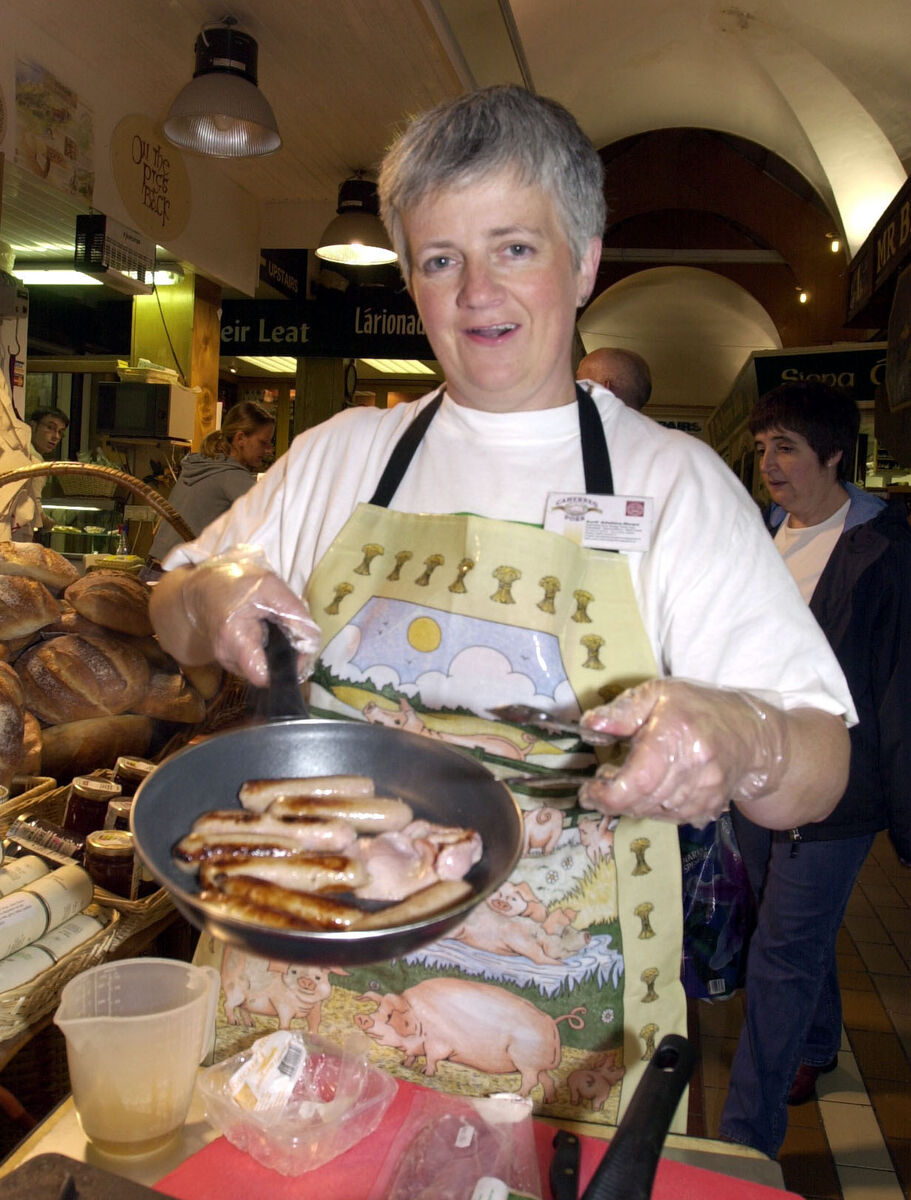
Avril Allshire Howe pictured at an English Market food fair in 2003.	Picture: Eddie O’Hare
Avril Allshire Howe pictured at an English Market food fair in 2003. Picture: Eddie O’Hare

Rosscarbery Recipes were the first ever Irish producer to win a gold medal for their puddings from La Confrerie, and soon after Willie was made a knight of this black pudding brotherhood. A few years on again, the fraternity recognised the whole family’s commitment to the craft of black pudding making by being the only entire family of an Irish producer to all be conferred.


Although it’s fresh blood that underpins our tradition of black pudding making, that doesn’t mean the same approach to craft and skill, tradition and heritage can’t be at the heart of making puddings from dried blood. Perfectly illustrated by the Allshire’s dedication to crafting puddings of note.

“The difference with our puddings is that we use pork meat and bacon in the pudding to add extra flavour to them,” says Avril. 

“It does make a difference, but we’ve always had the philosophy that a pudding had to be good enough for us to eat before we’d sell it to somebody else.”

The swap from fresh to dried blood wasn’t the only other evolution to happen in their pudding recipe. In 2016, they also developed a gluten-free version of both their black and white pudding, by swapping oats for rice.

The same meticulous approach to perfecting the recipe repeated itself, taking 12 months before it was deemed to pass their own quality test, and went on to win a silver award from the French knights of the black pudding.

As the years ticked by, Avril and Willie’s sons, William and Maurice, stepped up as the next generation of this family business. Avril is long since retired from making the puddings alongside her husband but has never stopped her love of experimenting with cooking with black pudding.

It’s a challenge close to my heart. While a slice of the original black stuff will always be a welcome sight on a breakfast plate, puddings are versatile and are happy in almost anything – sweet or savoury. For Avril, it’s a way to get people thinking about the different ways pudding can be enjoyed.

I recall years ago visiting the farm on a guided tour. At the end, Avril brought out flasks of tea, and some interesting nibbles, including golden pinwheels of pastry with black pudding and cheddar - a tasty memory I won’t ever forget!

There was also a cake where Avril asked if we could figure out the secret ingredient.

“Oh, yes, the Pork Cake,” Avril recalls. “Such a great cake! No eggs, no butter, no oil. A fruitcake but made with sausage meat!”

The idea came to her when faced with a small bit of sausage meat leftover; not enough to make anything with, but too much to countenance simply throwing it away.

“It’s about being resourceful,” Avril says. 

“It concerns me that in this modern age, we have people who would throw something out rather than repurpose it. Sausage meat is an ideal replacement for eggs if you want to make a Christmas cake, for example.”

I recently had a discussion with Irish social scientist, Dr Belinda Vigors, who writes as the Women of Ireland Project on Substack. Dr Vigors said, while acknowledging how in times past, men were mostly the breadwinners bringing money into the house, that was where the responsibility ended. It was the women who had to make that money stretch as far as possible to ensure food was always on the table, and her ability to be resourceful and creative in that resourcefulness was paramount to the success of a household.

Same with those women of the pudding who saved and gleaned ingredients as much as they could and found ways to make the most of every precious drop of blood they knew had enormous significance for a well-fed family.

Next time you pick up a ring of black pudding, whether from a supermarket or a butchers’ counter, think about where the recipe came from; the craft and care taken in perfecting a recipe several generations on, and the ingenuity of those women of the pudding.

More in this section

School uniform and schoolbag hanging on hook Cork mum of six and autism expert shares practical advice for dealing with school avoidance
Stressed out mother sitting on floor while children running around her. Diary of a Cork mum: 'I don't want a new life...I just need to outsource some of it'
Tai chi walking: What does it involve and what are the benefits? Tai chi walking: What does it involve and are there any benefits to it?

Sponsored Content

New build, renovation or replacement? Seven window and door decisions to make before comparing quotes in Ireland New build, renovation or replacement? Seven window and door decisions to make before comparing quotes in Ireland
Oxford fertility expert brings 30 years of experience to Sims IVF Cork Oxford fertility expert brings 30 years of experience to Sims IVF Cork
BnM Securing Ireland’s energy future through home-grown renewable power at the heart of BnM plans
Contact Us Cookie Policy Privacy Policy Terms and Conditions

© Examiner Echo Group Limited

Add Echolive.ie to your home screen - easy access to Cork news, views, sport and more