WoW Bites: 'I loved my old business, but I love bees more – and I get peaches'
In this month’s WOW BITES, KATE RYAN meets Cork beekeeper, Hanna Bäckmo and hears about her move from wedding dressmaking to beekeeping and her plans to grow her business this year, including by opening up her garden for tours.
WoW Bites: 'I loved my old business, but I love bees more – and I get peaches'

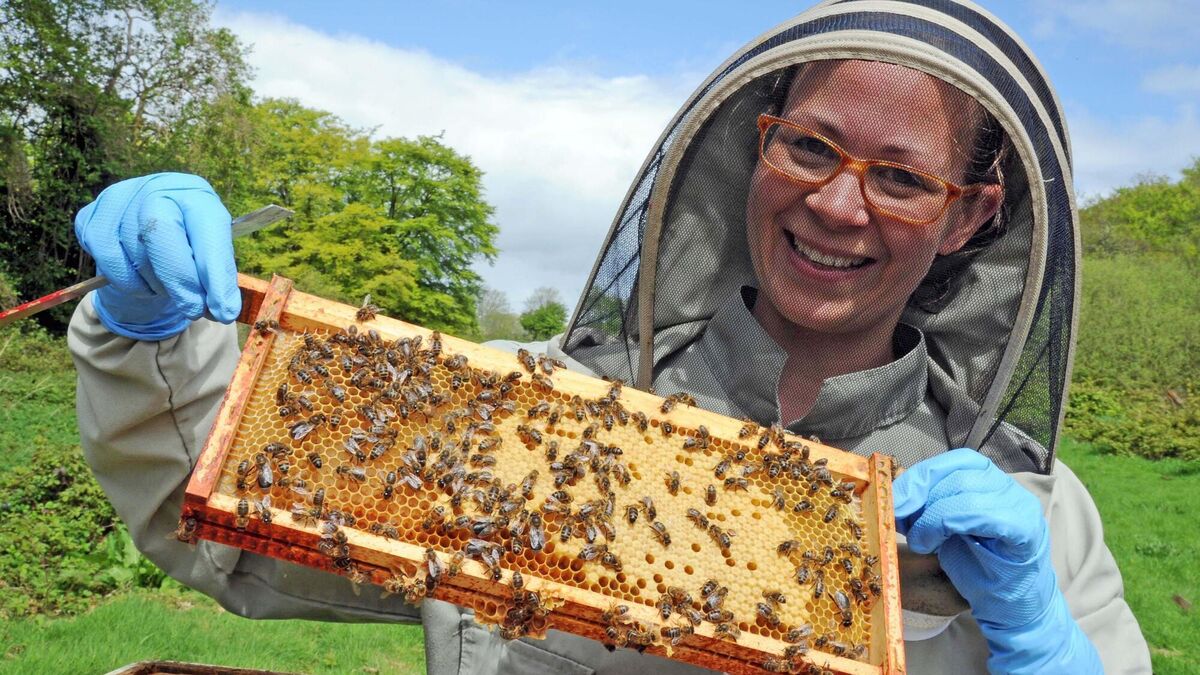
Hanna Bäckmo holding a frame from a hive at the apiary. Picture: Denis Minihane.
The encroaching industrial heartland of Cork’s Little Island does well to hide the long history of its early settlement and tidal mills, oyster middens and remnants of old estates.

Yet, exit off the busy N25 and away from the sprawling flatlands of offices, warehouses and shops, and the countryside is eager to make a reappearance. Along the residential Clash Road, gardens are in late spring bloom.

Beside the red gates of Clash Cottage is the unmistakable sign of a cottage industry – the honesty box. This one belongs to Hanna Bäckmo, founder of Hanna’s Bees, Cork’s beekeeper and honey wrangler extraordinaire.

I’m greeted by a pair of friendly dogs, a flock of chickens with cockerel in tow, and a gaggle of ducks all of whom call Hanna’s garden their home. I could swear I was just on a busy arterial road, but now I’m here in some kind of wonderland.

The cottage is a centenarian that has held onto its character despite myriad extensions and facelifts. It’s a home, but also production kitchen, studio and offices complete with a staff of four, and a diligent workforce of thousands in the shape of apis mellifera mellifera, an Irish native honeybee.

While Hanna’s Bees is best known for her honey and beeswax products, her garden is the reason why her business exists at all.

The half-acre plot is stuffed full of plants chosen for their friendliness to pollinators, vegetable beds, a polytunnel sheltering banana, lime and lemon trees, and an orchard of delicacies promising walnuts, mulberries, figs and quinces.

Inside a storm-shook greenhouse is a peach tree – ground zero.

“Coming from Sweden, I was really excited about the possibility of growing food year round in Ireland,” explains Hanna. “The first thing I planted was a peach tree, but I realised they flower so early in the year (January to March) when all the wild pollinators (bumblebees, hoverflies, wasps) are still hibernating. My peaches were going unpollinated year after year, so I decided to get bees!”

Honeybees stay active all year, surviving as colonies in their hives. Even in the depths of winter, honeybees can be spotted foraging for nectar on a mild December or January day.

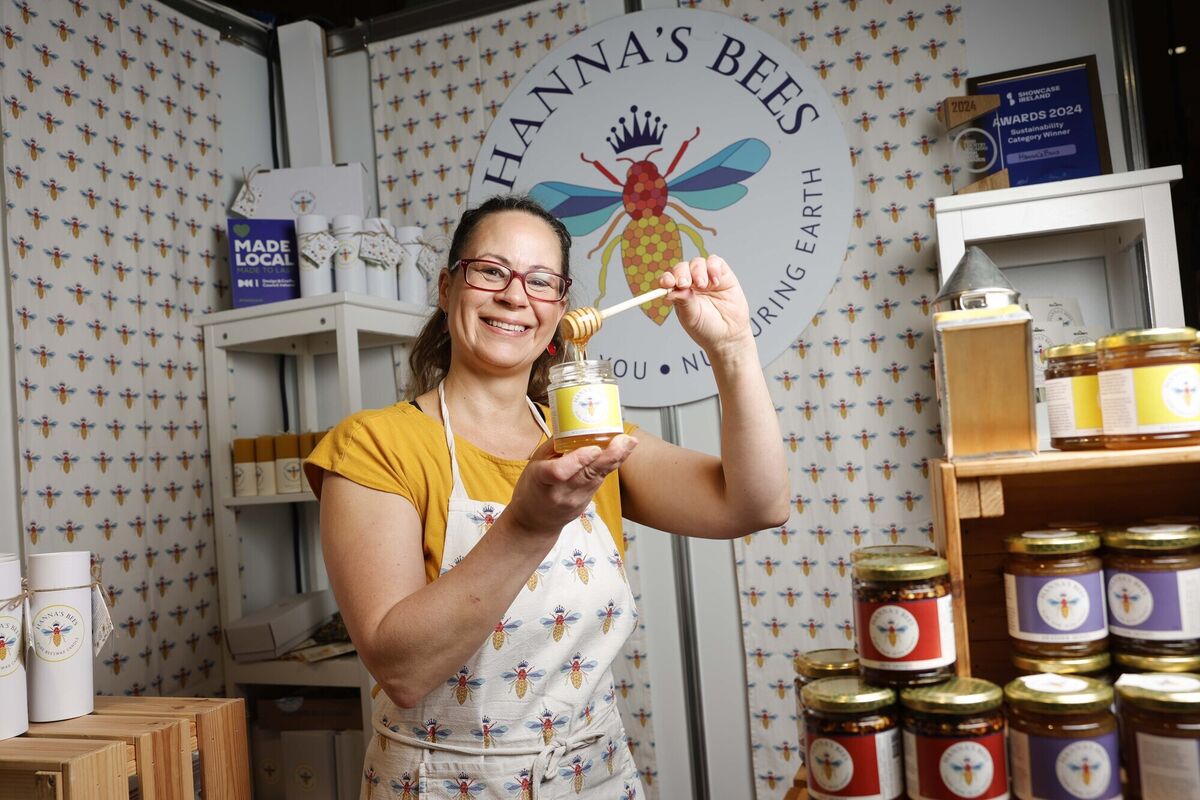
Hanna Bäckmo at her  Hanna's Bees stand at a craft and design fair. Picture: Conor McCabe Photography.

Now, every July, Hanna is overrun with sun-kissed peaches. “We eat them fresh off the tree, I dry them, and I make batches of peach and honey ice cream using my own peaches, honey and eggs from the chickens.”
Hanna admits she probably should have stopped at two or three hives. Afterall, she had a successful business as a wedding dressmaker. Today, she manages over 70 bee colonies around East Cork and employs a team of local women to help her run the business.

“I loved my old business, but I love bees more – and I get peaches!”

Hanna launched her ‘hive to home’ business with her pioneering beeswax wraps as an eco-friendly and sustainable alternative to clingfilm. Seasonal honeys, beeswax candles, and products developed from bee pollen and propolis harvested from hives have all been added to the range over the years.

Hanna has also garnered a reputation as an educator, regularly running workshops on all things bee-related and writing on the fascinating life of bees with Bee-Splaining articles on her website.

Think of bees, think of honey. Some of Hanna’s 70 colonies stay in the same location all year, while others are moved, taking advantage of new sources of bee food as seasons change.

“Most hobby beekeepers will take off honey once a year. That’s the summer wildflower honey - porridge or runny honey, as some people call it. That’s the main honey crop which happens from mid-summer for just two or three weeks when the brambles start flowering and the bees are bringing in copious amounts of nectar,” explains Hanna.

This is called the honeyflow, but with our weather becoming ever more precarious and consecutive years of poor honey harvests, commercial beekeepers like Hanna cannot rely on just the summer crop, which is why some hives are moved around.

“Because of three poor years of honey harvest, in the past year alone the price I pay to people we work with and buy honey from went up by 50%. That’s why real honey is so expensive because we just can’t produce enough of it,” Hanna says.

“To counter that, we go for as many crops as we can throughout the year which makes the honey taste amazing. Some years we get an exceptional whitethorn (hawthorn) harvest, but that’s only every six or seven years.”

Lined up in their jars, the honey’s colours and textures change as they follow the seasonal progression from spring (rapeseed), mid-spring (whitethorn), early summer (wildflower), summer (bramble), late summer (heather) and early autumn (ivy).

Aside from honey and wax, there are two other gifts from the hive that are less familiar. Pollen and propolis.

“While we can’t say any of our products have health properties, pollen, propolis and honey fall into that space between food and medicine. We eat it to keep well, and we also take it when we’re starting to feel unwell. It’s a functional food, something people know has all these benefits, but it’s very hard to prove because each batch of honey is different.

“Bee ingredients (honey, propolis, beeswax, pollen) have been used since the beginning of history to keep us well. There is a knowledge that it does work, but we don’t know a lot about how it works. But propolis is something I go nuts about. I love propolis!”

Propolis is a resin produced by trees to protect themselves from predators and disease. It’s packed with different beneficial compounds (varying from tree to tree) and naturally antimicrobial. Bees collect it then plaster the walls of their hives and honeycombs to stop fungi, bacteria and diseases entering the hive.

“Bees don’t eat the propolis, instead they bring it back to the hive and mix it with a little bit of beeswax and coat the inside of the hive with it. This is called the propolis envelope which acts like a communal immune system for the hive,” explains Hanna.

A healthy hive makes for healthy, more productive bees, and a stronger colony.

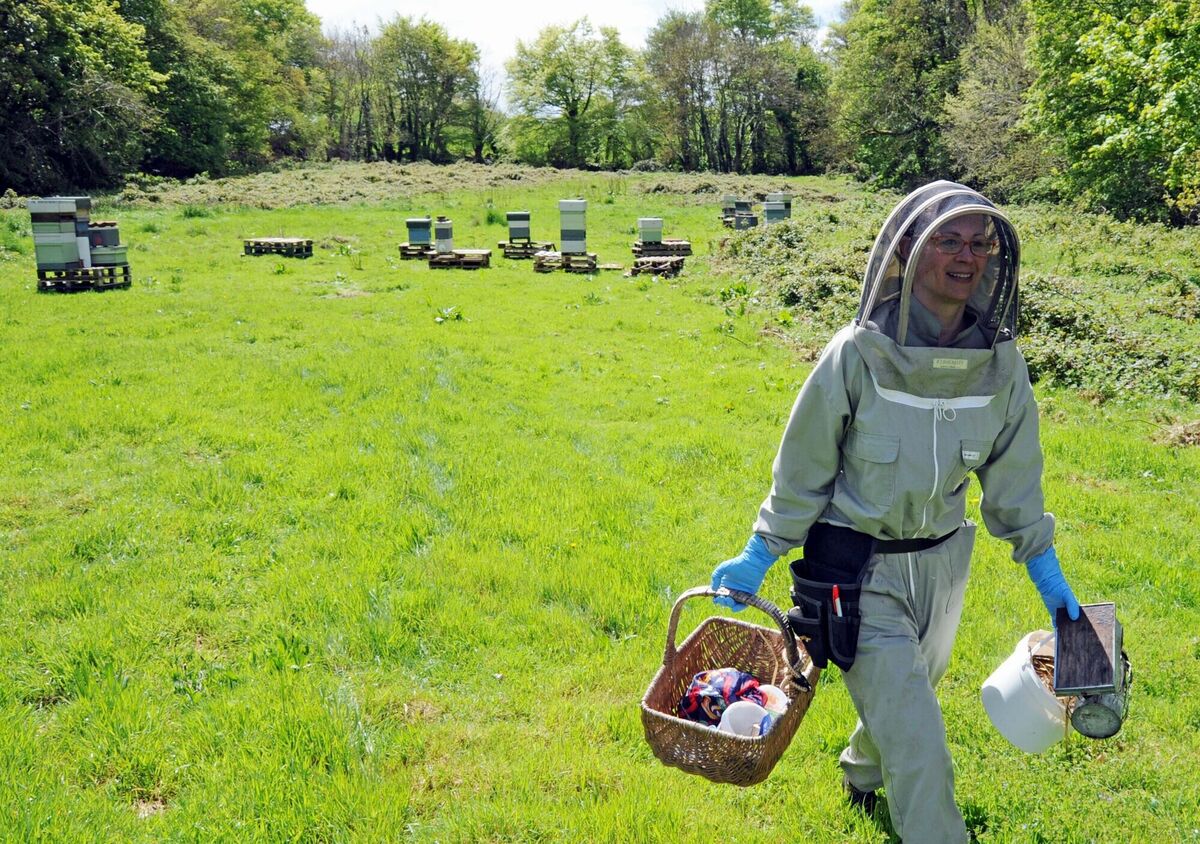
Hanna Bäckmo leaving the apiary. Picture: Denis Minihane.

“Propolis has a solid part that we can see and feel, but it also has a volatile [air-borne] compound. Those volatile compounds mix with the hive air and other substances (including the honey) so that when we eat honey, we also eat some of that goodness from the propolis.”

Use of propolis for topical ailments such as ear infections, cold sores, mouth ulcers, athlete’s foot and other fungal infections is not new. If you suffer from cold sores, over-the-counter treatments from pharmacies likely will include propolis.

“Propolis is amazing stuff, but many people don’t know about it,” says Hanna.

“I think a lot of the benefits of honey can be attributed to propolis. Bees are just geniuses, and they impress me all the time. That they can create something like propolis amazes me. I do get very excited about it, the whole process and all the different applications as well!

“We have developed propolis capsules, lip balms for cold sores, tinctures and sprays for sore throats. It has helped to counteract the three years of bad honey production while demand for all our products continue to grow.”

Later this year, Hanna will launch a new skincare range made from pure hive ingredients.

“A lot of people have been asking for skincare with ingredients they can understand. These barrier creams are made with pure ingredients, just propolis, beeswax and honey for people who have compromised skin such as psoriasis, dry skin, people who work outside, and lip balm for cold sores.

“It’s not a medicine, but it does support the skin to repair itself with ingredients people can trust and understand.”

While Hanna’s range of products – from food to wellness and beauty; candles and furniture polish to wildflower seeds – each serve a specific demand, her latest venture aims to bring this all together into one very special learning experience.

“People have been asking about tours of my garden for so long,” says Hanna. “People literally want to see the bees! But it’s not just about them; it’s about the wholeness of it. People want to see how something can be done. That’s how you inspire, by showing what’s possible when you grow a little ecosystem in a back garden.”

Hanna will offer a range of tours from this month, but her new In-Hive Experience is her flagship tour.

“We’re a small working homestead, so this will be a small group experience to keep in mind the intimate setting and so I can give everyone more time. I’ll give a bee talk and a guided walking tour of the garden to look at different plants, how they are pollinated and what’s possible to grow in our climate.

“Then we will put on the bee suits and go down to look at the bees in their hives. We will open a hive and have a look at what happens inside. That’s exciting because it’s rare to see what goes on inside a hive.

“We’ll look at the queen, egg laying, and look at larva in royal jelly. We’ll harvest a little bit of honey using the honey extractor, so everyone gets a jar of honey to take away home with them, and finish with a seasonal honey tasting. It’ll be a real once in a lifetime kind of experience!

“This winter, I’ll be hosting candle making workshops. They’re so much fun and a chance for people to create something.”

May 20 is World Bee Day, and this year’s theme is: “Be together for people and the planet, a partnership that sustains all.”

Here are Hanna’s top tips for celebrating all our amazing bees…

  • May is also No Mow May. If you must mow, wait until early evening when pollinators have returned to their hives for the night.
  • If you have a garden, allow a small patch to go wild to attract pollinators.
  • Avoid using pesticides and herbicides.
  • Remember: just because it flowers doesn’t mean it produces nectar! Garden centres often label plants that are excellent for bees, or ask for advice.
  • Support Irish beekeeping and Irish honeybees by looking for Irish honey in shops.
  • Hanna’s Bees will be at Ballymaloe Festival of Food in May and Cork on a Fork Food Festival in August with her mobile Observation Hive.
  • Visit www.hannasbees.ie for information on upcoming In-Hive Experiences and to shop the full range of handmade products.

More in this section

SARAH My Career: ‘Being flexible is important... I have five sources of income'
Cork woman completes gruelling challenge in aid of cancer charities Cork woman completes gruelling challenge in aid of cancer charities
Mature woman applying sunscreen on face Emer O'Callaghan: 'I see sun damage everyday...make sure you apply SPF all year round'

Sponsored Content

Your local hearing care experts in Cork Your local hearing care experts in Cork
AF The College Green Hotel Dublin March 2026 The College Green Hotel: A refined address in the heart of Dublin
SETU and Glassworks set to accelerate innovation SETU and Glassworks set to accelerate innovation
Contact Us Cookie Policy Privacy Policy Terms and Conditions

© Examiner Echo Group Limited

Add Echolive.ie to your home screen - easy access to Cork news, views, sport and more