Throwback Thursday: ‘I’ll always remember the glow in the sky’
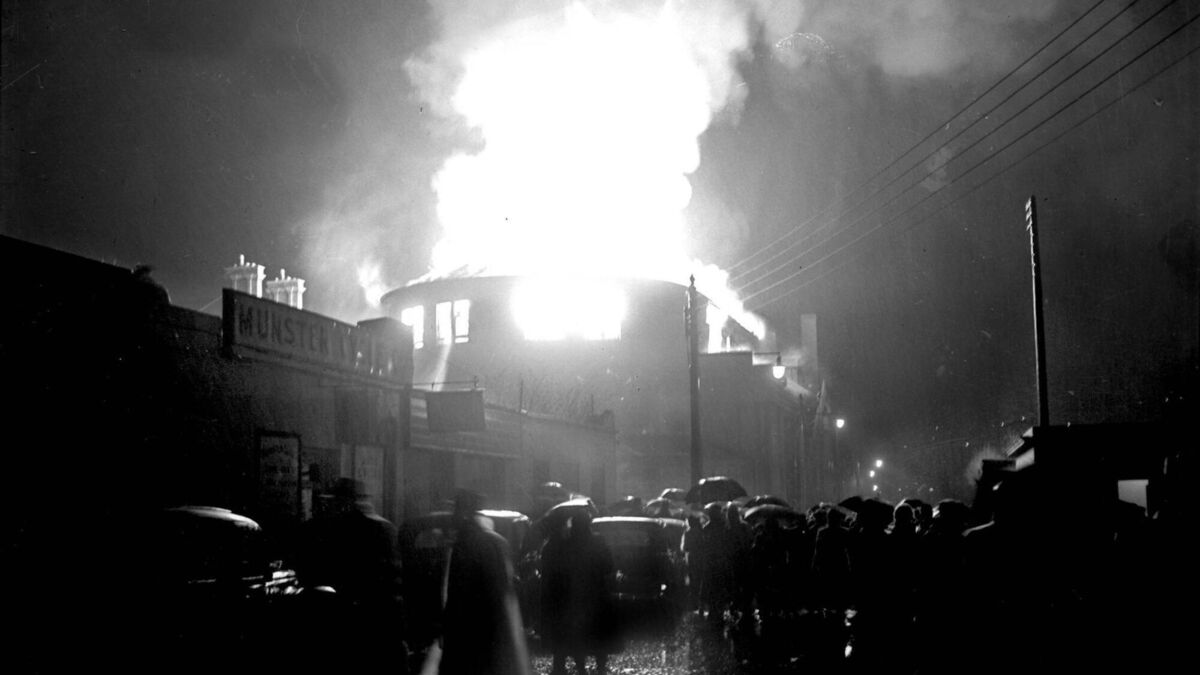
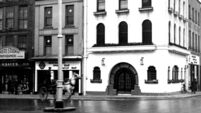
Crowds gather as fire engulfs Cork Opera House 70 years ago, on December 12, 1955
That was a memorable piece by Pat Poland in the Holly Bough (and now on EchoLive.ie) wasn’t it, recalling that fateful night, 70 years ago tomorrow, when our beloved Cork Opera House burned down?
As happens with every event of enormity, anyone of appropriate age in our city can remember exactly where they were, what they were doing that night, and whether they dropped everything and rushed down to witness the horror for themselves, or waited trembling at home, watching the skies turn a flaming red.
It was strange indeed that, for anyone who had time to think and calculate as the conflagration took hold, it happened just 35 years after the great Burning of Cork when Crown forces torched so much of our city.
That was another wild and stormy night, the winds helping to spread the flames.
Back in December, 1920, The Gondoliers was in progress at the Opera House, as we know from Ger Fitzgibbon’s brilliant reconstruction in his novel Songs For A Burning City.
In 1955, it was The Sleeping Beauty in rehearsal, and many an old trouper today can remember being hurried out the stage door as a Tiny Tot by their minders as the flames took hold of the roof above.
Pat Poland’s piece was excellent too in that it gave tribute to all the firefighters and others who worked through the night to contain the blaze and guard the adjoining School of Art. This particularly pleased Tim Morley, who wrote of his own memories of that night.
“Those of us old enough to be a witness will always remember the big glow in the night sky,” said Tim.
“My mother kept me up wondering where the light came from, but only at about midnight, when my brother came in, did he tell us what had happened.
“He was working in Guys, the printing firm on Patrick Street, which was at that time making the Opera House programmes in Cork (in competition with The Eagle on the South Mall).
“The very last Opera House programme they printed at Guys was for The Belle Of New York, due to open when the pantomime ended in January, but which then of course couldn’t take place.
“My brother was sharp enough to take some of these now unneeded programmes home, as he had the hope that ‘some day’ they would be valuable.”
Oh gosh, wouldn’t they just, Tim! They would be akin to a ticket for the return voyage on the Titanic, or the second performance of Our American Cousin in Washington DC (Abraham Lincoln was assassinated at the first show, which rather put a damper on the run).
Alas, however, the entrepreneurship shown by Tim’s brother did not gain its just reward, as he explains the fate of the programme
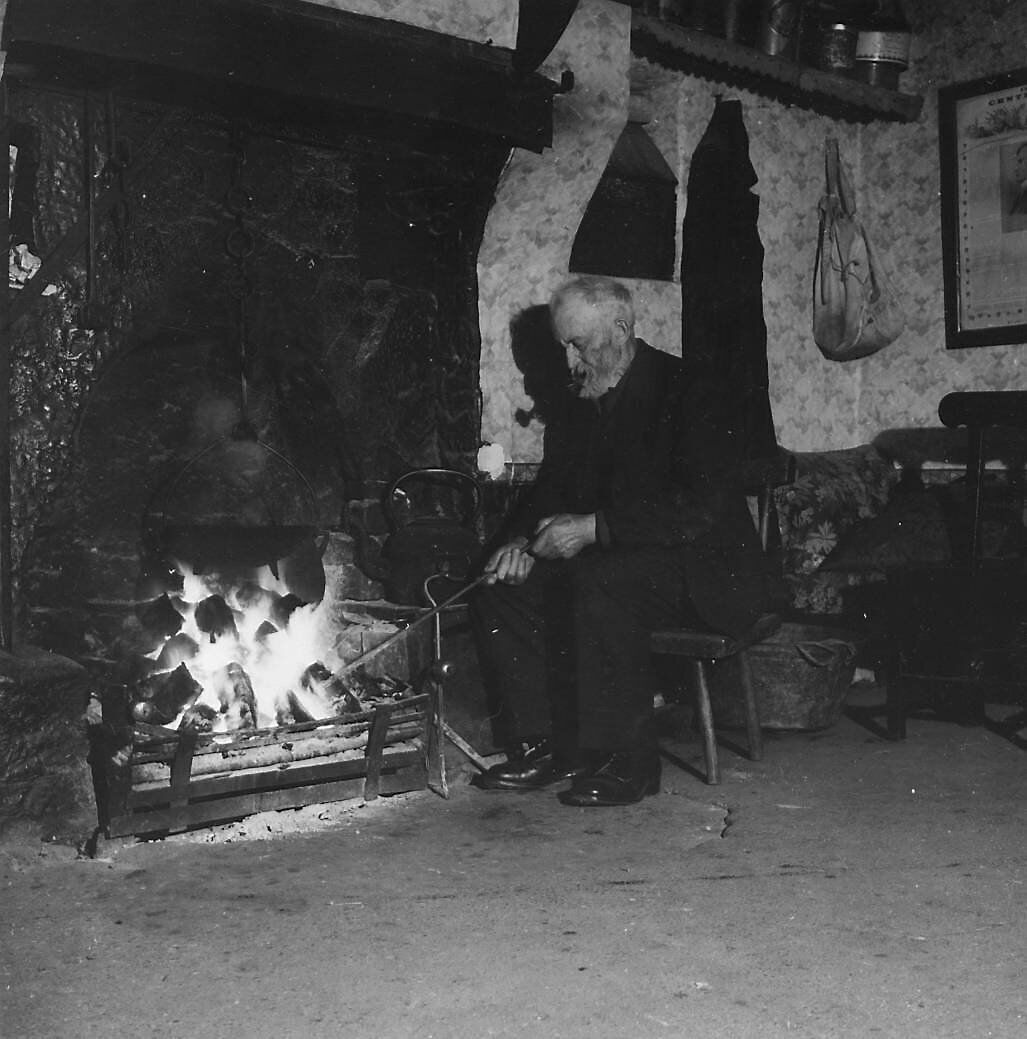
“And this links into your theme last week too, Jo, on poverty in those times. My mother was up early every morning to clean out the fire grate, thriftily saving the only partially-burned cinders. These were then wrapped up with dampened Evening Echos and – inevitably - those unused Opera House programmes lying around doing nothing.
“In this way, she made the foundation for the daily fire which was lit later in the afternoon when the real heating need arose.
“So the programmes went into providing warmth for the house, but reflecting on what my mother did every day as a matter of course, I wonder if there is anybody left over nowadays who would – or could - carry out those chores? “
Tim added: “I should add that when my mother had time in between cleaning, cooking, housekeeping, she was more often than not repairing the seat of my trousers which had the reputation of being the latest version of the map of the world with so many different patches on it.
“It was my childhood friend Teddy Murphy, later to be a practising GP for some 50 years in Cork, who invented that description for the seat of my trousers. There were so many distinct patches (various shades of grey, not of course coloured) resulting from the climbing, and sliding, etc, of a small boy tearing about, that with a little imagination this could be interpreted as a map of the different countries of the world.”
Tim continued: “My mother had, after many years, come back to Ireland from Scotland, where she no doubt had the virtues of thriftiness particularly impressed on her. New trousers were strictly kept for Sundays.
“We had enough money to buy healthy Irish agricultural produce, but half the clothes for us children were ‘hand-me-downs’. I’m sure we weren’t the only ones.
Indeed you weren’t, Tim. We all had clothes passed down from oldest (or tallest) to the next and then the next in line. Shoes and boots too. Wellies worn by the biggest, and carefully inscribed with their initials in Biro on the inside, went on to the next, where those initials would be crossly scratched out and replaced; and so on, and so on…
By the time a full Cork family had grown and moved on, the cupboard was jammed with old wellington boots, shoes, and sandals, of different sizes.
You do wonder if today’s families have lost the run of themselves entirely, the way they buy cheap casual items from the big international store that gets its stock from Asia, and then dump them almost immediately, creating serious problems for disposal since the materials are almost always man-made and definitely not bio-degradable.
What happened to the coat you wore for years? The trousers, like Tim’s, that were mended? Your big sister’s shoes that you’d coveted for years and finally got to wear yourself?
Clothes used to be regarded as an investment; now they are throwaway items of no value.
If we do one thing for the New Year, let it be putting a stop to this casual buying of cheap manmade fibres that are only choking our landfill forever.
Tim has something more to say too on our somewhat lower standard of living in bygone years.
“We might have won the War of Independence, but the next 30 years were spent reinculcating Irish culture, and at the same time keeping us in line if we dreamt of wandering too far from Catholic morals, (the unholy alliance of Dev and John Charles McQuaid).
“Money, for the not too well off in Ireland, was not allowed to be very important. The Irish small farmer, the economic backbone of the country at the time, had the job of providing the English worker with cheap food (in particular butter and Yorkshire(?) beef.)
“As we were told as students at UCC, ‘the boat’ was the expected future. It was the hard alternative for many Irish, as they had to leave their families at home, whom they would then have to provide for (remember the ‘Dagenham Yanks’?). And then came Lemass, we had a Celtic Tiger, and even better, a Common Market as cream on the cake. We still had poor people, certainly, but in general we could no longer be called ‘poor’.”
Tim recalls: “In the early 1970s, I was living in Switzerland, dependent on 15 minutes of the BBC for my Irish news, and the story came through that the Irish GDP had gone past the British.
“Yes, John Bull was definitely defeated, and those people who had won the Battle of the Boyne were now on the wrong side (does anyone ever feel like asking them why they are still celebrating the 12th of July?).
“That Jo, was the tale of poverty in Ireland, and how we got out of the worst of it.”
Great memories, Tim, and sharp observations too.
Coincidentally, at the very moment of writing this piece, a piece came up on RTÉ, observing that living standards are now higher in the Republic than in Northern Ireland. It took us a long time to pull out and ahead, but one might say that we are at last where we were always meant to be.
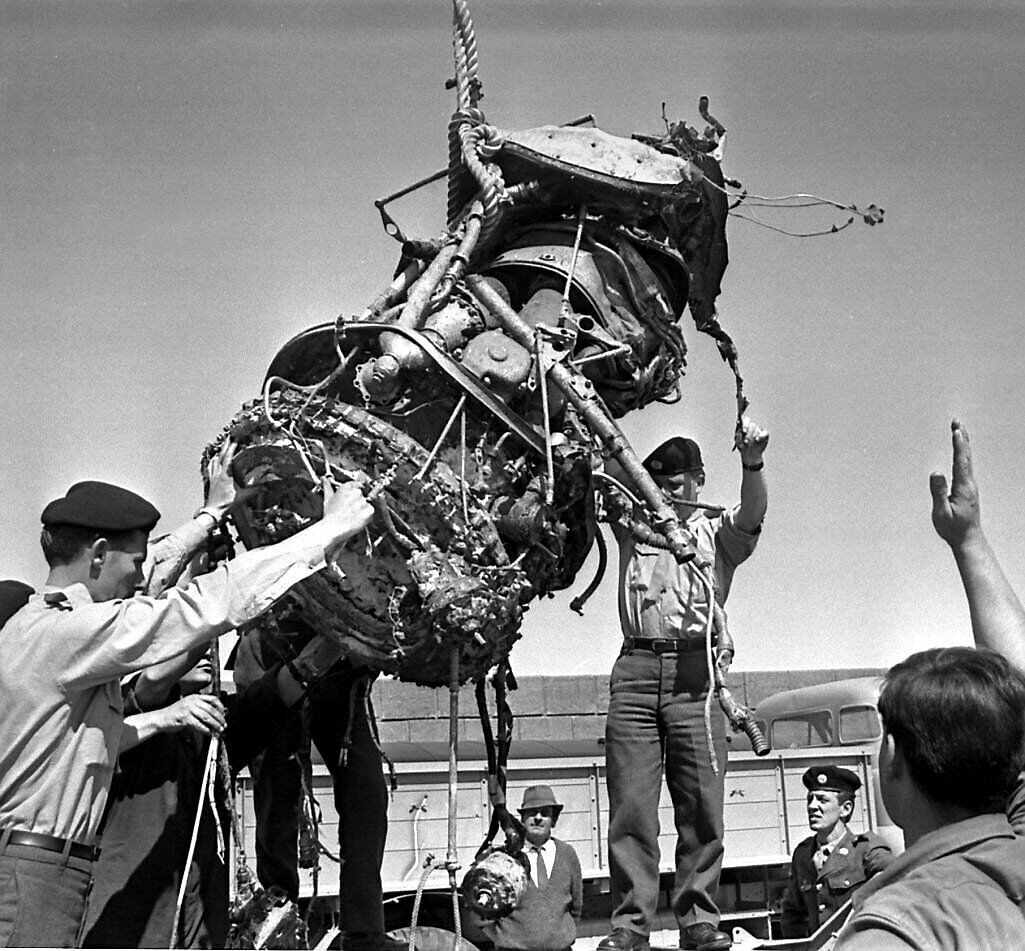
Noel Johnston, a regular reader of Throwback Thursday, was taken aback by last week’s pages where we mentioned Rory Delaney, a former scouting friend of Brian Cronin, who tragically lost his life in the Aer Lingus crash of 1968.
“Catching up on Throwback Thursday, I got a shock to see a photo of Rory staring back at me. I recognised him immediately before I could even see his name,” said Noel.
“As a pupil of Cork Grammar, I knew him as he was living nearby, and later he worked in insurance for the Norwich Union who were sending him for training in Norwich.
“He was all revved up for it and I think it was the previous week he went to an Insurance Institute fancy dress dance in one of the pavs in Musgrave Park. He was the life and soul of the party, dressed as a Red Indian in only swimming togs (or bathing-ahs) and two tea towels strategically placed fore and aft.
“Little did we know what was to follow on that ill-fated flight.
“As an aside, my first cousin was booked on the same flight but the day before changed to another one. Oh Destiny…
“Regards and keep up the great work.”
Sobering and touching, Noel. Thank you for sharing that.
A regular contributor to Throwback Thursday, who wishes on this occasion to remain anonymous (the reason will probably become clear as you read on) was reminded by Micheal Kenefick’s memories of temperance outings, of another outing in which he himself was involved, although perhaps not in quite the same line (or indeed spirit).
“The article about the Cork Pioneers reminded me about another side of the story.
“As you know, I worked in Kent station many years ago. One year, a ‘boys jolly’ was organised by the station staff. We were disappointed by the miserable discount offered by CIE for the hire of a bus, so we signed up with a private bus company who shall remain nameless.
“The driver picked us up from one of the Lower Road pubs, which shall also remain nameless. Needless to say, we had all got a head start in the beverage stakes.
“Anyway, as we approached the turn into Patrick Street, the driver announced through his microphone, ‘On your right you see the statue of Fr Mathew, the apostle of temperance... and look at the ***ing tears in his eyes!’ He did have a point.
“We ended up in Inchigeelagh, where a great night was had by all, including the driver for whom we all bought a drink.
“Unfortunately, upon leaving the hotel, the poor driver admitted his incapacity to negotiate the series of acute bends leading to the main road home. ‘Can any of you drive a bus?’ says he. ‘No problem,’ I replied, and indeed drove the bus to near my home and abandoned the ship!
“Thank goodness nobody came to any harm and a great day was had by all!”
Well, you would probably not get away with it these days (let’s keep the anonymity), but your story certainly evokes the casual laissez-faire and camaraderie of earlier years.
Clearly, the notoriously winding road back from Inchigeelagh (it’s still every bit as bad) held no fears for you. So on that issue alone, well done!
Let’s hear some of the reprehensible or outrageous stories that the rest of you most certainly have tucked away into the recesses of your mind.
Yes, we will observe some form of anonymity if you insist, although it’s always more fun if you can match the miscreant to the misdeeds!
Email jokerrigan1@gmail.com, or leave a message on our Facebook page: www.facebook.com/echolivecork.