Patrick Talbot: ‘Seeing Rory was part of the Christmas ritual’
It is only as we get older that we appreciate certain artists have created a soundtrack to sections of our lives, writes PATRICK TALBOT. He reflects on Joe Bonamassa’s appearance in Cork during the summer and the impact of the music of Rory Gallagher on a whole generation.
Patrick Talbot: ‘Seeing Rory was part of the Christmas ritual’

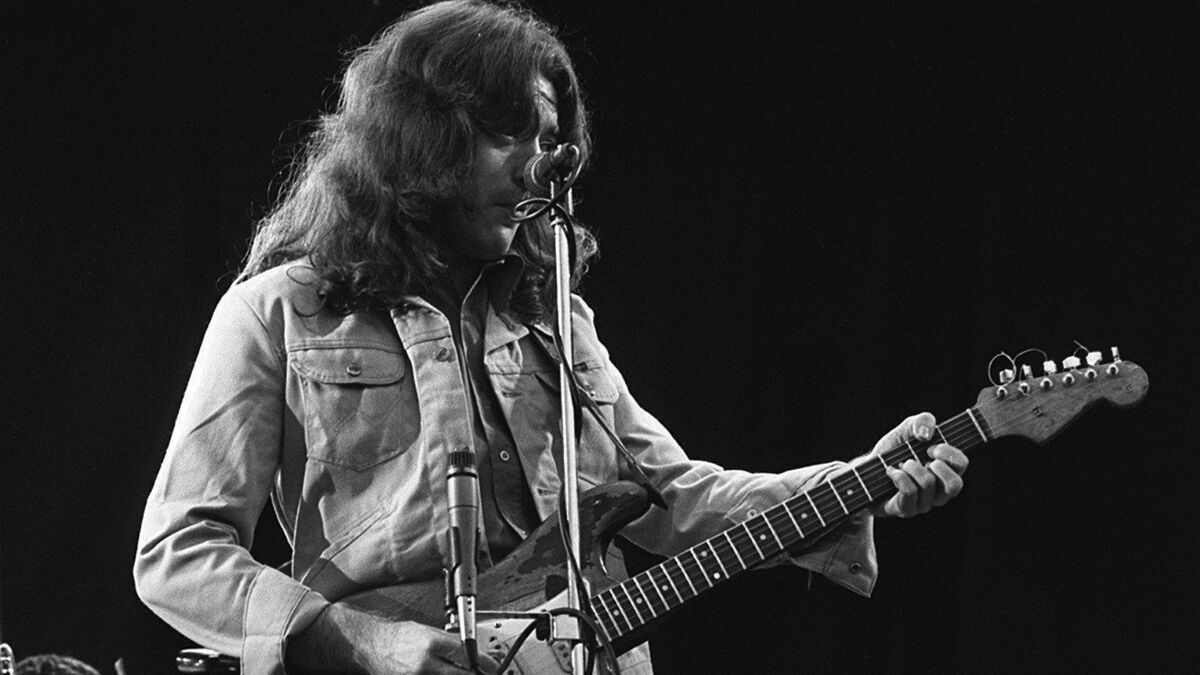
Rory Gallagher on stage in Macroom in 2978. 

We are constantly seeking conduits to people and events in the past. It is just as Joe Bonamassa said. During his compelling residency at the Marquee back in July, Bonamassa remarked that of course, he was not Rory Gallagher, he was simply a conduit for his music. And what a conduit he was in marking the 30th Anniversary of Rory’s passing.

Bonamassa’s pristine rendering of the setlist for Rory’s Irish Tour ‘74 LP, and some other tracks, was a conduit to an unlocking of vivid memories of Rory himself doing the same thing. One can only applaud Donal and Daniel Gallagher, Rory’s brother/manager and nephew respectively, and promoter Peter Aiken, in their astute choice of guitarist and band to take on this sensitive assignment. This was not some standard tribute act. This was an artist of significant international standing in his own right, focusing entirely on the work of another.

Joe Bonamassa performing Rory Gallagher songs onstage at Live at The Marquee, Cork. Picture: Darragh Kane

It is only as we get older that we appreciate that certain artists have created a soundtrack to sections of our lives. Remembering the artist is the conduit to remembering our lives at particular points. And we fondly recall the venues in which we encountered these artists in earlier days.
SAVOY CINEMA, CORK

Bonamassa’s magnificent takes on early Rory Gallagher songs like Walk On Hot Coals and Tatoo’d Lady, aided and abetted by stellar keyboard playing by Australian Lachy Doley, instantly transported me to the Savoy Cinema in Cork in the early 1970s when I was barely a teenager and had no real idea who Rory Gallagher was.

My parents had been musically middle of the road. My father was a huge fan of Dermot O’Brien, the singer and accordion player who had a huge hit with The Merry Ploughboy. My mother used to seriously swoon over Dickie Rock and The Miami Showband. As a boy, I had a massive crush on Eileen Reid of The Cadets Showband. I had cut-out photos of her in her snazzy band uniform from Spotlight magazine.

But then I found myself in the Savoy Cinema on Patrick Street one evening in the early 1970s, not to watch a film, but to experience a concert by a guy called Rory Gallagher for the first time.

How or why I was at this gig in the 2,000-seat Savoy Cinema, I cannot recall. I was only vaguely aware of who Rory Gallagher was.

The Savoy would be forever associated with the grandeur of the Cork Film Festival. But in strong contrast to the plush auditorium, what I was seeing and hearing was primitive, pared-down, bare stage stuff. A couple of amps, a microphone on a stand, stage centre, and a drum kit. A man in denim jeans and a check shirt with straggly long hair, drenched in sweat, who performed with his Stratocaster guitar as if his life depended on it, at that moment, on that stage, in that swanky cinema.

It was frightening. It was exhilarating. It was loud. I had never experienced anything quite like it in my young life.

The gig seemed to trigger some switch deeply embedded in my psyche, which had been dormant in respect of rock and roll up to this point. I was hooked. And I wanted to know more. And I set out to learn everything I could about Rory Gallagher.

THE APOLLO THEATRE, GLASGOW

I found myself living and working in Glasgow some years later. It was a daunting challenge for a young man not yet 21 who had never lived away from home. Glasgow in the late 70s/early 1980s was a tough, uncompromising working-class city. The thick Glaswegian accent was impenetrable at first, and the Troubles in Northern Ireland resonated loudly in the city where sectarian tensions between Celtic and Rangers fans were always inflammatory.

Glasgow possesses a handful of beautiful Victorian theatres, but the venue that had world renown in the music industry was the Apollo Theatre on Renfield Street.

It was a cavernous, crumbling 3,500-seat auditorium with a balcony that actually seemed to bounce on its foundations in response to exceptionally loud music. The Apollo was immensely popular with musicians because it had a mojo, an energy, and a vibe to it which was dynamic.

Artists of the calibre of Paul McCartney, Neil Young, The Rolling Stones, and Eric Clapton played there. AC/DC recorded their live album If You Don’t Want Blood You’ve Got It at the Apollo.

My introduction to the Apollo was a gig by Rory Gallagher. At this stage, I was six months into my new job and things were not going well. I was under all sorts of pressure and missing home enormously, and reconnecting with Rory in this very special place was going to be just the ticket. I went into the crammed stalls with a mixture of pride and trepidation.

Nobody sat, of course. And as Rory wailed about The Mississippi Sheiks from his album Photo Finish (1978), over 3,000 Glasgow rockers seemed to wail with him. As he barnstormed through songs like Brute Force and Ignorance, Shadow Play and Shin Kicker the intensity went off the scale.

And then the gear change. Rory donning his mandolin and announcing his anthem: Going To My Hometown, featured of course on his classic live album Live in Europe (1972). And suddenly there was no doubt where I was as Rory pitched that plaintive song bridge at us:

I’m getting lonesome, I’m getting blue

Let me tell you what I’m going to..

Yes I’m going to my hometown

I don’t care even if I have to walk.

As I roared out the lyrics, I knew I was singing about myself. The emotion within me over everything that was going wrong for me in Glasgow was pouring out of me in the Apollo. And I wanted to take ownership of Rory by roaring at the Glasgow throng:

-He’s ours! He’s ours!

But then I went one better and smiled and muttered to myself:

-See you back home some Christmas, Rory.

I just knew I would be returning there sooner rather than later.

CITY HALL, CORK

Christmas was not complete without the Rory gig, nearly always in the City Hall. It was as much a ritual as the Christmas turkey. Attendance was compulsory. It was the gathering of the tribe, the reaffirmation of who we were in a sense, as we bounced on that vast sprung floor.

If the balcony in the Apollo Theatre could bounce in response to the decibels of sound coming at it, then the sprung floor of the City Hall was a trampoline for the animated Rory faithful.

My family home was just around the corner from the City Hall. Perhaps in anticipation of my own career to come in theatrical production management, I would pop down before lunch to see if the articulated lorries carrying Rory’s sound and lighting gear had arrived and if the load-in had begun. Seeing these trucks was as much a part of the experience for me as the gig itself. Routines are a vital part of any ritual.

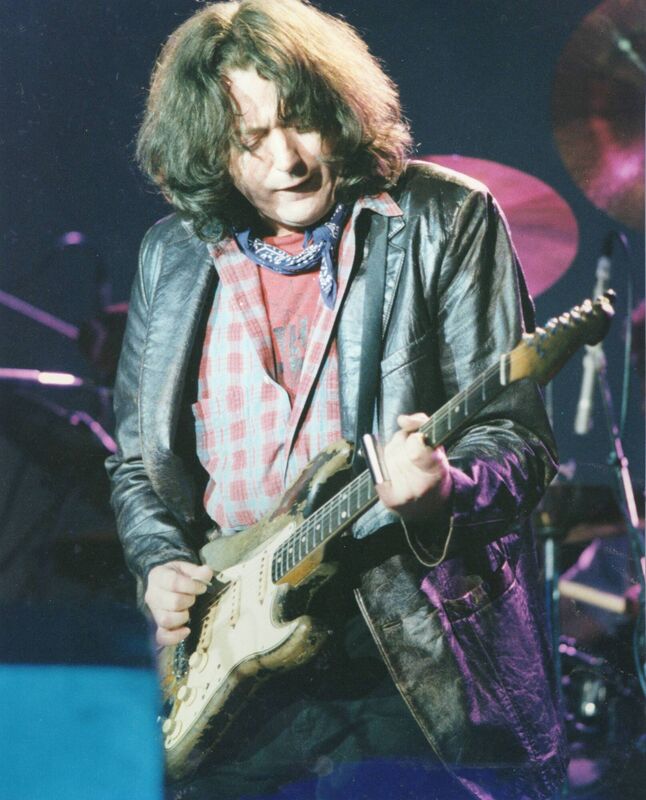
Rory Gallagher on stage. Picture: Eddie O'Hare 

While the Troubles raged Rory would insist on playing his beloved Ulster Hall in Belfast also during these Christmas tours. It was as if an unspoken truce would be called and fans from both sides of the divide could mingle openly because it was all about one thing and one thing only: Rory.
And it was odd, actually. Here was this Cork guitarist playing the American blues, but playing and singing with this uniquely Irish soulful inflection. It was Sonny Boy Williamson via Mississippi via Cork.

And back again to the USA, in particular New Hartford, New York State, where Joseph Leonard Bonamassa was born on 8 May 1977.

His first album, A New Day Yesterday (2000) features a cover version of Rory Gallagher’s Cradle Rock, flagging an admiration and respect for the Cork guitarist that would find its ultimate expression 25 years later at The Marquee.

The conduit going full circle. Rory would have approved, I’m sure.

This story originally appeared in the 2025 Holly Bough

Read More

Recalling the fire that devastated Cork Opera House 70 years ago

more Holly Bough articles

Pictures: Holly Bough makes its way around the world  Pictures: Holly Bough makes its way around the world 
Arrival of Cork's ‘Holly Bough’ heralds countdown to Christmas Arrival of Cork's ‘Holly Bough’ heralds countdown to Christmas
Meet this year's fiction section artists for the Holly Bough  Meet this year's fiction section artists for the Holly Bough 

More in this section

Throwback Thursday: ‘I’ll always remember the glow in the sky’ Throwback Thursday: ‘I’ll always remember the glow in the sky’
Throwback Thursday: Pioneer trips, and boy scout reminiscences Throwback Thursday: Pioneer trips, and boy scout reminiscences
Throwback Thursday: The Cork gate-crashers who tried to con Pioneers Throwback Thursday: The Cork gate-crashers who tried to con Pioneers

Sponsored Content

River Boyne in County Meath, Ireland. Water matters: protecting Ireland’s most precious resource
Turning AI ambition into action: Dell Technologies leads the way Turning AI ambition into action: Dell Technologies leads the way
Delicious desserts and exclusive pours, perfect for Christmas Delicious desserts and exclusive pours, perfect for Christmas
Contact Us Cookie Policy Privacy Policy Terms and Conditions

© Examiner Echo Group Limited

Add Echolive.ie to your home screen - easy access to Cork news, views, sport and more