‘Hunger out, plenty in’: New Year’s Eve traditions and lore in Cork 
SHANE LEHANE looks at some of the more unusual traditions around New Year’s Eve including banging bread on the door at midnight.
‘Hunger out, plenty in’: New Year’s Eve traditions and lore in Cork 

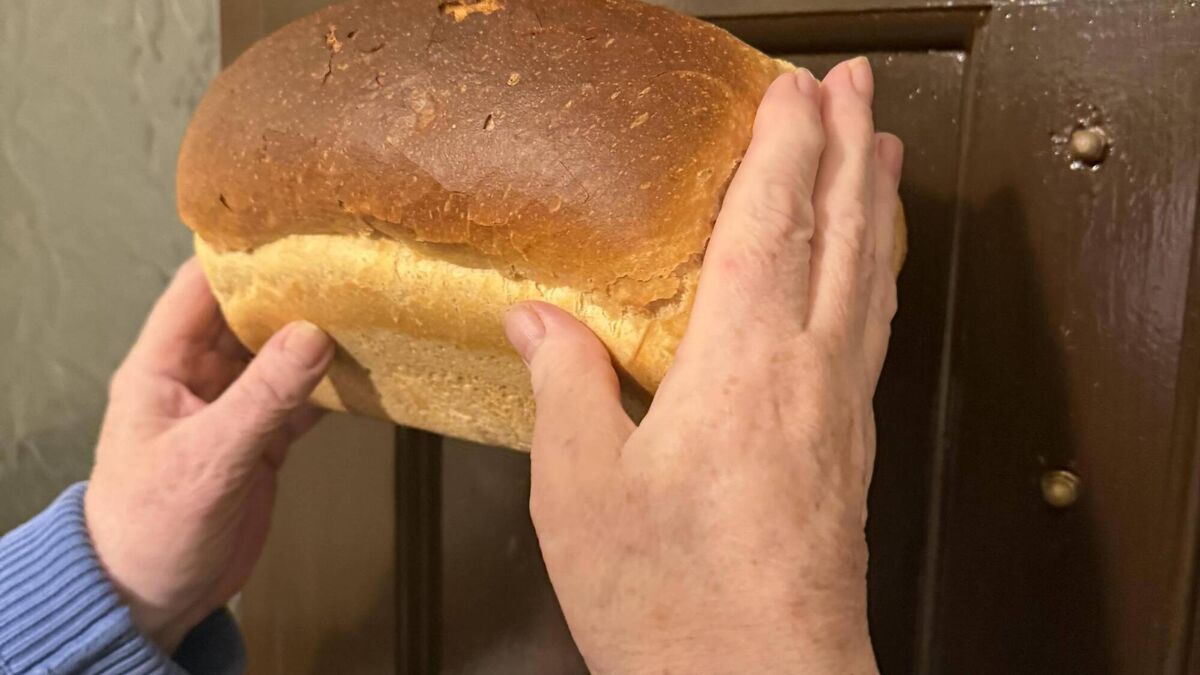
Many continue the tradition today of banging the bread on the door at midnight on New Year’s Eve. Picture: Barry Corcoran

On New Year’s Eve, on the stroke of midnight, there was nowhere more important in the house than the doorway.
Outside, there might be great revelry with church bells ringing and red flares shooting from trawlers and ships lighting the sky, but the door of the house was the chief focal point to mark the change in the year.

One age-old practice was, at the point of midnight, to ceremoniously open the back door to let the old year out, before marching to the front door and with a sense of pageantry, opening it, to welcome the new year in.

With the front door wide open, it was important that only positive portents of good fortune should come in, and to this end it was thought that a man should be the first person through the door to bring the best luck. Women were thought to bring bad luck and the women themselves were not adverse to overtly coaxing an unknown man into the house for a glass of whiskey and with a man being first in the luck would come with him.

Not only should the first person through the door be male, but the colour and quality of his hair was equally vital. Older, balding or grey-haired men were redundant in the face of spritely young men or boys with healthy crops of black hair, the darker the better.

There was an organised conspiracy between the households in the locality with mothers waking their young, black-haired boys early on New Year’s Day and sending them on make-do errands to nearby houses with little gifts, and as they were the first through the door, they would ensure prosperity for the year. All daughters, specifically those with red hair, were commanded to stay in bed, lest their presence bring the opposite. The young boys would wish everyone in the house a Happy New Year and were rewarded with a slice of fruit cake for their trouble. If the first footing was from a man, he would sit down and enjoy a glass of whiskey, but this was a significant exception in the extension of hospitality, and little else was on offer. People feared that anything given away on this day would be lacking for the rest of the year.

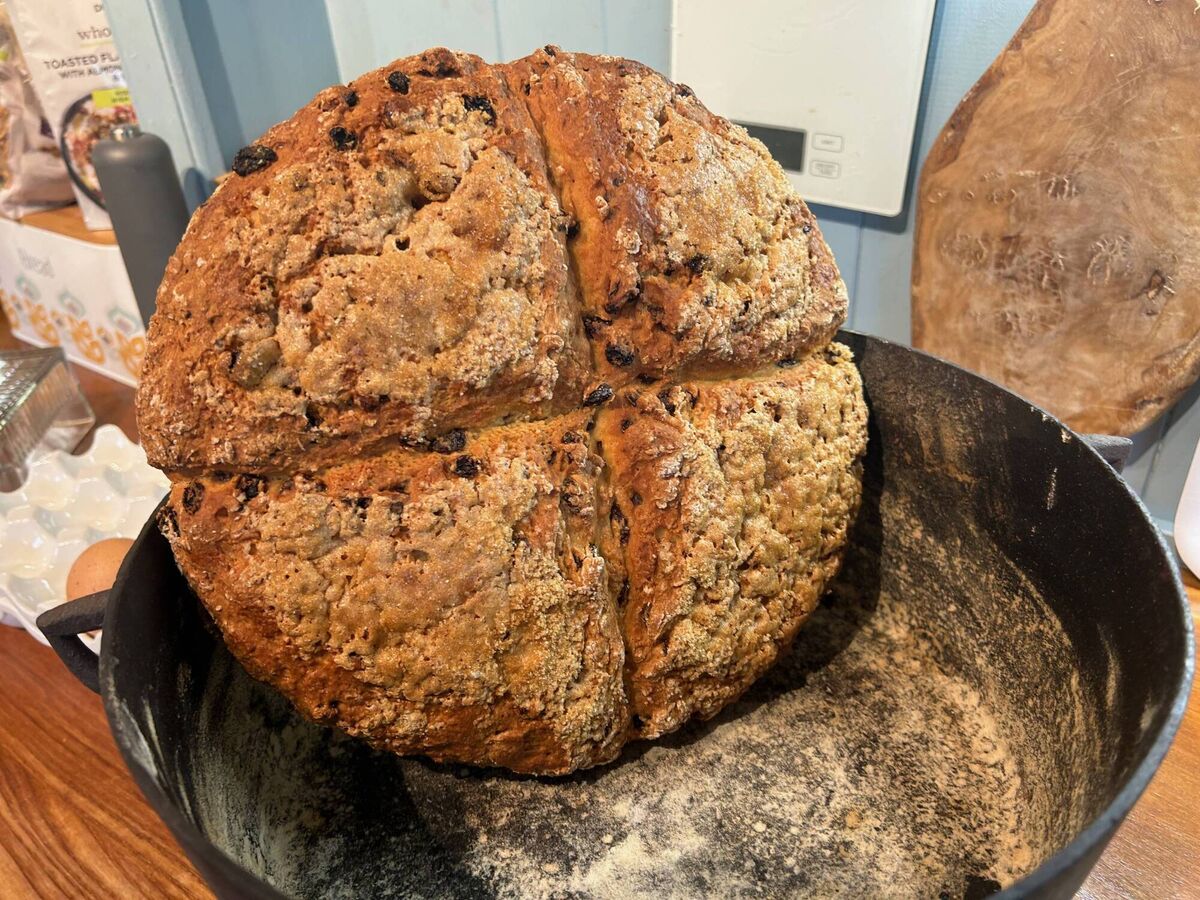
In the southern half of Ireland and in Cork and Kerry there is a firmly established tradition of breaking or throwing bread at the door on New Year’s Eve. In the countryside, a special, fruit-enriched, sweet cake was baked in the round bastible pot, its lid covered with the hot gríosach (smouldering embers). Suspended from the crane and baked over the open turf fire for just an hour or so, the lid was lifted, and the irresistible smell from the crunchy crust of the freshly baked sweet cake wafted through the kitchen. It was almost too much for the children to bear, but they had to wait until midnight.

 In the countryside, a special sweet cake was baked in the round bastible pot for the New Year's Eve task. 
In the countryside, a special sweet cake was baked in the round bastible pot for the New Year's Eve task. 

At the appointed time, the man of the house took the bastible cake and with great determination and force banged it violently three times against the back of the door, with the family chanting loudly in unison buailfimíd na ghorta amach, buailfimíd na ghorta amach ‘we beat hunger out, we beat hunger out’. On impact, the cake invariably broke into pieces and the children happily scrambled underfoot to salvage the tastiest chunks for themselves. The eligible girls in the family believed that if they secured the first piece of cake that hit the floor, it was a sure sign of marriage for Shrove that year, and they would have a home of their own and their own New Year’s cake within 12 months.

There were several variations of this New Year’s cake tradition. In some parts of Cork and Kerry, instead of a large cake, the women of the house used to make two small griddle cakes, and at midnight, she went to the door and cast one to the east and the other to the west saying as she did so, ‘keep out hunger, keep out rogues’.

Others used to make pancakes for the night, and before eating their fill, they tossed the first of them out the door to keep hunger from the door.

In the cities and towns where baker’s bread was available, any number of the usual array of loaves, a large batch loaf, a basket, a skull, a duck, a cottage or a lodger’s loaf were purchased on New Year’s Eve. This abundance of bread was the mainstay  of what was known as Oíche na Coda Móire ‘The Night of the Big Portions’, for it was understood that if the family had an abundance of food, with everyone having their fill and more if they wanted, it ensured that the rest of the year would be the same. In Kilkenny, it was known as ‘The Night of the Big Enough’ and people would proudly declare ‘I’ve had my ‘nough to ate’. Some people took the loaves of bread and threw them out through the open door where they were caught outside and with great excitement, brought back in to chants of ‘hunger out, plenty in’.

The rituals could be less elaborate, with many simply rolling the baker’s bread or cake of bread against the back of the door or placing them on the threshold or outside the door to the same effect. The rubbing against the door was regularly augmented by rubbing a piece of coal to ensure heat and a coin to always have money, all three keeping ‘cold, want and hunger from the door’. Sometimes all three items were left outside the door on the eve and when the New Year came into being, they were carried in.

The ritual of breaking cakes of bread at the threshold of the doorway was also a part of the Irish wedding tradition. The bride, on returning to the groom’s house, used to kneel at the threshold, and the wedding cake in the form of a traditional cake of bread, was held aloft over her head by her mother-in-law or the priest. Taking it in two hands, they broke the bread in two and any little crumbs or morsels that fell were eagerly scavenged for by the unmarried girls. They later asked the bride to let them pass the crumb through her wedding ring and then putting the crumb under their pillow that night they hoped to dream of their husbands-to-be.

An account recorded in the School’s Folklore Collection from Wexford, tells of breaking the bread against the door tradition taking place, not on New Year’s Eve, but when the first flour was available following harvest. This description by Miss Flusk describes what happened in her grandfather’s home in Glandoran:

“When the harvest was over and the wheat ground into meal, my Grandmother made a nice loaf in a pot oven beside the fire. This would be the first loaf made from the new meal. That evening, before supper was served, the fear-an-tighe, taking the loaf went outside the door and striking the door three times in the name of the Three Persons of the Blessed Trinity prayed that hunger and want might not enter the habitation during the year. Then his wife opened the door and coming into the kitchen the fear an tighe broke a piece off the cake and ate it, breaking of a piece and giving it to his wife and his children he thanked God for the new food, and finally placed himself and his family under the protection of Christ and his blessed mother during the coming year. Then the loaf was cut into slices and the family sat down to supper”.

This account, along with several others recorded in the nineteenth century, pertain to the years that followed the famine of 1845 -1851 and remind us that the horrors of hunger and starvation were very real and intensely remembered at that time.

The ritual of beating out hunger was inevitably a more fervent and serious occasion for those in need and a sense of solemnity was manifest with many praying the rosary on New Year’s Eve.

Many years ago, Tom Desmond, one of my former students, sadly now deceased, recounted to me a cant that was common all over Blackpool in Cork City, when hitting the bread off the door: ‘Bate out hunger, bate out hunger, until this night twelve months and that night too’.

The tradition is certainly still alive in parts of Cork city with some remembering when they were children, with a sense of fun, throwing slices of bread off neighbours’ doors on the night. Mary Corcoran (the editor of the Holly Bough), pointed out to me that her own mother made sure that the ceremony was carried out with a ‘proper loaf of bread’, bought or baked especially for the occasion.

New Year's Eve celebrations in Bantry.  Picture: Andy Gibson.

The ubiquitous sliced pan was considered inadequate for the job in hand. Having repeated her beat-out hunger mantra, she then liberally doused the house and all the family with holy water to protect them for the year ahead.


My Auntie Rita used to beat the back of the door with the bread, shouting ‘hunger out’ before turning to the front of the door and hollering ‘plenty in’. My first cousin, Jimmy and his daughters, along with a host of others, still perform this great traditional custom each New Year’s Eve.

I too will undertake the age-old tradition as I do every year.

This year however, I will not be thinking of the folkloric tradition alone, but I will pause and reflect on the multitudes affected by the horrors of war and who have been cast into appalling hunger. My earnest wish will be for peace and the end to starvation, deprivation, and injustice.

This story appeared in the 2025 Holly Bough.

Read More

Memories of life on Horse Island: ‘It was hard, but they were great people’

more Holly Bough articles

Pictures: Holly Bough makes its way around the world  Pictures: Holly Bough makes its way around the world 
Arrival of Cork's ‘Holly Bough’ heralds countdown to Christmas Arrival of Cork's ‘Holly Bough’ heralds countdown to Christmas
Meet this year's fiction section artists for the Holly Bough  Meet this year's fiction section artists for the Holly Bough 

More in this section

Throwback Thursday: ‘I’ll always remember the glow in the sky’ Throwback Thursday: ‘I’ll always remember the glow in the sky’
Throwback Thursday: Pioneer trips, and boy scout reminiscences Throwback Thursday: Pioneer trips, and boy scout reminiscences
Throwback Thursday: The Cork gate-crashers who tried to con Pioneers Throwback Thursday: The Cork gate-crashers who tried to con Pioneers

Sponsored Content

River Boyne in County Meath, Ireland. Water matters: protecting Ireland’s most precious resource
Turning AI ambition into action: Dell Technologies leads the way Turning AI ambition into action: Dell Technologies leads the way
Delicious desserts and exclusive pours, perfect for Christmas Delicious desserts and exclusive pours, perfect for Christmas
Contact Us Cookie Policy Privacy Policy Terms and Conditions

© Examiner Echo Group Limited

Add Echolive.ie to your home screen - easy access to Cork news, views, sport and more