Forget Christmas cards...'Turkey lift' saw thousands of birds posted to families in UK 

Before, during and after World War II, families in Ireland sent thousands of turkeys to their loved ones in Britain by mail ship and ‘turkey lift’, writes AISLING MEATH.
Forget Christmas cards...'Turkey lift' saw thousands of birds posted to families in UK 

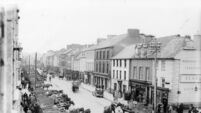
Turkeys were sent in their thousands from Cork to Britain. This picture was taken at the turkey market at Dunmanway in 1953.
Christmas is traditionally a very busy time of year for the postal services, with people sending parcels to their loved ones abroad who can’t make it home for Christmas Day.

This was especially true in the years preceding and during World War II, when food was rationed.

Thousands of families in rural Ireland went to enormous lengths to ensure that their emigrant sons and daughters, who were scattered throughout the cities of the UK where they had gone to find work, would enjoy a good Christmas dinner.

Food parcels zigzagged along the train tracks of Ireland towards the mail boat in Dun Laoghaire, and from there were carried on to English addresses.

The exiled Irish, often missing home but without the funds to return, would joyfully receive them in the knowledge that the parcel contained not only food, but was also imbued with love and care from their families back home.

Turkey was the quintessential element of the festive table, and they were posted in their droves, whole and intact, from Ireland to Britain during those years.

Before and during the war years, these ‘gift turkeys’ were mostly dispatched by sea, traversing the country by train to be loaded onto the mail boat and then delivered to their destination in the UK, and then in later years after the war, were sent by air in what became known as the ‘turkey lift’.

In 1951, the ‘turkey lift’ transported up to 10,000 birds across the water, with a special ‘turkey depot’ in Cathal Brugha Street in Dublin, with a staff of 30 workers who were charged with the transportation of the birds onto flights from Dublin to the UK.

An account from the Cork Examiner of 1948 mentions that the flights involved special arrangements for the transport of ‘both live humans from Britain’ (for those who could afford the return home), ‘and dead turkeys to that country during the Christmas season.’

These were the days before wide-scale refrigeration so the turkeys would have been packed in straw or canvas, or sometimes just brown paper, and the recipients then had to go about cleaning them out, a process that would never have to be undertaken by most of us these days, living as we do in an era of different standards of sanitation and convenience.

Dr. Siobhan Browne from the Department of Folklore and Ethnology in UCC is a specialist in the migration of the Irish to Britain during the war years.

During the course of her research, she interviewed many people who remembered back to those days when it was common practice to post turkeys to relatives in the UK to offset the rigours of food rationing.

“It was really common practice to send turkeys in the post during the years of the Second World War and right through to the 1950s,” she said.

“One woman told me that the parcels that would regularly come at Christmas time in the 1950s always contained a turkey from her Auntie Nelly’s farm in Co. Limerick.”

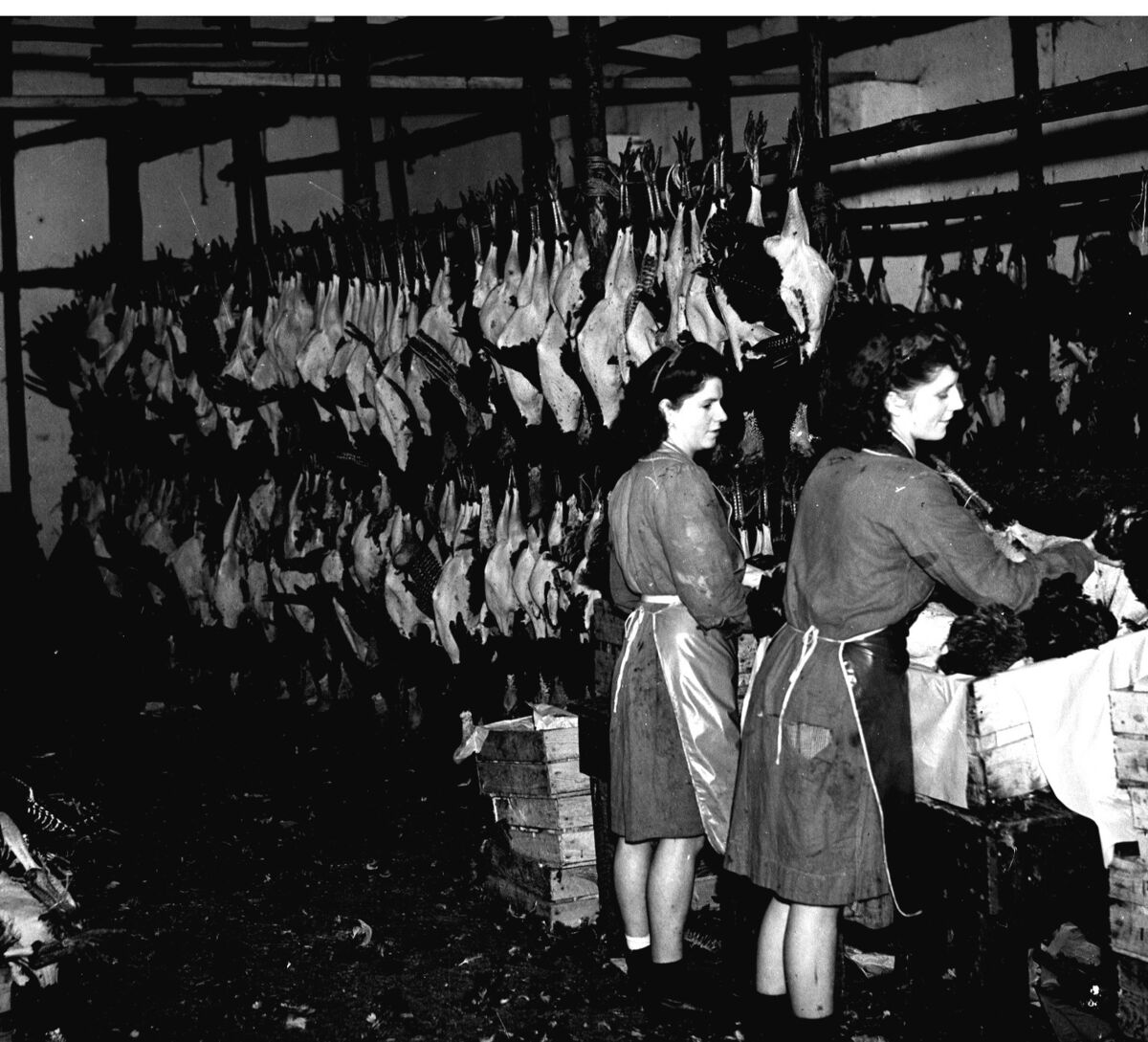
Archive image from Christmas 1945. Women were very involved in the rearing and preparing of turkeys.

It was women who sent the food, and if they had it, men would send money.
Those in Ireland who had the means, and often those who didn’t, would have been aware of food shortages in cities such as London at the time. They would often have sent fresh food such as chicken or butter in parcels to their loved ones.

These were people in Ireland who themselves were often under financial pressure so it was a huge sacrifice.

In those days, too, it was also common practice to give a turkey to the local convent or to the local priest.

Those who lived in rural areas often had more access to fresh food and so were aware that their family members, their cherished sons or daughters, were living under the restraints of World War II rationing.

The postal service was pretty sophisticated in those days- you could post food and it would be in London the next day, or the day after, via the mail ships at a time when there were five mail boat sailings a day from Ireland to Britain.

“I spoke to a man who worked in the post office in London during the war years and he told me that it was also common for turkeys to ‘get lost in the post,” she said.

In those days the rearing of poultry was mainly women’s work, which enabled them to make a supplementary income.

The skills involved, including how to clean them out, were often passed on to their daughters, who knew exactly what to do when the postman arrived bearing the completely intact bird, heads, guts and all.

“It was a niche thing, a knowledge practiced by the women who would have been brought up knowing how to pluck them and clean them out,” said Siobhan.

As well as the rearing and killing of the bird to get ready to send, they would have had to prepare it for postage by going to the local post office, often at some distance.

Bear in mind, it was during a time when women did not have the same access to cars, so hopping down to the local post office was not always as simple as it often is these days.

“The women often kept geese and ducks too, but actual turkeys themselves were the most lucrative element of their poultry for the Christmas market sale.

“Most of the people I interviewed who would have posted them to their families sold the rest of the turkeys, and would have eaten goose themselves for their own Christmas dinner because a turkey fetched a higher price.”

By 1957, the meat rationing was well and truly over and there was more variety of food available.

“The newly arrived Irish were mesmerised by the food choices in London compared to what was available back home, and so then the practice of sending luxury items, such as Mars bars, were sent back home to Ireland,” continued Siobhan.

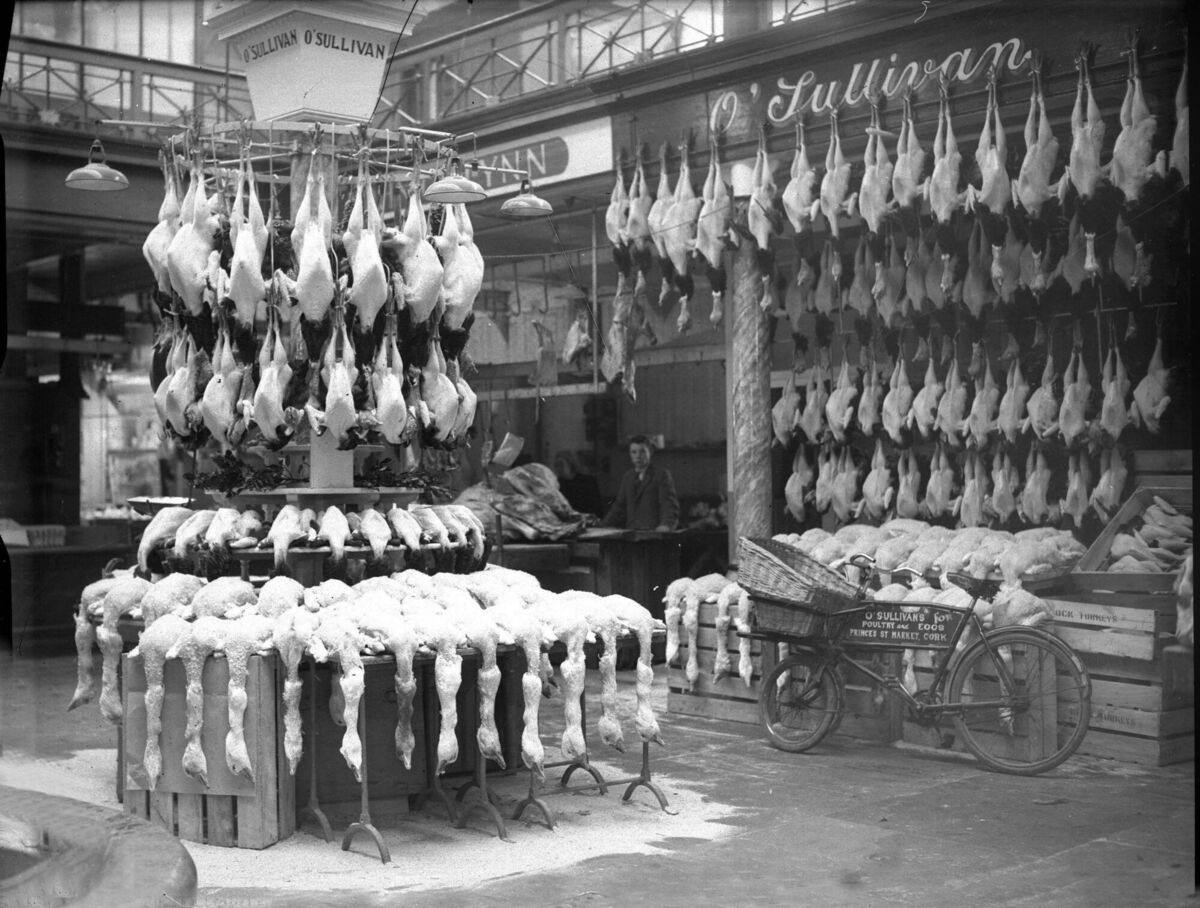
Christmas turkeys on sale at the English Market, Cork in 1947. 

“In those days you would never have seen such an item, you would have been lucky to get a toffee at the time.

“Baked goods were often sent too and one of those items recalled was an almond cake.

“I spoke to one woman living in London as a child of Irish emigrants who remembered this cake arriving in the post which was made by her granny in Ireland.

“During the lead up to Christmas the children were allowed to take one almond off the circle on top of the cake each day and eat it.”

Others remember being sent ‘Emerald’ sweets in the post, their green wrappers being synonymous with Ireland. Bottles of poteen marked as ‘Holy Water’ were often sent too.

These were not always for consumption but would sometimes be rubbed on arthritic hands and knees as a cure.

Others recalled items such as tea being sent and of course there were the Christmas cakes and puddings too.

The sending of food parcels was an act of love and a bridge between two worlds, that of the emigrant and their families.

When it came to the goose in Ireland, which many people had instead of turkey, nothing was wasted.

These days it is still popular to roast your Christmas day potatoes in goose fat.

Food historian, broadcaster, writer and lecturer at UCC Regina Sexton explained:

“There was more meat on a turkey and it was deemed a superior quality bird with its white meat and was sold on to supplement the family income, so it was the goose which often ended up being consumed for the Christmas dinner in homes across Ireland.

“For as long as people have been keeping geese they have also been keeping the fat. Olive oil is a relatively recent thing here.


“Goose fat is very versatile and it was used not only for cooking but also for polishing boots and other household items.

“If people were sick it was also common practise to rub goose grease on the chest, and it was also used for stiffness of the joints and for sprains.

“The eggs are very large and therefore really good for cooking and baking, people really treasured goose eggs. The feathers were also used for stuffing the bedding- items such as pillows and eiderdowns.

“Then there are also the large wing feathers which were saved and used for brushing the hearth, and, of course, the meat on the goose was enjoyed by stuffing it with potato and apple stuffing.

“So when it comes to the goose, nothing was wasted,” she said.

So whether your preference is for goose or turkey this Christmas spare a thought for the incredible Irish women down through the years who with their knowledge and skills literally went out of their way to ensure that all of their family, whether at home or abroad, had a Merry Christmas.

The task of standing in a queue with a handful of Christmas cards in the post office in order to buy a book of stamps seems to pale into insignificance compared with waiting in line with a whole intact turkey to post abroad as generations of Irish women did for their loved ones in times gone by.

This story appeared in the 2025 Holly Bough

Read More

Paying a visit to Santy in Cork 

more Holly Bough articles

Pictures: Holly Bough makes its way around the world  Pictures: Holly Bough makes its way around the world 
Arrival of Cork's ‘Holly Bough’ heralds countdown to Christmas Arrival of Cork's ‘Holly Bough’ heralds countdown to Christmas
Meet this year's fiction section artists for the Holly Bough  Meet this year's fiction section artists for the Holly Bough 

More in this section

Throwback Thursday: Pioneer trips, and boy scout reminiscences Throwback Thursday: Pioneer trips, and boy scout reminiscences
Throwback Thursday: The Cork gate-crashers who tried to con Pioneers Throwback Thursday: The Cork gate-crashers who tried to con Pioneers
Throwback Thursday: My happy childhood in city’s Moores Hotel Throwback Thursday: My happy childhood in city’s Moores Hotel

Sponsored Content

Turning AI ambition into action: Dell Technologies leads the way Turning AI ambition into action: Dell Technologies leads the way
Delicious desserts and exclusive pours, perfect for Christmas Delicious desserts and exclusive pours, perfect for Christmas
A top expert reveals the perfect wine for festive cheer and Christmas party pairings A top expert reveals the perfect wine for festive cheer and Christmas party pairings
Contact Us Cookie Policy Privacy Policy Terms and Conditions

© Examiner Echo Group Limited

Add Echolive.ie to your home screen - easy access to Cork news, views, sport and more