How a hero of 1916 slipped hangman’s noose in Cork city
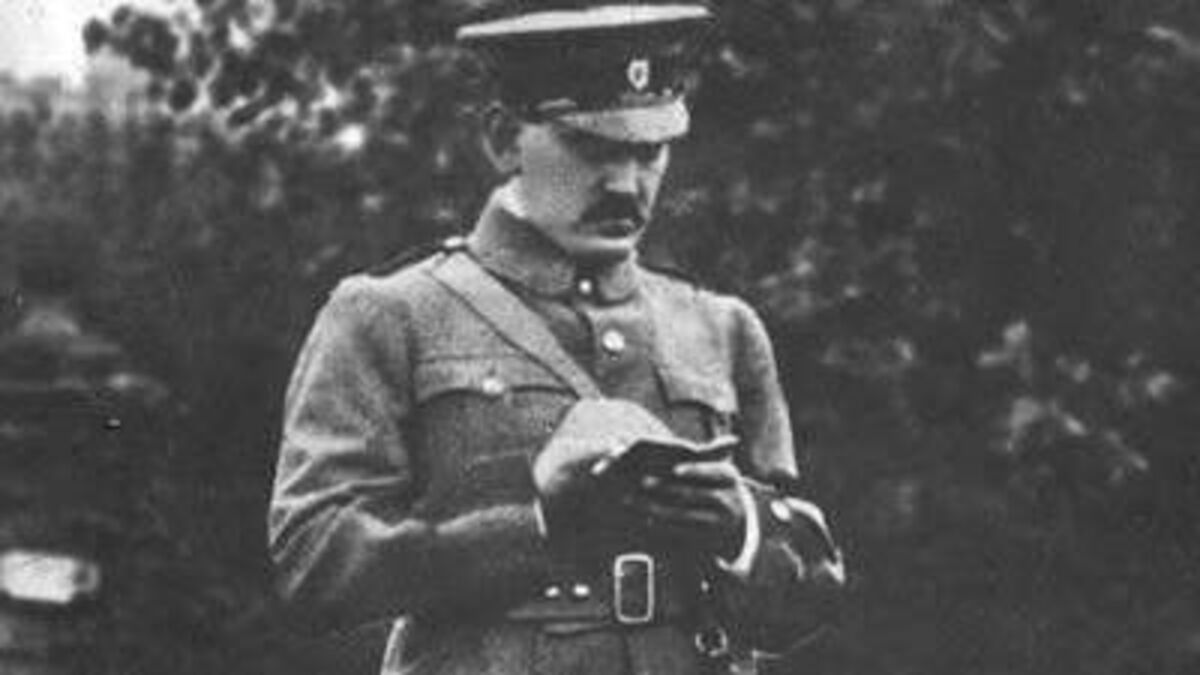
Captain Robert Monteith
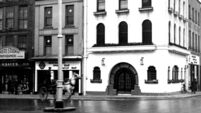
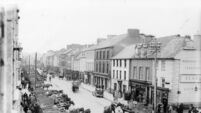
IT was December, 1916, and one of the most wanted men in Ireland was walking across St Patrick’s Bridge in Cork city, disguised as a priest.
Fr Bonaventure nursed his charge back to health, and many years later, Monteith recounted: “Much to the satisfaction of all, I pulled through.
“Fr Bonaventure was a busy man and I saw little of him during the day time, but in the evening, he came in and sat with me, bringing me all the news of the day.
“He would read to me, when my eyes were tired, and one evening lives in my memory. He stood at the head of my bed, looking quietly at the road outside, his face set and worried looking. He was strangely silent. I was afraid I had said something that annoyed him, but he assured me I had not.
“Some 30 years later, I learned the reason for the concern expressed in his face that evening. He was watching a patrol of police and military which had halted on the road, directly beneath the window!” The risk taken by the Rector was huge. Had Monteith died in the Capuchin College, or been discovered there, no religious establishment in Ireland would have been spared from continuous raids by police and military.
Monteith stayed at the college in Rochestown for a little over a month, when he made that drama- filled escape to the Cork ferry.
****** After boarding a boat to England, Robert Monteith got on a merchant vessel to New York, working on board in disguise as a fireman and coal trimmer.
Upon landing, he was reunited with his family - wife Mollie and their two daughters, who he had left in New York before going to Germany to work with Casement.
He spent the next few years in a succession of menial jobs in the city, enjoying a brief respite when Éamon de Valera appointed him organiser of the American Association for Recognition of the Irish Republic from 1920 to 1922.
Monteith then moved to Detroit and worked for various motor companies, eventually rising to the position of foreman in Ford, though he spent some years in the depression breaking up and mending roads. He retired in 1943, to a farm he had bought in Michigan.
In May, 1947, he returned with his wife to Ireland and settled in Kilcoole, Co Wicklow. de Valera tried to dissuade him from returning, stressing that “it was hard to transplant the oak at 70”, and he proved prescient.
Monteith stayed six years in Ireland and saw Casement’s boat retrieved at Banna Strand in 1950.
That year, while I was at Boarding School at Rochestown College, Captain Monteith visited. He addressed all 100 students in the college dining room, and had dinner with us, as a guest at the priest and lay teacher’s table.
He spoke of his time on the run in Cork 34 years earlier,and the role Rochestown College had played in his escape.
By now, Monteith’s health was poor and he was disillusioned by the reception to his book, Casement’s Last Adventure. He returned to Michigan in 1953 and died there on February 18, 1956.
A monument to him and Casement, erected on the 50th anniversary of the rising in 1966, stands at Banna Strand. Robert’s papers are in the Florence Monteith Lynch collection in Ryan Library, Iona College, New York, and contain his diary for 1915/16.