Recalling my summertime stint at Cork Irish College
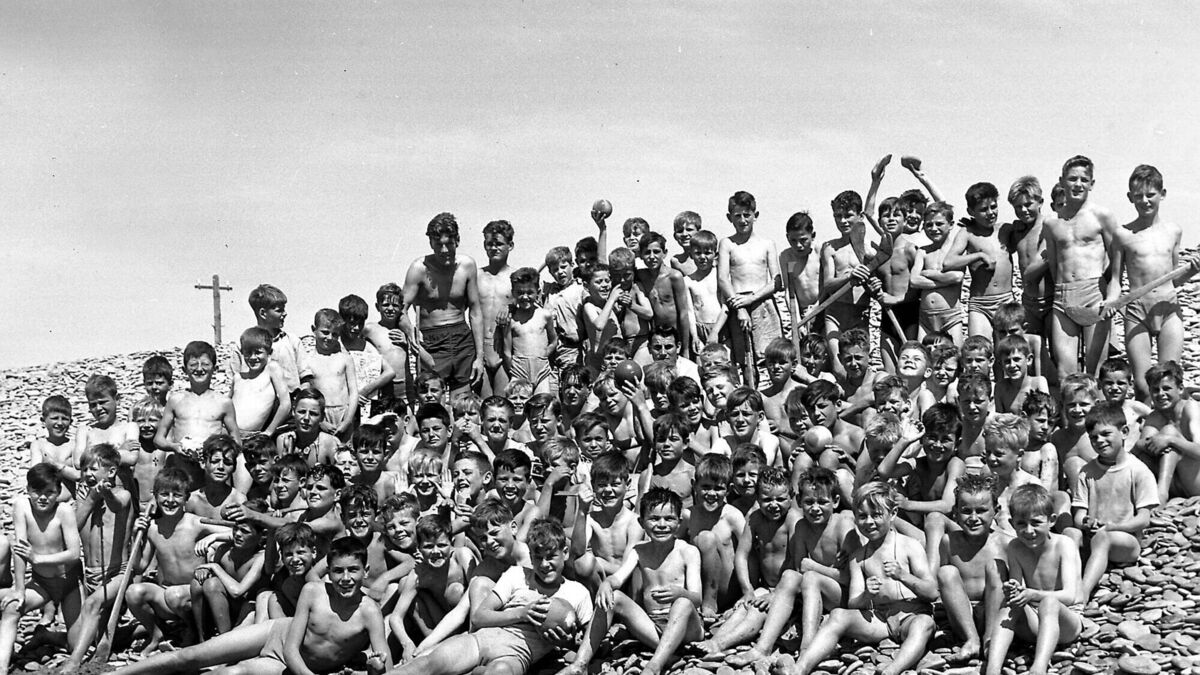
Boys attending the Irish Summer College at Garryvoe, at the local beach in August, 1956
WE really are into one of those summers of memory, aren’t we? It hardly seems possible, but we have had weeks of clear skies, sunshine, and wonderful warm weather (while, strangely enough, Mediterranean holiday locations like Spain and Italy have been huddling under downpours).
It won’t continue of course (after all, a week without rain here is considered a severe drought), but it has been great while it lasted.
Summer holidays of childhood were always sunny, it seems. Although, if you think hard, you can probably remember those rainy times when you had to stay indoors at the guest house and play with an aged pack of cards or a battered Ludo set, or find a way to survive in the tent when raindrops kept falling on your only dry clothes.
Why anyone ever went camping in our unreliable climate before the advent of luxuries like groundsheets, anti-drip covers, and folding beds, is a mystery, but we did it, and survived (albeit with a lifetime of hatred thereafter for anything connected with canvas and hard ground).
Richard Mills, growing up in France, always camped with the boy scouts each summer in those endless French forests which stretch for miles. There, however, they didn’t even consider something as bucolic as sleeping on the ground. Platforms were erected right up in the trees, and bracken was piled on these platforms to make the most comfortable of beds.
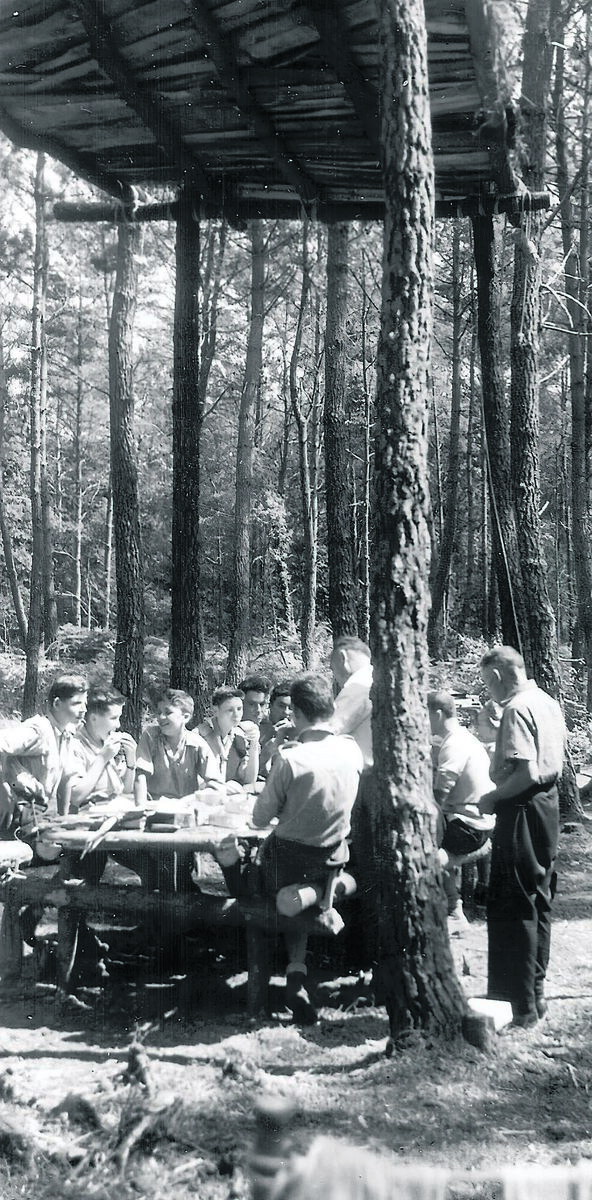
It is something one would envy Richard for, that experience of lying awake on a summer night gazing up into the starlit sky above and listening for the stealthy movement of animals below.
Anyone in Cork who possibly could, went to the sea at some point during the summer: Robert’s Cove, Rocky Bay, Crosshaven, Youghal, Ballycroneen, Ballybrannigan...
Some had buses to take you there, one at least had its own train line, and others could only be reached by bike or car.
And what were the things that you most remember doing? Making sand castles, damming streams, catching crabs from the rocks? Remember that first rubber ring or Li-lo to encourage you to swim?
One thing we all remember vividly is that the sea was always freezing in this northern part of the Atlantic. And wasn’t it a pleasant surprise in later years, on venturing abroad, to discover that the ocean isn’t always cold, that it can in fact be as warm as, or even warmer than, dry land?
It spoils you forever when your earliest memories are of shivering knee-deep and trying to get up the courage to plunge below the icy waves.
Yes, summer was always the time for holidays, but also for suitable summer clothes. Short-sleeved T shirts, shorts, cotton frocks... Remember those light cotton frocks run up by your mother or a helpful neighbouring dressmaker from a length of fabric seized in the summer sales?
And sandals! We got Clark’s brown sandals from one of the dignified shoe shops in Cork, like Grants, if family finances could run to those. If not, then ‘rubber dollies’ or even plastic shoes were purchased, usually from one of the smaller shops on the Northside. Anything as long as they could survive the adventures of summer yesteryears, from mud and sand to endless soakings in sea or stream.
The sensible shoes of the school year were joyfully abandoned until Nemesis in the autumn.
Some of us were sent to stay with relatives in the countryside and got involved in the seasonal work of hay-making, learning to milk, and collecting eggs. Such activities brought us back in touch with the rural yearly round that our grandparents would have known from babyhood.
But there was another, less happy, more feared option for those precious summer days of freedom from the classroom - the Irish college.
How many of you can remember, having only just raced out the school gates, being packed off to yet another seat of learning, and this time with far more rules because it was in effect boarding school?
Our parents might have thought it was the best thing for us, since a good working knowledge of Irish was becoming more and more a requirement for any future job, be it in local government or RTÉ. In fact, you couldn’t pass your exams unless you had passed Irish, which was a fact resented by many.
One can see the government’s point in making this rule, but it didn’t make for an instinctive love of our native language, not back then. Now that we are older, we actually value those ‘cupla focail’, but we were a long time learning their pricelessness.
Eileen Barry hated her experience at Irish college: “I don’t know why I was sent there, back in ’63; Perhaps it was because I wasn’t great at Irish, and the comments on school reports often said ‘Could do better’ or ‘Eileen must try harder’.
Anyway, it must have been the beginning of July that year that myself and two pals from school (Madge and Ger) ended up in my father’s car, three bicycles tied onto the top, heading for Ballingeary.
She was quite shy back then, says Eileen, and the thought of not only extra school, but of living in a house with strangers was beginning to look very daunting.
“Well, we arrived at Toureen Dubh, about three miles west of Ballingeary, to a nice big farmhouse (Twomey’s). Met by the Bean a’ Tí, we three were told to put our bags into our bedroom, and to come back later for tea, when everyone else would have arrived.”
Imagine Eileen’s horror when, on opening the door to the bedroom, they saw seven double beds, with girls aged 12 to maybe 14, already throwing their bags on the beds and chattering.
“There was probably less than 3ft of space between each bed. My two pals dived for the top corner bed in the room, which was vacant, leaving the only other space for me, in the next bed - already occupied by someone I didn’t know... This was probably the reason I slept right at the edge of the bed, practically falling out on the floor, for the whole two weeks. I seem to sleep that way still!
“We had a couple of hours to kill before the official start of our two-week stint, so my parents collected a few eatables in a local shop, and brought us down to Gougane Barra. It felt like the last couple of hours of freedom!
“Never did shop bread and shop luncheon roll taste so good, along with a billycan of tea from a little fire that my father made. This was at a place in Gougane a bit east of the lake, and higher up, which he called ‘The Nose’. (Iif the Nose is dripping, then rain is coming”.)
There a a small stream there which we paddled in and sang, almost forgetting our fears, until eventually we had to make our way back...
Mealtimes, recalls Eileen, were bedlam. “Huge, long tables with what seemed to be about 40 girls, all chattering in Irish (we weren’t great at oral Irish back then in our school).
“On to our bikes in the morning and a three-mile trip for classes in the Ceárd Scoil. I didn’t like the lessons, my Irish not being great, but the one thing I loved was when the teacher (Séan Ó Sé?) decided to teach us Irish songs. Peigí Leitir More was one I remember to this day, and of course, An Poc ar Buile.
Eileen adds: “For the first few days, we cycled ‘home’ for lunch, then cycled back for organised games - I remember rounders, but there probably was football or camogie as well?
“But the organisers decided that it was a bit far for those of us staying out of town to come back in the afternoon, so we were granted a reprieve! We were allowed to stay around our Tí, and cycling was allowed, but only as far as the junction to Gougane Barra. No visits to Gougane or to the Pass of Keimaneigh. Strictly out of bounds!
“Of course, we went to the junction, made sure no one was around, and cycled furtively and as fast as we could, past the Tailor and Ansty’s little house, down to Gougane, and on to the island. Peace and quiet there.
I wrote home, according to my mother, nearly every day. Probably telling her I hated it, and I definitely remember asking could she send some more bandages, please? (I had a habit of falling off my bicycle or skidding on a bit of gravel so I regularly had grazed knees or cut toes.)
“Some of the girls were friendly, especially the ones who were a bit older than us (maybe 15 years olds) and those who had been to Irish College before. But we three kept to ourselves mainly and rarely went to the ceilidhs at the school in the evening.
“I remember a little ditty people would write in autograph books, which were all the rage, it went... ‘Don’t kiss boys at the Ceárd Scoil gate, Love may be blind, but O’Criodáin ain’t! (He kept an eye on things, especially after the ceilidhs, so I guess he was the Principal).”
Eileen says feelingly that she was never so relieved as when she saw her father’s old car arriving to take them home. “We got the freedom of Cork again!”
Once was quite enough, she said, and she didn’t go back to the Gaeltacht until the end of her first year in UCC, in the summer of 1967.
“Back then, under those same government rules, and I suppose the university’s too, all first years had to take an oral Irish class once a week, usually with Padraig Tyers. I enjoyed my first year in the Science department to the full, and didn’t always get to the Thursday afternoon at 4pm class.
“I mean, everyone was finished lectures, and meeting up in the Talk of the Town, or arranging where to go that night - Clancy’s, The Rob Roy, a dance in Shandon Boat Club and so on.
So, eventually I got called into Tyers’ office and was told that, unless I kept attending classes, I might not pass my exams.
Eileen adds: “A good friend who was from a Gaeltacht area (Ballyvourney) had heard that there were ‘scholarships’ to the Dunquin area (two weeks free bed and board, no classes), and that it would be a good idea if I went in for an interview for one of these scholarships, because it would show I was willing to learn (Thanks, Jim!)
“It worked. Tyers seemed pleased, I got my free two weeks, and so did half of the First Science class of ’66/’67.”
It was one of the best times she has ever had, affirms Eileen. “We all chose the fortnight directly before the start of Autumn term (UCC didn’t start classes until nearly mid-October back then). I learnt more Irish then than I ever did in ’Geary, went to sing-songs and ceilídhs, danced sets in Dunquin, Muirioch, Ballydavid.
“We often crept back to our house (I think the Post House, Muirioch?) late at night. The back door was left open for us, and a supper left on the kitchen table. We were looked after so well there, myself and a girl called Sheila Lawton (where is she now? I think she became a Science teacher in Clonakilty...)
Anyone else with memories to share? Email jokerrigan1@gmail.com or leave a comment on our Facebook page: https://www.facebook.com/echolivecork