Cork Views: How bond between Church and State fell apart
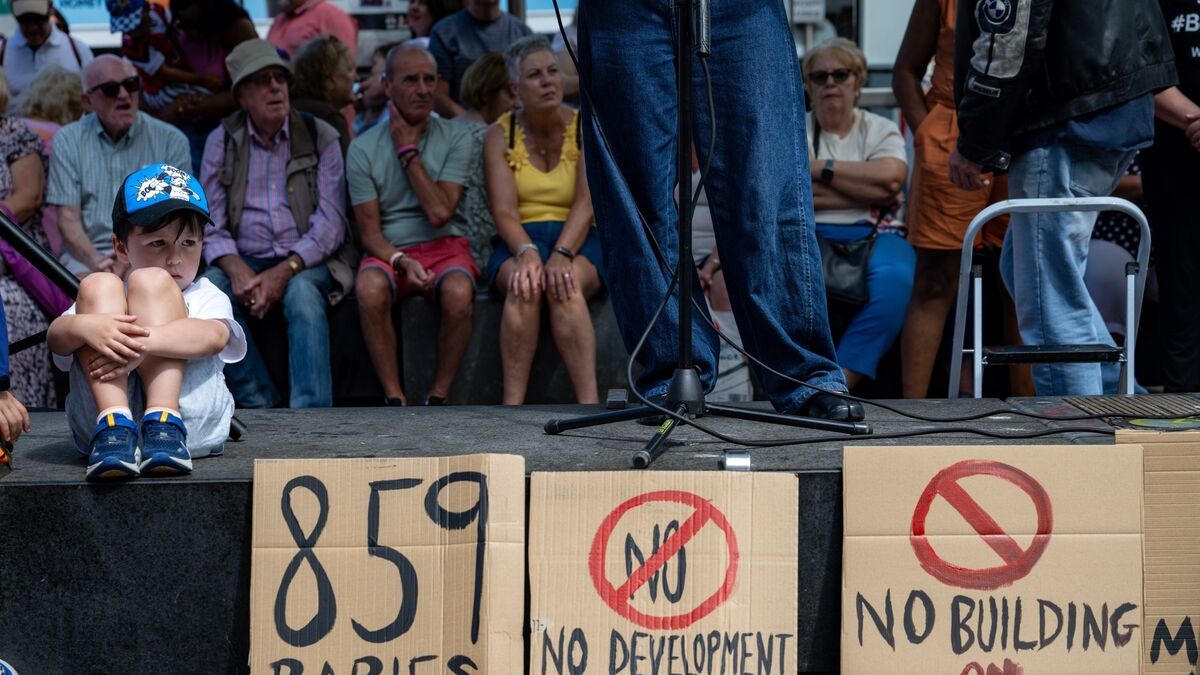
A row over the former Bessborough Mother and Baby Home site in Cork recalls Ireland’s underbelly. Picture: Chani Anderson
The controversy over the future of the site of the former mother and baby home in Bessborough is a reminder of the cosy collusion between Church and State that characterised the dark underbelly of Irish life since independence.
The anger of survivors at plans to build on this site in Blackrock bears its own sad testimony to what has been called the “republic of shame”. History can’t be erased, but the hurt caused in the past ought not to be needlessly perpetuated.
The story of Church-State relations in this country is a multi-layered one, laced with controversy. And while that story was well told up until the end of the 1970s, the “dark underbelly” - of which the Magdalene laundries, mother and baby homes and industrial schools (such as Greenmount in Cork and Artane in Dublin) were prime examples - didn’t feature prominently.
That didn’t really change until another scandalous episode - the shocking revelations of the sexual abuse of children by members of the clergy - forced its way into the public domain and resulted in the hugely-damaging Murphy, Ryan, Ferns, and Cloyne Reports.
Prior to that, Catholic Ireland was stunned when the Irish Times, in a front-page story in May, 1992, broke the news that the Bishop of Galway, Eamonn Casey, had fathered a child in secret with an American woman named Annie Murphy.
Journalist Mary Kenny, in her 1997 book Goodbye To Catholic Ireland, caught the reaction: “Among the best-loved of these new-style, outgoing, social-justice, television-friendly clerics was Father Eamonn Casey, later to be the Bishop of Galway, later again to be at the centre of a sex scandal which shocked and scandalised Catholic Ireland when it was revealed that he had had a mistress, fathered a child, and paid off mother and son with diocesan money”.
For many older Catholics in particular that tawdry episode was an eye-opener. For younger Catholics it was a turning point. But the power and prestige the Catholic Church had enjoyed since independence in 1922 had been shaken long before then.
In my new book, Forbidden Ireland, I set out to tell that story, to bridge the gap in the Church-State narrative in the Republic - a gap during which the Eamonn Casey-Annie Murphy scandal paled into insignificance against the background of a spate of new and large-scale sexual scandals and cover-ups. It was during this period that the tectonic plates underpinning society in this country began to shift decisively.
This is the story of how the Irish State moved from a cosy symbiotic partnership with the Catholic Church since independence into open opposition and even segued into an antagonistic relationship.
Nobody has painted the background picture to all of this better than Mark Hederman, the former abbot of Glenstal Abbey in County Limerick: “Throughout most of the 20th century in Ireland, the Catholic Church was involved in a symbiotic structural entanglement with the Irish Free State as this reality unfolded socially and politically,” he said.
“As the song says, both went together like a horse and carriage. This seemed normal and almost providential to the majority of Ireland’s citizens for the first half-century of our existence.
“Then, very suddenly, in a period of 20 years, more or less, the horse collapsed or the carriage crumbled, whichever way you choose to look at it; the Catholic Church melted away. How could this have happened?”
Multiple dramas were played out before it did happen. The emergence of an antagonistic State followed a long and mutually fruitful ‘horse-and-carriage’ period dating from 1922.
The famous anti-Vatican speech in 2011 in Dáil Éireann by the then Taoiseach, Enda Kenny - rightly described as a “philippic” and leading to the closure of the Irish Embassy to the Holy See - was the most dramatic example of this antagonism.
The evolution of State-versus-Church dynamics began in 1951 with the confrontation between Archbishop McQuaid and Health Minister Noel Browne in the ‘Mother-and-Child’ crisis. McQuaid won - but this was, in the words of broadcaster and historian John Bowman, a “pyrrhic victory”.
My book title derives from the fact that in a number of key socio-sexual spheres, the Church suffered a series of morally damaging setbacks, beginning with what was traditionally “forbidden” - contraception, then homosexuality, divorce, abortion, and same-sex relationships.
The Irish bishops had embraced a Maynooth version of the domino theory - their fear was that if the link between sex and procreation was broken, then “anything goes” - the floodgates would open.
The Humanae Vitae controversy had serious implications for papal authority, and this had ripple effects throughout the universal Church. In Ireland, the moral monopoly the Church had enjoyed since independence had started to crumble long before the publication of the Ryan and Murphy Reports in 2009.
Forbidden Ireland traces seven decades of Church-State conflict and the social transformation that followed. The story goes from the shadowed realities of the mother and baby homes and Magdalene laundries to the repeal of the Eighth Amendment. At the heart of the story are the women who refused to remain silent. Their courage forced Ireland to confront itself and change.
Forbidden Ireland: Church And State 1951 To Present Day, by TP O’Mahony, is published by Mercier Press at €16.99.

App?