No Mow May... an all-you-can-eat buffet for our insect friends
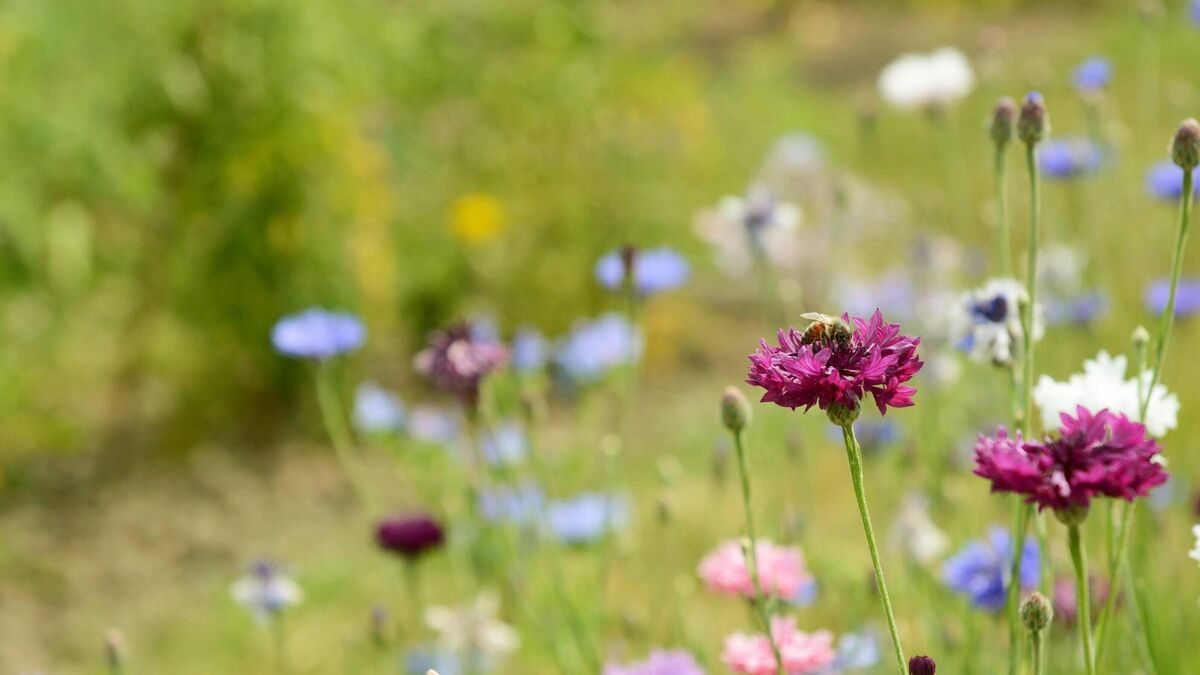
In No Mow May, enjoy knowing you are cultivating a gourmet restaurant for bees in your back garden, says Kathriona Devereux
It won’t require major investment, bank loans or planning permission. You can do it without any knowledge of food hygiene, recipes, or hospitality. It requires zero effort, yet has profoundly positive effects on the wellbeing of our beautiful planet.
It’s No Mow May, and by not cutting your grass for this crucial month, you will allow the native wildflowers like dandelions, clover, and bird’s-foot-trefoil to emerge and feed our pollinators.
These creatures are a vital part of the food web, and they need lots of pollen and nectar from early spring to autumn.
‘Well-kept’ gardens have long been a symbol of respectability, but May is the month to shrug off the mindset of Victorian colonialists that large expanses of lawns represent wealth and prestige, and instead allow your garden to become rebelliously wild and messy.
By shedding this desire for ‘tidy’ gardens, we allow them to become a fantastic source of food and shelter for our pollinators.
In the past, if you were posh enough to have a patch of land that you didn’t need to grow food, you really were the hoi-polloi.
After World War II, the expansion of American suburbia copper- fastened the notion that a neat garden is a sign of care.
Paradoxically, a garden that is filled with native flowers and places for creatures great and small to feed and live is a genuine sign of care for our precious planet.
To challenge our preconceptions of what gardens ‘should’ look like, No Mow May offers the perfect opportunity.
There is a wonderful series on TG4 at the moment called which sees Mary Reynolds, a reformed garden designer turned wild gardener, help homeowners turn their sterile gardens into havens of biodiversity. Reynolds advocates for turning our patches of land - however big or small - into ARKs - Acts of Restorative Kindness - for nature.
She recognises that people need their gardens to sit in, entertain, and play games, but she designs lush and abundant gardens beyond the standard patio, grass, and a few shrubs. A blank field in Donegal transformed with riotous wildflowers, sprouting willow tunnels, sheltered and leafy fire pits, and a standard Dublin suburban back garden into a stunning magnet for creatures great and small.
The series is a beautiful reminder that with a bit of initial effort - digging up grass, planting native seeds and trees - a patch of land can be transformed forever.
Every Tarmacadamed driveway, every metre of artificial grass, every concrete yard is somewhere that nature has been squeezed out.
One third of our wild bee species are threatened with extinction, mainly because we have drastically reduced the amount of food and safe sites that support them.
A house in my neighbourhood was recently renovated. I watched dismayed when part of the ‘improvement’ process involved digging out a mature and established hedge.
It provided fantastic shelter and privacy in the garden from the busy road nearby. It was also undoubtedly home to thousands of insects and invertebrates, it cleaned the air, it provided cover for birds.
Soon after the house was re-occupied, the owners installed a couple of trellises peaking over the exposed wall, and lately, I noticed artificial plastic creepers threaded through the trellises. I suspect the owners don’t like looking at a bare brick wall and are trying to replicate the privacy and greenery that nature provided for free.
The destruction of the hedge provides the perfect mini-example of our warped relationship with nature.
For every re-wilded garden, there is a neighbour digging out a hedge or rolling out artificial turf in pursuit of convenience and low maintenance, even though they become annoyances for different reasons.
Take artificial plastic grass. It’s sold as an alternative to mucky lawns - somewhere where kids can play all year long. A lawn that doesn’t have to be mowed or minded. But what we lose from such ‘conveniences’ is huge.
Far from the low maintenance dream it promised, the plastic turf was unpleasant to walk on, none of the soft feel of real grass. Summers brought a plague of bluebottles, apparently drawn to the synthetic surface in a way she never got to the bottom of.
With three young children, meals and snacks outdoors were a pain. Every crumb, smear of ice cream, or dropped morsel sat stubbornly on the surface, demanding cleaning and even hoovering on occasion! Real grass would simply have absorbed any spillages.
Autumn was no better, fallen leaves accumulating on top rather than gently breaking down.
And some of the small joys of playing outside were also impossible - no hammering in tent poles, no planting the pole for a swing ball set, no sticking anything into ground that was, essentially, a glorified carpet.
All that is before we think about how plastic grass degrades through wear and exposure to sunlight and weather into millions of shards of microplastics which pollute our soils, our waterways, and most importantly when it comes to small growing children - our bodies.
So, this month especially, keep the lawnmower quiet, trim the edges if you want to signal to neighbours that the long grass is intentional.
Enjoy knowing you are cultivating a gourmet restaurant for bees in your back garden.
And whatever you do, resist the urge to install plastic grass!







 App?
App?


