Trevor Laffan: Am I safe here in Cyprus? War is a little too close for comfort
That’s a question many people are asking lately, and my answer is that I don’t know for certain. I really hope so... but I’m here now and I expect to stay for a while longer.
So far, I have no worries, but I can understand why people might be concerned.
A quick glance at a map will tell you that Cyprus is pretty close to the action in the Middle East.
The island is as close to Lebanon as Cork is to Dublin. Israel is only a couple of hundred miles away, and you could reach Iran in a six-hour flight from here. So, it will always be on the fringe of any military conflict that erupts in the Middle East.
Having said that, Cyprus is never likely to be a big player in any conflict. It is only about the size of Munster with a population of roughly one and a half million people.
It doesn’t present a threat to anyone, but if it did ever become a target for one of the superpowers, it wouldn’t take long to reduce this little island to a pile of rubble.
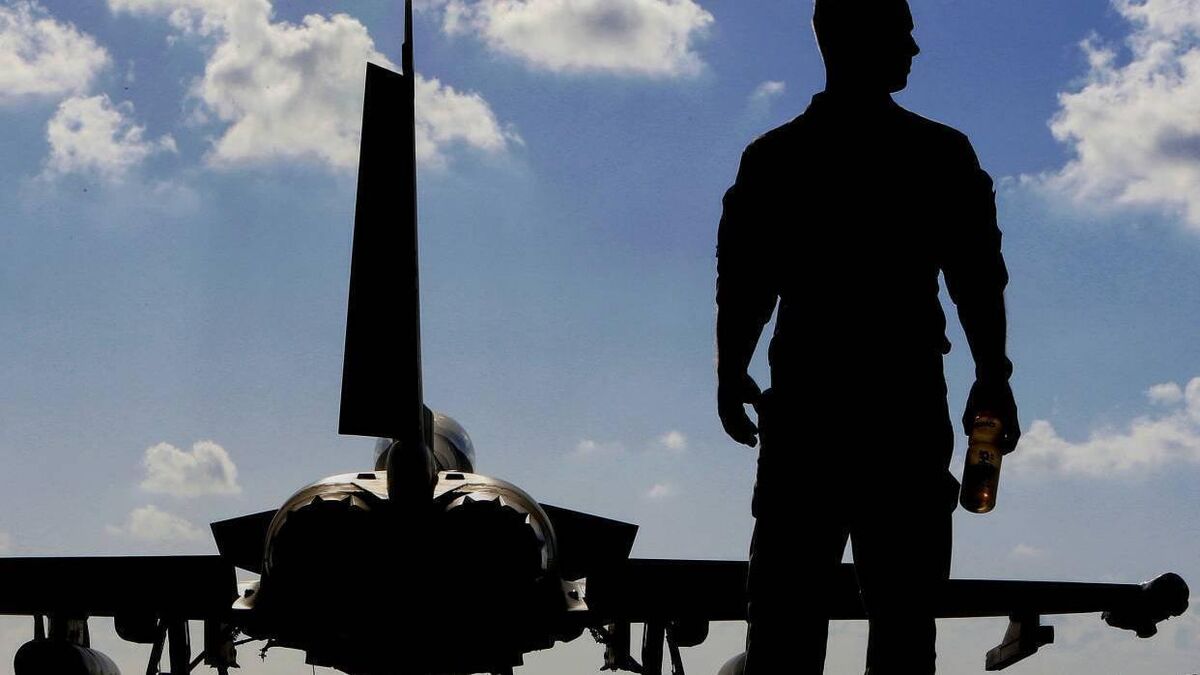
There are two British military bases here, one is in Akrotiri, in Limassol and the other is in Dhekelia, outside Larnaca. They’re known as Sovereign Base Areas, or SBAs, a legacy from the days when Cyprus was under British rule.
Cyprus gained independence in 1960, but the bases remain. They are two substantial pieces of real estate under the administration of the British Army and British Police, and are of strategic importance to the military regarding access to the Middle East.
With the American armed forces also having access to these bases, they could potentially become targets.
Cyprus is anxious to stress that it has no involvement in the widening Middle East conflict and is distancing itself from it. But, as the BBC reported in March, Cyprus was unexpectedly drawn into the aftermath of US-Israeli strikes on Iran through no fault of its own when a drone struck RAF Akrotiri. Thankfully, it caused minimal damage and no casualties.
Two further drones were apparently intercepted and destroyed.
The UK has not said where it thinks the drone that hit the base came from, but the Cypriot government suspects the Iran-backed group Hezbollah in Lebanon.
While Britain did not join US-Israeli strikes on Iran, British planes were taking part in what the government described as “defensive operations” to protect UK citizens and allies in the Middle East.
French and British reinforcements have since arrived to offer protection for Cyprus airspace, which made the news here, but apart from that, talk of the war in Iran is not dominating the conversation.
The economic fall-out from the conflict certainly is though. The Akrotiri incident has created uncertainty for a lot of tourists.
The early signs are predicting a poor tourist season and that’s disastrous for a country that relies so heavily on it.
Mid-March is the time when that industry blows the cobwebs off the furniture after the winter and prepares to open the restaurants and hotels for the summer season. It’s quieter than usual now.
There is already a steady call for the government to introduce support measures for those working in the hospitality sector, many of whom have not been called back to work.
I know of some seasonal workers who would normally be receiving calls about this time, but they have been told they are not required for the moment.
There is some chatter about cancelled bookings and deposits being returned.
Last year was a record-breaking one, with 4.5 million visitors to the island, but there doesn’t seem to be as many holidaymakers strolling around the tourist hot spots at present.
It’s still early in the season so there is time for things to pick up.
Another topic of conversation doing the rounds here concerns the Sovereign Base Areas. Some feel their presence on the island is inviting trouble.
The events of the past few weeks have restarted debates about whether the bases should be here at all.
Last week, President of Cyprus Nikos Christodoulides said that when the conflict in the Middle East is over, he would have “an open and frank discussion with the British government” regarding the bases, which he called a “colonial consequence”.
The government has apparently sought legal advice regarding the treaty which established the bases in Cyprus. Their future is firmly on the agenda and a few weeks ago, there were protests in Nicosia, with a few hundred people demanding the British withdraw completely.
The other question though, is what happens to the SBAs if they are abandoned?
They occupy 99 square miles, or just under 3% of the island’s landmass. There are more than 10,000 Cypriot citizens within the bases, and many of them gain employment from the various goods and service providers who support them. Losing that revenue stream would hit hard.
The crisis also raises another question regarding security.
Historically, many invaders have visited Cyprus over the centuries. Would the vacant bases be a temptation for others to stake a claim for occupancy?
That’s something the Cypriots need to give serious consideration to.
The British might not be the ideal tenants, but some would say the dog you know is better than the dog you don’t.



 App?
App?


