Trevor Laffan: The importance of taking good advice
There is also good advice and bad advice, and sometimes it’s difficult to know whether to go with it or not.
The wisdom of that decision is usually only discovered with the benefit of hindsight.
Take Ferdinand Foch for instance. He was a French military officer who assumed command of the Allied forces in March, 1918, and oversaw the final hard-fought victory over the Central Powers.
After four years of brutal fighting, the desperation to restore peace was keenly felt by the exhausted troops.
Though the defeated Germans balked at the stringent terms of the treaty that ended World War I, Foch’s advice was to make them even tougher.
Believing that the Germans would soon recover to threaten France once more, he fumed: “This is not peace. It is an armistice for 20 years.”
Growing up in the mid-1850s, Thomas Edison was expelled from school for being “unteachable”. Thankfully, his mother believed in him and advised him to stick with his education, even teaching him herself at one point.
When Edison then entered the workforce, he was fired from several jobs because he wasn’t productive enough. His first thousand or so attempts at getting the light bulb to work were failures.
Yet, despite all of his defeats, Edison never gave up.
It’s just as well Thomas wasn’t like me, or we might still be living in complete darkness. I’m more of a supporter of the Homer Simpson philosophy - if at first you don’t succeed... give up.
Patience wouldn’t be my strongest virtue and I’m not great at listening to advice either.
I remember my father advising me when I started my life in An Garda Síochána, to keep a diary, but of course I didn’t do that, which was a big mistake. It would have been a huge resource for me now for recalling yarns and anecdotes from my working life.
Unfortunately, my memory is rubbish so all I’m left with are the odd bits that pop into my head. I still regret not taking his advice.
There are other people though who do appreciate the importance of receiving the best advice, like lawyers for example.
Saul Ewing is a large law firm in Philadelphia, USA, which prides itself on giving the best advice to its clients.
They ran an advertising campaign with four ads, and each featured several ‘historic’ characters and the bad advice, they imagined, the lawyers may have given them, resulting in disaster in each case.
For instance, one of the ads asked, “Will you have the right counsel when you need it?” Underneath was a photo of General George Custer and a quote from an imagined advisor at the Battle of Little Big Horn. “General Custer,” the quote read, “I say we attack. What’s the worst that can happen?”
In addition to Custer, Saul Ewing invited the public to consider the bad advice the gatekeeper at Troy may have received when the wooden horse arrived at the front gate. “Look everyone, a present from the Greeks. Let’s open the gates.”
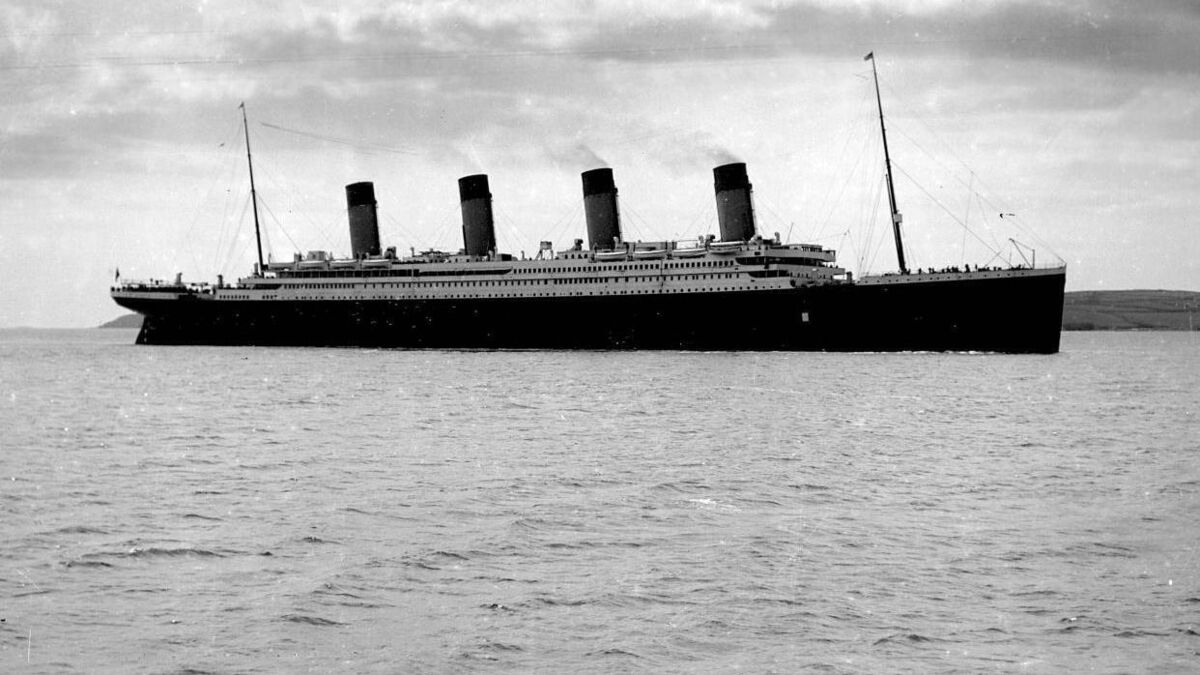
The captain of the Titanic could also have been the recipient of bad advice, another ad explained. “Full steam ahead, Captain, it’s clear ahead.”
The campaign also imagined how the chief architect of the Tower of Pisa could have been advised: “In my opinion, this is a rock-solid spot to build the new tower.”
The advice could have been given to Galileo, “Don’t waste your time studying the stars. They all look the same to me.”
That was a light-hearted take on the subject, but sometimes, ignored advice can have fatal consequences.
David Bernays and Charles Sawyer tried to save the residents of Yungay, Peru from the huge avalanche that completely destroyed the town in 1970.
American scientists exploring the region in 1962, they were climbing Mt. Huascaran when they noticed a lot of loose bedrock under a glacier.
The pair knew this region was prone to earthquakes, so they tried to advise the town that a deadly avalanche could be on its way.
The government was so outraged by Bernays’ and Sawyer’s warning that they ordered the scientists to take it back or go to prison.
Bad advice can be costly in other ways too.
In 1984, a guy in America had a friend who worked for GTE, servicing small relay stations around Redmond, Washington. The friend suggested he should buy stock in a little-known company that was one of his clients. He took his advice and bought 200 shares.
He watched the stock go up to around $31 a share and then drop again. Then it would go back up and drop again.
He remembered his old accounting professor telling the class that if they ever had a stock that performed that way, they should dump it. So that’s what he did.
This man sold his stock in Microsoft at under $31 a share. He’s afraid to look at what it would be worth today because he doesn’t want to be sick.
Some advice is better off ignored completely, particularly when it comes to dealing with bears. These animals can be unpredictable and dangerous so knowing what to do when you cross paths with one could mean the difference between surviving or becoming a statistic.
It’s not as simple as just staying calm either. Your next move could be your last if you follow the advice of one genius who suggested that if you should happen to meet a bear and don’t have time to run away - give him a hug!







 App?
App?


