Catherine Conlon: Clock change is an opportunity to break bad habits
As the clocks spring forward this weekend, CATHERINE CONLON takes a look at the importance of daylight to our body clock and says we should use the change as an opportunity to stop break our habit of scrolling first thing each day.
Catherine Conlon: Clock change is an opportunity to break bad habits

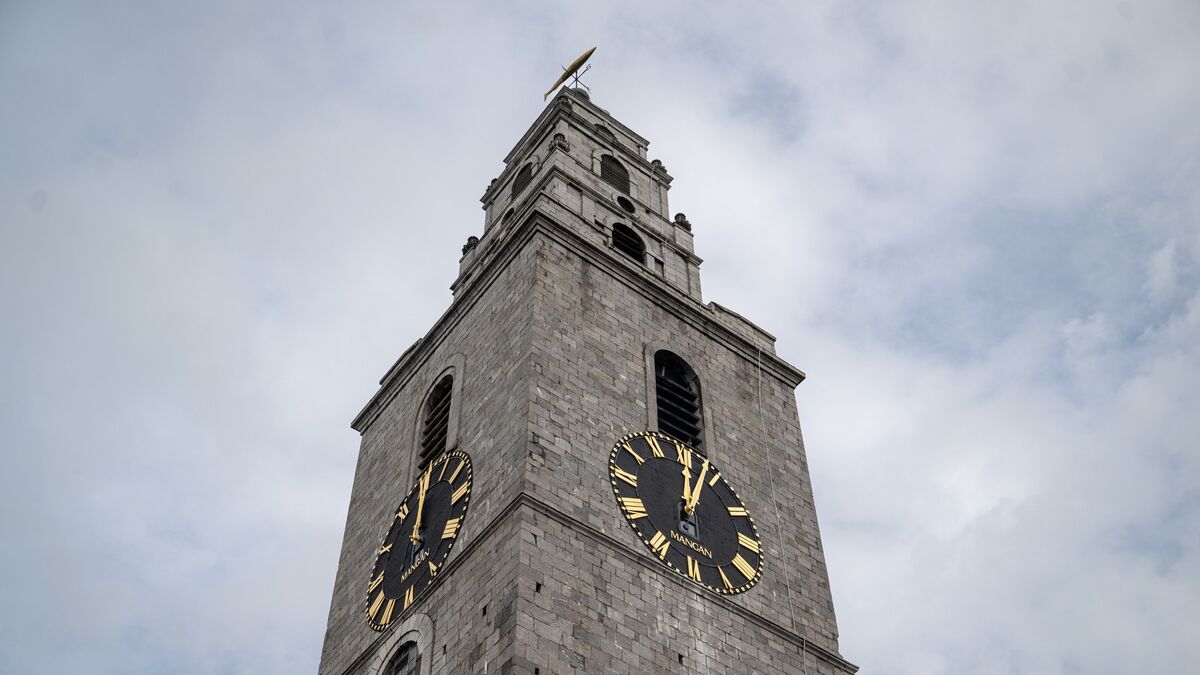
The gilded new clock faces at Cork's iconic Shandon tower, which were unveiled last month. Picture Chani Anderson

How many of us wake up in the morning, and immediately reach for our phone? Checking the news, social media, the weather, crosswords, games?

Before we know it, 30 minutes have passed. At weekends, or without work or appointments, it could be a lot more…

The clock going forward this weekend is an opportunity to break the habit and acknowledge the benefits of early morning sunlight that acts like a timer on our body clock - and step into the day.

Every morning, your brain is trying to answer a simple question. What time is it? It does not look at a phone or a clock. It looks at light. When sunlight enters your eyes, it activates a small but powerful area in the brain called the suprachiasmatic nucleus. This is the brain’s master clock that runs your entire system.

Body clock

Once the clock is set by morning light, it co-ordinates all the complex interconnected body systems that make you feel awake, alert, and ready to face the day.

Researchers have been identifying the degree to which our mood, metabolism and cognitive abilities vary over a 24-hour day, while disruption of the body clock is being implicated in a range of health conditions, including type 2 diabetes and cancer.

The US Institute of General Medical Sciences explains how the system that controls our in-built sense of time works. The body clock is controlled by proteins that are maintained by thousands of genes that switch on and off in a specific order. All of these peripheral body clocks in cells and tissues are synchronised by that master switch in the brain - the suprachiasmatic nucleus (SCN).

What controls the suprachiasmatic nucleus? Light hitting the eyes controls the release of melatonin in the morning. In the evening, when the light begins to fall, your master clock tells the brain to release more melatonin causing you to feel sleepy.

And it’s not just sleepiness that the body clock controls. Researchers have begun to identify the degree to which our mood, metabolism, and cognitive abilities vary over a 24 hour period, while disruption of the body clock is being implicated in a range of health conditions.

Understanding our circadian rhythms means understanding the natural oscillations in our tissues or the literally trillions of clocks ticking in every cell of our bodies.

Body clock to promote metabolic health and prevent disease

A review paper in Clocks & Sleep (2023) summarised the interplay between mealtimes, circadian rhythms, hormones and metabolism. The researchers outlined the importance of synchronisation between the body’s central and peripheral clocks and optimal metabolic function. The research highlighted the importance of aligning mealtimes with the body’s natural rhythms to promote metabolic health and prevent disease.

“Circadian hormones, including melatonin and cortisol, interact with mealtimes and play vital roles in regulating metabolic processes,” the researchers concluded.

As the clocks spring forward this weekend, there is a temptation to lie in and catch up on a lost hour of sleep. There is also an opportunity to reset your relationship with light at the start of the day, says Catherine Conlon.

Understanding the mechanisms of central and peripheral clock synchronisation, including genetics, sleep duration, and hormonal changes, provides valuable insights for optimising what to eat and how we eat. This knowledge is a key contributor to overall health and well-being.

All those late-night snacks that are out of sync with our peripheral and central circadian clocks are potentially impacting our metabolism in more ways than we realised.

The emerging evidence suggests that the old adage: “Eat breakfast like a king, lunch like a prince, and dine like a pauper”, may actually be rooted in science.

What happens when you ignore your body clock?

When people ignore their body clock, either deliberately or because of the demands of work or family or social commitments, the signals the timing is off can show up in different ways; poor or broken sleep; tiredness even after rest; cravings for sugar or alcohol; weight gain; or just feeling “wired but tired”.

Most people try to fix sleep by going to bed at a regular time each night. But the recent evidence suggests we should start by fixing sleep in the morning.

Morning sunlight raises cortisol at the right time and starts the countdown to melatonin release later in the day. All of this strengthens your natural circadian rhythm.

The opposite happens when light exposure is poor. Sleep quality drops. Energy slumps. Dopamine levels fall. Cortisol levels fall. The brain compensates by pushing you under the covers or onto the couch; driving you towards sugar or alcohol to pick up your energy. This is not laziness or lack of discipline - it’s your body pushing you towards ways to correct an energy imbalance.

Sitting beside a window helps, but it is not enough. Outdoor light is more intense, broader in spectrum, and more effective at sending those vital signals to the brain.

As the clocks spring forward this weekend, there is a temptation to lie in and catch up on a lost hour of sleep. There is also an opportunity to reset your relationship with light at the start of the day. Resist the impulse to scroll through your phone, and instead step outside into the morning. It could be a coffee outside, an early morning walk with the dog, and on weekdays a walk or cycle to work or with the kids to school.

If you make one change on Sunday spring, step outside early. It will calm your mind, boost your energy, balance your metabolism, and help you sleep soundly when darkness falls.

  • Dr Catherine Conlon is a public health doctor in Cork

More in this section

John Arnold: Ronnie had gene for speed... gift of gab runs in my family John Arnold: Ronnie had gene for speed... gift of gab runs in my family
Boy with bicycle is waiting at the traffic light of a big road We must build Cork streets so children use them
For sale sign in yard of house Áilín Quinlan: Burning issues... a chat in the sun shed light on housing crisis

Sponsored Content

Where tech meets care: At the forefront of IVF Where tech meets care: At the forefront of IVF
10 minutes with Shannon O’Sullivan of Corlann 10 minutes with Shannon O’Sullivan of Corlann
10 minutes with Jason Cooke of Cheshire Ireland 10 minutes with Jason Cooke of Cheshire Ireland
Contact Us Cookie Policy Privacy Policy Terms and Conditions

© Examiner Echo Group Limited

Add Echolive.ie to your home screen - easy access to Cork news, views, sport and more