Kathriona Devereux: It’s not ‘OK’ to speed: Motorists must park their bad behaviour
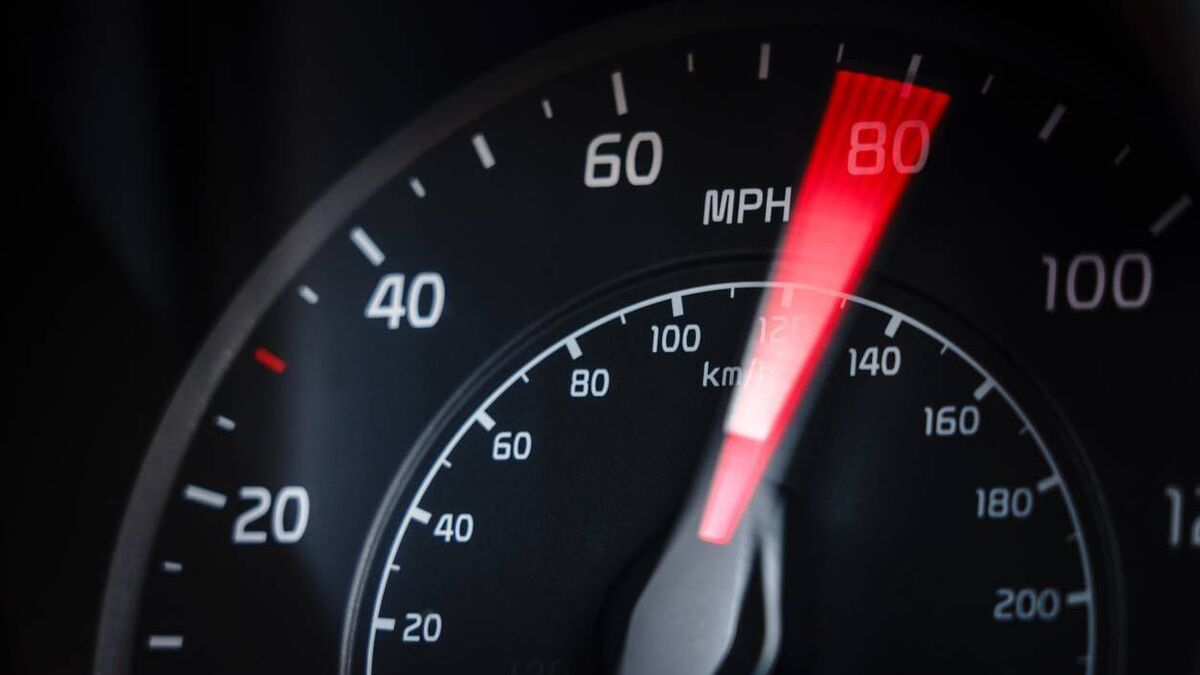
Just a small reduction in speed can be the difference between life and death if an accident happens.,
An RTÉ radio discussion with a road safety specialist, a forensic collision investigator, and a behavioural scientist stopped me in my tracks last week.
The conversation occurred against the backdrop that as of March 20, 38 people have already died on Irish roads this year. Those lost lives, six more than the same period last year, demand we seriously examine what is happening on Irish roads.
We have normalised speeding
Suzanne Meade, a road safety specialist with Transport Infrastructure Ireland (TII), laid out sobering Irish research. In observed speed surveys on 50km/hr roads, 40% of people are exceeding the speed limit.
You’ve seen the type - you might be one yourself. Eager to get to your destination, willing to take some risks to shave a few seconds off your travel time.
Their impatience puts everyone around them at risk and achieves nothing. They are usually still sitting at traffic lights as the bus pulls up behind them or the cyclist alongside them.
In the countryside, we see similar behaviour but at far more treacherous speeds. TII research found that 28% of drivers on 100km/hr roads break the speed limit. Drivers pushing their speedometers on roads barely designed for 80km/hr speeds. Overtaking on continuous white lines or corners. Taking risks that no other road user around them has consented to.
The physics of “a little” speeding
Other attitudinal research found nearly a third of Irish people think that it’s OK to speed over an extra 10 kilometres per hour in a 50km/hr zone. That it is fine to drive at 60 or more in a 50 zone.
Most of those people clearly do not understand what “a little” speeding means in practice.
Forensic collision investigation expert and former Garda Tony Kelly explained if you are travelling at 60km/h in a 50 zone and a pedestrian steps out, and your reaction time is one second, the speed at which you are likely to hit that person is around 46km/h.
However, in the same scenario, travelling at the speed limit, the impact speed drops to about 25km/h - just half the force of the speeding car. So, a “little” speeding carries an enormous price if a pedestrian or anyone else gets in your way.
Too many cars
Since 2018, the number of vehicles on Irish roads has grown from 2.7 million to over 3 million. More cars, bigger cars - SUVs that give their drivers a false sense of invincibility while posing greater risk to everyone else outside them.
Behavioural scientist, Pete Lunn, articulated what many of us probably feel intuitively. Congestion is not just an inconvenience, it is a psychological trigger.
When people feel like they are losing time, are running late, stuck and frustrated, they become more likely to take risks.
You can see it happen in real time. A jam on the South Link clears and suddenly everyone accelerates as if they can recoup the minutes they lost.
That same frustration drives people to run red lights, use bus lanes illegally, and tailgate the driver in front.
And as one texter to that RTÉ radio show witnessed, someone reversing their car along the M11 to reach a missed exit - frustration overriding all reason.
The road is not a place for distraction
People underestimate the complexity of driving. In any urban environment, a driver is simultaneously monitoring speed, road conditions, other vehicles, pedestrians, junctions, and signals.
It is a cognitively demanding task performed inside a large dangerous machine. It demands full attention.
We think we are better drivers than we are
Some 80% of drivers in UK research believed they were above average in ability - a statistical impossibility. It’s likely that Irish drivers are similarly deluded.
When people think they are better drivers than most, they overestimate their reaction times, their vehicle control, their ability to handle the unexpected.
However, there was an irony buried in the conversation that Lunn pointed out. Publicising how many people speed can actually make things worse.
If half the country thinks speeding “a little” is normal, and that message is widely repeated, it confirms the norm. More people conclude: “Well, everyone’s doing it.”
But remaining silent and not acknowledging the scale of the issue doesn’t help either.
What next?
There is no easy way to turn the trend of poor driver behaviour.
Enforcement, education, infrastructure, and more alternatives to the car are all needed, but the solution mainly lies in drivers recognising that their individual actions contribute to the collective behaviour on the road.
The next time you edge over the limit because you’re late, or glance at your phone, or decide to push through an amber: remember that the only difference between a near-miss and a fatality is sometimes just 10 kilometres per hour.
We need to start treating road deaths as preventable catastrophes that we can all help tackle together - by driving slowly, keeping our eyes on the road, and being considerate to other road users.
Like our lives depend on it.






 App?
App?


