Is it time we had a congestion charge in Cork city?
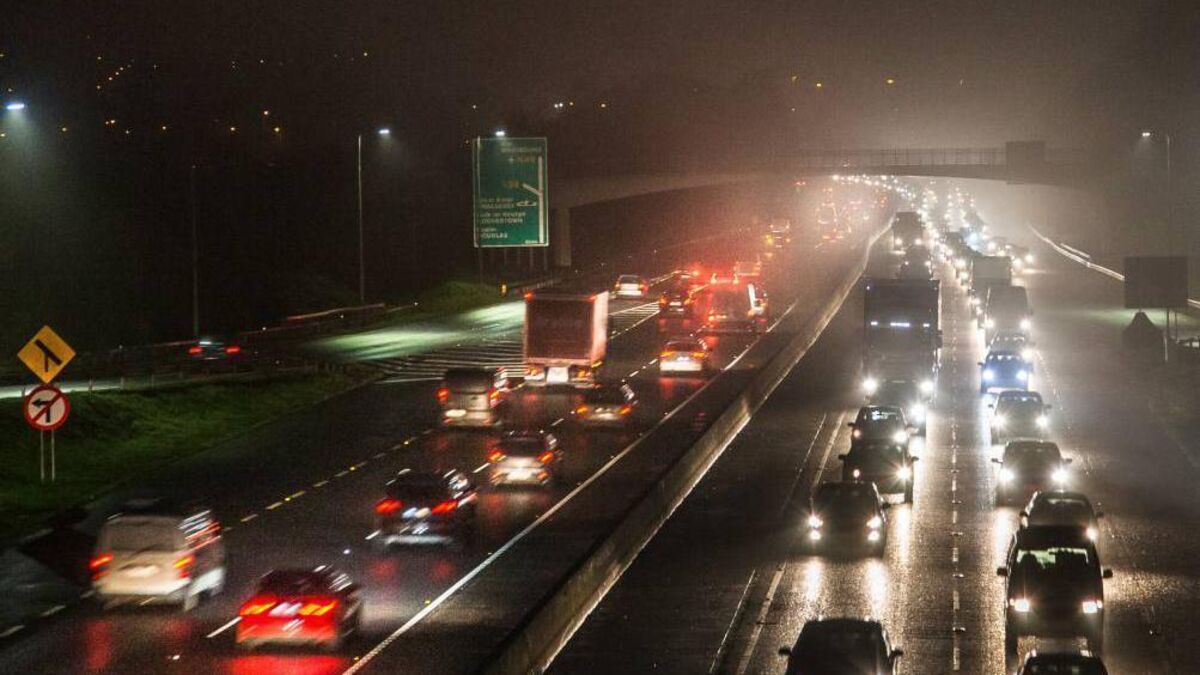
JAM TODAY: Morning traffic building up on the N40 near Mahon in Cork city
Cork is the 42nd most congested city in the world, according to the latest figures from the TomTom Traffic Index. Better than Dublin (3rd) and much worse than London (75th).
The figures tell their own story. In Cork city, the average speed during rush hour is 21km/h, 1km/h slower than in 2024, and a miniscule fraction faster than your average cyclist in city traffic at 12-20km/h.
However, traffic is not just about speed – it is also about flow. TomTom figures report that congestion levels in Cork last year deteriorated to an average of 56.9%, up 4.7% on 2024.
Congestion levels are calculated by collecting all travel times recorded in a given area and comparing them to the lowest travel times from when traffic is in a free-flowing state. Congestion levels are then expressed as a percentage, which represents the increase in travel time due to excess traffic.
TomTom found that it took motorists an average of 23 minutes, 10 seconds to travel 10km in Cork city last year. At evening rush hour, this increased to 28 minutes, 24 seconds with an average congestion level of 97.1%.
Overall, time lost due to rush hour in 2025 amounted to 107 hours – that’s four days and 11 hours sitting in traffic - seven hours and 40 minutes more than 2024.
“As people flock to cities never designed to house such vast populations, traffic will continue to worsen until cities act now, arm themselves with the right data and the most useful and trusted insights,” said a TomTom spokesperson.
With a miniscule population compared to other metropolises across the globe, it is mind- boggling that we in Cork cannot devise a system where we can traverse the city with ease.
Two years ago, the Government approved a strategy to give local authorities the power to introduce congestion charges, but legislation has yet to be introduced.
Meanwhile, a congestion charge was introduced in New York in January, 2025. Despite the naysayers, it appears to have been a resounding success. So, should our city councillors ignore the diatribe of abuse and forge ahead with plans to introduce one here?
In a year, pollution and traffic in New York have declined by 11% in the toll zone. The Metropolitan Transportation Authority has generated more than its targeted $500 million of revenue from the scheme after expenses. Visitors have increased by 3.4% and sales-tax revenue has risen by 6.3%
Robust evidence suggests such a move in Cork, far from bringing the city to a standstill, would free up clogged streets, facilitate buses and taxis to move freely, and allow us all to breathe a sigh of relief as we traverse the city - be it rush hour or any other time of the day.
The sceptics say that we cannot introduce a congestion charge until we have good quality public transport. The reality is unless we get cars out of the way, good quality public transport is unable to move.
The National Planning Framework 2040 anticipates Cork will become the fastest-growing city region in Ireland with a projected 50-60% increase in population by 2040. The Cork Metropolitan Area Transport Strategy (CMATS) has plans to reduce dependency on the private car while increasing the appeal of sustainable transport options.
Public transport improvements include the roll-out of sustainable bus corridors, improved bus frequencies, a light rail system travelling east to west across the city, and improved infrastructure for active travel.
CMATS 2040 highlights the particular issues that exist in Cork in terms of travel behaviour including: an over-reliance on the private car; relative low levels of cycling and limited (though improving) cycle infrastructure.
There is a high level of car use for the school run, suppressing the use of public transport, walking and cycling – that contributes to high levels of city congestion. Additionally, there is a low level of parking control via controlled parking zones such as residential areas; and complex one way systems creating high speed environments.
There is clear evidence of huge gains from the implementation of a congestion charge in New York.
Fewer vehicles have entered the zone. Buses can travel faster in and around the central business district. Congestion pricing revenue amounted to over $500 million of net revenue in 2025- on average about $42 million a month. This is due to be assigned to improve public transport.
Foot traffic in New York has increased. More people are going into the area for shopping, appointments, entertaining and dining. Visitors to the area were up by 3.4%, more than double the 1.4% increase across all of Manhattan during 2025.
And despite opposition from retailers to the charge, business was up.
Whether Cork should introduce a congestion charge to reduce gridlock on narrow city streets is hotly disputed, with heated opposition from local businesses citing risks to business interests, insufficient public transport alternatives and unfair burdens on drivers while traffic will shift outside the zone.
The evidence is clear. The city is clogged with evermore oversized cars, vans and trucks making movement across the city impossible. A congestion charge would make people think twice about driving into the city – making movement for public transport and active travel much more feasible.
Time to open our eyes to the reality. We cannot wait another decade for a fully integrated public transport system as the city population continues to spiral between now and 2040.
Congestion charges work in reducing congestion and taking cars off the road. There is a strong case for introducing one in Cork.
Alternatively, and if you are in a hurry, you might consider a bike






 App?
App?


