Cork Views: Rating the best and worst of our 16 taoisigh
Of our nation’s 16 leaders since 1922, there have been good, bad, and indifferent holders of office. A new book sets out to sum up each one, says TP O’MAHONY, who names his No.1
Cork Views: Rating the best and worst of our 16 taoisigh

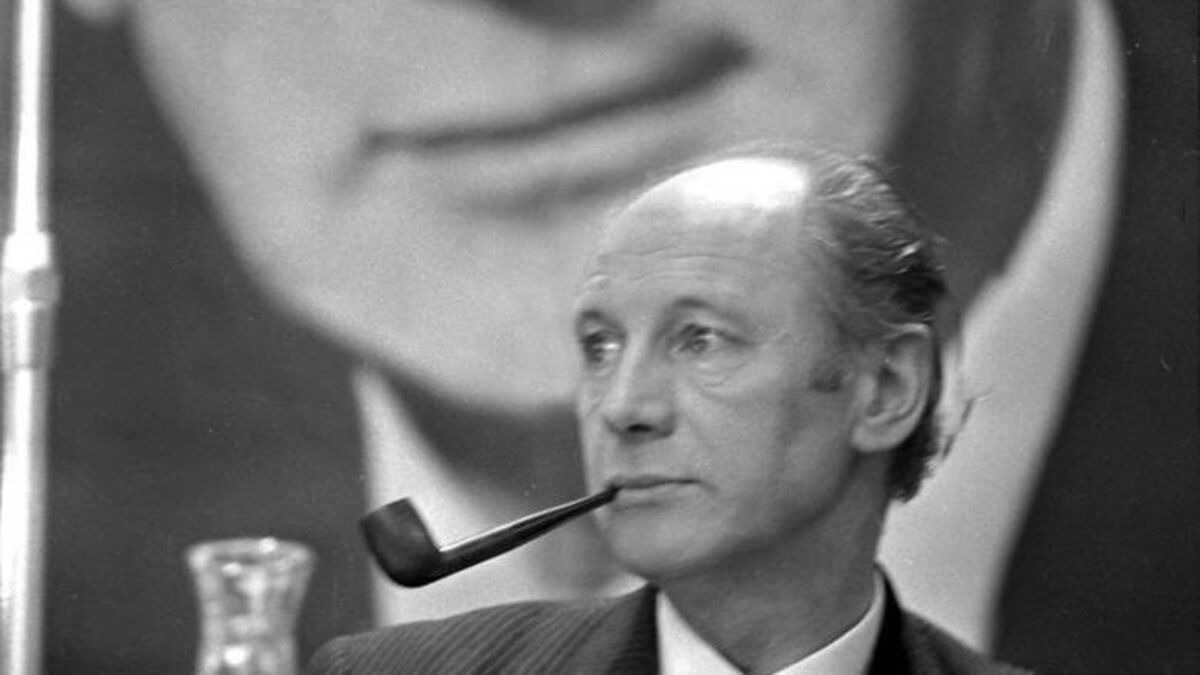
Lynch held his head and a possible coup d’etat was averted - but he messed up the economy, says TP O'Mahony. 

Of the 16 men (no woman as yet) who have held the office of Taoiseach since the foundation of the State in 1922, who would rate as the best?

Or - to put it another way - how should one classify them as (a) the good, (b) the bad, and (c) the indifferent?

A new book, simply called The Taoiseach, provides ample material on which to base an overall assessment. It gives us profiles of the 16 office-holders - and some evaluations.

The contributors are a mixture of journalists and academics, all involved in either reporting or teaching politics. And the standard throughout - in terms of background and insight - is quite high.

After surveying the field of 16, only two things can be said with certainty: (1) Ireland never had a left-wing Taoiseach, and (b) none of the 16 could be convincingly described as a ‘visionary’.

It is true that Bertie Ahern once claimed to be a “socialist”, but as Mick Clifford (of the Irish Examiner) who wrote the chapter on Ahern, said, this was “a positioning that was greeted with a mixture of mirth and ridicule”.

That said, and despite the damaging revelations about his finances from the tribunals, he deserves the nation’s gratitude for his part in bringing about the Good Friday Agreement - finally (we hope) taking the gun out of Irish politics.

As for the ‘vision’ thing, it is the great tragedy of Irish politics that none of the men who ended up in the top job ever came to it with anything approximating to a ‘blueprint’ for the Ireland they wanted to see.

Jack Lynch and John A Costello didn’t want the job, and didn’t make a very good fist of it. Yes, during the Arms Crisis of 1970, Lynch held his head and a possible coup d’etat was averted - but he messed up the economy. And Costello, a distinguished lawyer, will forever be associated with the Mother-and-Child controversy of 1951.

Albert Reynolds believed in realpolitik, and his good personal relationship with John Major helped to broker the Downing Street Declaration of 1993, prefiguring the Good Friday Agreement of 1998.

Enda Kenny was the most underrated of recent Taoisigh. His attempt to abolish the Seanad (an institution greatly in need of reform) might have succeeded if he had promised to bring back a reconstituted upper chamber within a specified period of time. And his brave and outspoken criticism of the Vatican after the publication of the Cloyne report will go down as one of the great Dáil speeches.

Leo Varadkar barely registered on the nation’s political barometer, fitting neatly into the indifferent category, along with John Bruton and Simon Harris.

They all, to a greater or lesser extent, made things up as they went along. If one sought exceptions, one might point to Sean Lemass or Garret Fitzgerald. But even they were just reacting to circumstances.

Lemass recognised that protectionism, which he had once championed, was unsustainable. A policy of economic development was needed. And Fitzgerald saw that the way forward to a ‘new’ agreed Ireland would involve painful changes, constitutional and otherwise, to cleanse the Republic of some of its more sectarian characteristics. But the promised ‘just society’ turned out to be a chimera.

And what of Dev? He is dealt with here by RTÉ’s David McCullagh (author of a well-received two-volume biography of Éamon de Valera) who tells us that Dev “extended Irish sovereignty, introduced a new constitution and kept Ireland out of the Second World War”. All very true.

Then McCullagh adds: “While he gave his name to an era, the term ‘de Valera’s Ireland’s’ is now a shorthand for a despised conservative backwater”. His infamous “wade through Irish blood” speech in Thurles in 1922 helped to spark the civil war.

The first holder of the office, WT Cosgrave, had to face down an armed rebellion in the form of a tragic and unnecessary civil war, and like him, his son Liam Cosgrave, during the 1973-77 period, was unflinching in his opposition to the Provos. But he voted against his own government’s Bill aimed at liberalising the law on contraception.

The story of Charles Haughey, told in this book by his biographer Gary Murphy, remains one of the great ‘What ifs’ of Irish politics. Described by Murphy as “a decisive, charismatic and naturally dominant personality”, Haughey had all the talents required to be a great Taoiseach. But, like Shakespeare’s Richard III, his character was also deeply flawed.

Murphy’s verdict stands: “Despite his achievements in office, Haughey’s legacy is that of a tarnished politician whose name has become a byword for corruption, venality and profligacy.”

History will not be kind to Micheál Martin. The government he heads is increasingly seen as a ‘do nothing’ unit, especially in such key areas as health and housing. Along with Brian Cowan and John A Costello, he will feature in the ‘bad’ category. His ‘leadership’, if it can be called that, has been plagued by indecisiveness.

And who was the best? Lemass, indubitably. The pity is that Dev didn’t make way for him sooner: we’d all have benefited. Incisive and decisive, he was no ideologue, but he knew what he wanted. While hospitalised once, Dev told him to brush up on his Irish - Lemass ignored him and asked for books on economics.

The Taoiseach (edited by Iain Dale) is published by Swift Press (€19.99).

Read More

Sorry, Mr Trump, this Cork man is the true liberator of Venezuela
Cork Views: Pana is in need of a facelift... here’s how to do it
Trevor Laffan: A 30-year war on drugs in Cork - but issue is worse than ever

more Politics articles

Tánaiste calls for ‘cool heads’ over Trump's threatened tariffs Tánaiste calls for ‘cool heads’ over Trump's threatened tariffs
‘Sovereignty of Greenland and Denmark cannot be violated’ – Taoiseach ‘Sovereignty of Greenland and Denmark cannot be violated’ – Taoiseach
Helen McEntee brands US tariffs plan ‘completely unacceptable’ Helen McEntee brands US tariffs plan ‘completely unacceptable’

More in this section

Bicycle path PlasticRoad made out of recycled plastics in Zwolle, The Netherlands. Kathriona Devereux: 'Every time I get on a bike, I cycle as if I'm about to be in an accident'
A small pile of white powder on a dark surface Trevor Laffan: A 30-year war on drugs in Cork - but issue is worse than ever
John Dolan: A train from Blarney to city? I’m on board IF the service is right John Dolan: A train from Blarney to city? I’m on board IF the service is right

Sponsored Content

Turning risk into reward: Top business risks in 2026 Turning risk into reward: Top business risks in 2026
Top tips to protect Ireland's plant health Top tips to protect Ireland's plant health
River Boyne in County Meath, Ireland. Water matters: protecting Ireland’s most precious resource
Contact Us Cookie Policy Privacy Policy Terms and Conditions

© Examiner Echo Group Limited

Add Echolive.ie to your home screen - easy access to Cork news, views, sport and more