Could a cable car be the answer to Cork's traffic woes?
The decorations are being flung into the attic tomorrow and the Big Wheel on the Grand Parade has disappeared for another year.
It has become a family tradition to have a spin on the Big Wheel over the festive season. We have lovely photos of our children growing from babas in a sling, to gap-toothed toddlers, to smiling ten-year-olds. I’m hoping a super organised version of me in the future will put all the photos over the years together into one adorable album.
Over the years, their sense of the geography of Cork has grown. “There’s Churchfield swimming pool in the distance”, “I can see the top of Patrick’s Hill”, “Look, there is Knocknaheeny’s Water Tower peeking up on the horizon”, “The new bridge looks class - but why is it leading to a building site?!”
Sadly, the giddy experience of ascending over the streets of Cork to admire the views of St Finbarr’s Cathedral, Shandon (with its lagging jacket on this year) and the County Hall in the distance is tainted by the unchanging view of dereliction below.
The former Grand Parade Hotel site, 50, Grand Parade, has been on the derelict sites register since March, 2000. For a full quarter of a century, this prime city centre location has been sitting there unused and unloved. It seems such a terrible waste of space.
Sure, there have been various redevelopment plans over the years, but nothing has materialised and the years click by.
Every time the Big Wheel rolls into town and we queue expectantly and then float up over our “beautiful city”, there is the deflating reality check that parts of it are a disgrace. Will this be the year the site gets much-needed love?
This week, a lot of Corkonians are back to the traffic grind after a two-week respite from red tail-lights, 5km/hr progress, and the depressing familiarity of drive time radio presenters’ updates: “Traffic is at a standstill on the Rochestown Road following a collision.”
Cork is the 38th most congested city, globally ranking higher than other major cities such as London, Toronto, and Rome. Those cities boast bigger populations and bigger public transport networks.
Driving around Cork during the festive season visiting friends and relations, the amount of new housing being constructed was plain to see. It’s a welcome sight. We desperately need more houses, but the second thought was ‘where are all the cars going to go?’
It’s well established that building new roads makes congestion worse. Planners have a term for it, ‘induced traffic’. Construct wider lanes or new roads and congestion might be alleviated temporarily, but then more people see driving as a viable transport option and the roads get congested and you are back to square one.
Build it and they will come. Unfortunately.
Measures that actually do reduce congestion are giving people realistic alternatives to driving - high-quality public transport, safe walking and cycling networks, compact land-use planning, and congestion charges.
There are plenty of progressive projects underway, but the big ones - the Cork Luas and BusConnect Sustainable Transport Corridors - are progressing at the speed of Thursday evening traffic on the South Link during an ice storm with accidents in both directions.
Planning applications for the Cork Luas have not even commenced and construction is not expected to begin until the early 2030s. Miles off.
A better bus network offers more immediate hope. If you live on a good bus route with a regular service and decent bus lanes, it is a real alternative to sitting in traffic.
And more people are using buses - passenger numbers are up!
Planning applications for three main corridor schemes of Bus Connects will be lodged during the year so, again, we will be waiting. (I wince to think of the traffic disruption the construction of those tracks and corridors will cause).
Or floating from Carrigaline to Mahon and then connecting with a reliable bus network to the rest of the city?
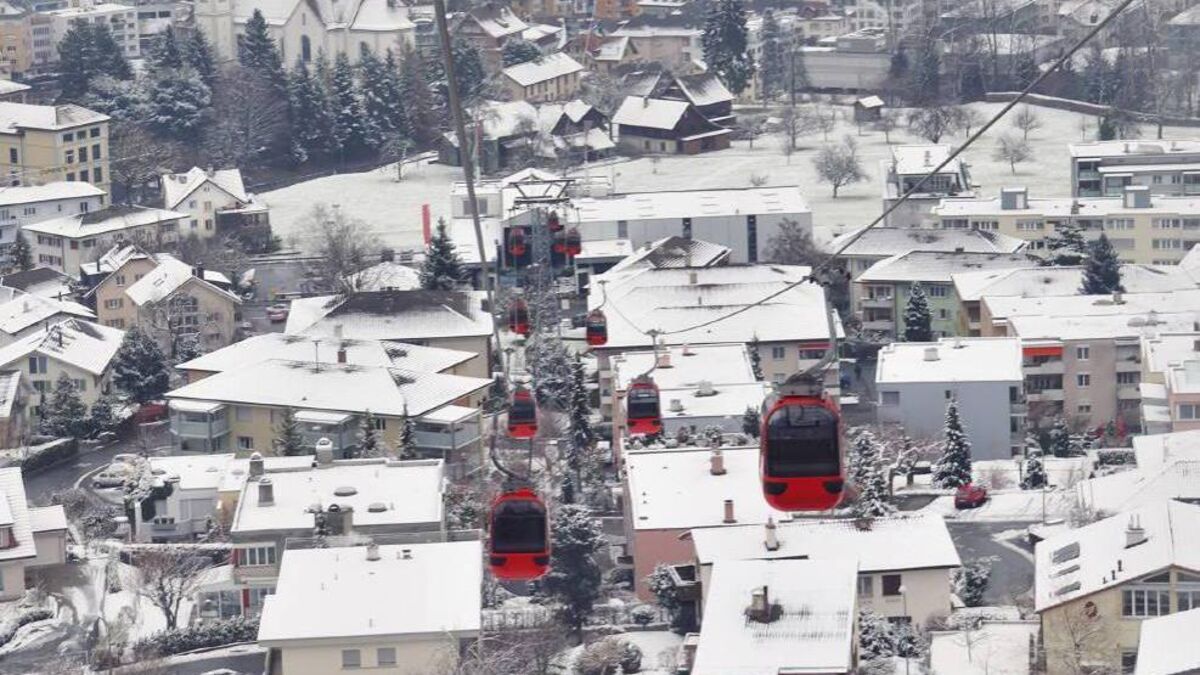
Greater Paris just got its first urban cable car before Christmas, connecting isolated neighbourhoods with the Paris Metro line.
The 4.5-kilometre line, with five stations along its route, is the longest urban cable car in Europe. It can carry 1,600 people per hour and it is expected that 11,000 people will use the system every day.
Cable car systems work in cities because they have a small footprint - no tunnels, no tracks. They are excellent for crossing rivers, valleys, motorways, and rail lines, and they are high-frequency (cabins arriving every 10-20 seconds).
The first aerial cable car urban transit system was built in the city of Medellin, Colombia, in 2004. Mi Teleférico ferries the citizens of La Paz in Bolivia. In Toulouse, they have the Téléo.
Is it too ambitious to think that the Lee could be traversed by cable car?







 App?
App?


