Kathriona Devereux: 'Irish audiences are a curious bunch'
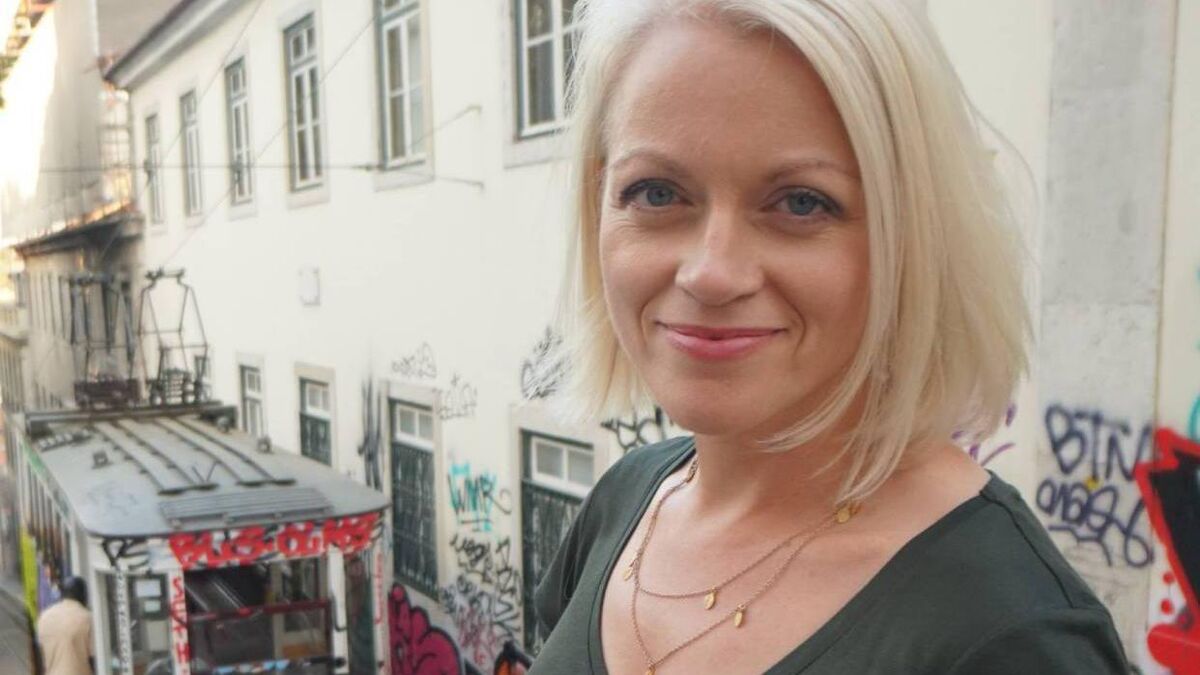
This year brought me to a wild weather station in Galway’s windswept Mace Head where Storm Éowyn broke wind speed records; to a verdant County Wexford farm buzzing with biodiversity thanks to its ecologically-minded owners; to Cork’s masterfully reimagined Marina Promenade as a positive example of what urban change looks like.
With each new season, I’m asked what is behind the success of the series and I think it’s simply because Irish audiences are a curious bunch.
Most people may not self-describe as science fans, but we’re nosey. We’re interested in how things work. On wintery Monday evenings in November and December, we’re happy to watch a bright spark work hard to make the world a better place.
As the latest … series draws to a close (fellow nerds, you can watch it back on the RTÉ Player over Christmas!), here are my three key take-home messages from the series.
Change is hard
“Progress is impossible without change, and those who cannot change their minds, cannot change anything” - George Bernard Shaw
Collectively, us humans are resistant to change. Behavioural scientists call it status quo bias. It’s a mental shortcut that makes us favour existing situations, even when a change could be an improvement. Most of us describe it by saying, ‘she’s stuck in her ways’.
There are rational reasons for this resistance. People worry about the risks and costs of changing something. For example, when it comes to electric vehicles, surveys have shown that people’s resistance was due to high purchase prices, insufficient public charging infrastructure, and range anxiety. All legitimate reasons to stick with the familiarity of a petrol car.
However, change is happening. 2025 is expected to be the year with the highest new EV sales ever. Mainly because EVs have become cheaper, there are more models available, and they are now more familiar. For many drivers, EVs now feel like the most sensible option, not the most virtuous one.
Our kneejerk reactions against change are problematic, especially when it comes to addressing crunch issues like the climate, housing and infrastructure crises, so it is important that communities, citizens and policymakers recognise the strength of status quo bias and how it can potentially hold us back from making positive changes.
New technology can help - but we need to help ourselves too
Antimicrobial resistance (AMR) is one of the greatest threats to public health globally. Around a million people die every year from bacterial infections that are no longer treatable with antibiotics.
We are literally running out of effective antibiotics and risk returning to a time when even minor infections cannot be treated.
Making new antibiotics is a challenge (and bacteria will eventually become resistant to new versions), so some scientists are taking a different tack and are trying to develop vaccines for resistant bacteria like MRSA to prevent the so-called ‘superbug’ infections in the first place.
The series featured scientists who hope that, in the future, if you find yourself scheduled for surgery in a hospital, you may receive a vaccine in advance to protect from an MRSA infection.
Cutting unnecessary consumption of antibiotics reduces the amount of antibiotic residues sloshing around in the environment and has huge health benefits.
From a climate point of view, there is a lot of techno-optimism around innovation when immediate emission reductions would be a far more practicable option. The series featured a Direct Air Capture machine trial at Dublin Airport by Trinity College scientists ,which is a fine example of how smart researchers are working to fix critical problems - a machine to suck molecules of carbon dioxide out of the atmosphere.
Yes, we need technology like this to help cool the planet - but we could help ourselves more effectively by curbing our carbon emissions today.
Nature is under serious pressure
When we delay action, behavioural or technological, nature absorbs the cost. And the results are plain to see.
From the shocking sight of fields of felled trees to the depressing vista of Lough Neagh’s thick green carpet of an enormous algal bloom, the series consistently showed how nature is under pressure.
You don’t need to be a trained ecologist to recognise that the lurid green slime of Lough Neagh is an ecosystem out of kilter. Or understand the damage an Asian hornet could do to our honeybee population when you hear it can eat 50 honeybees a day.
It was unsurprising to read that a recent National Parks and Wildlife Service (NPWS) assessment found 90% of Ireland’s woodland, grasslands, coastal and freshwater areas have “unfavourable status” and are in poor condition.
The report landed the same week government ministers described a three-year nitrates derogation extension for farmers as ‘good news’. Not for many of the plants, animals and ecosystems struggling because of intensive farming practices.
We won’t be able to reinvent a new ecosystem or deploy technology to restore a lost species - once it’s gone, it’s not coming back.
This year, as we wrap up another series, I am left with a deep appreciation for the precious world we live in, the deep complexity of how it works, how interconnected it is, and our obligation to keep it safe and healthy.
After watching. I hope you feel the same. And resolve to make some changes to help create a brighter future.




 App?
App?


