Being lonely is bad for your health
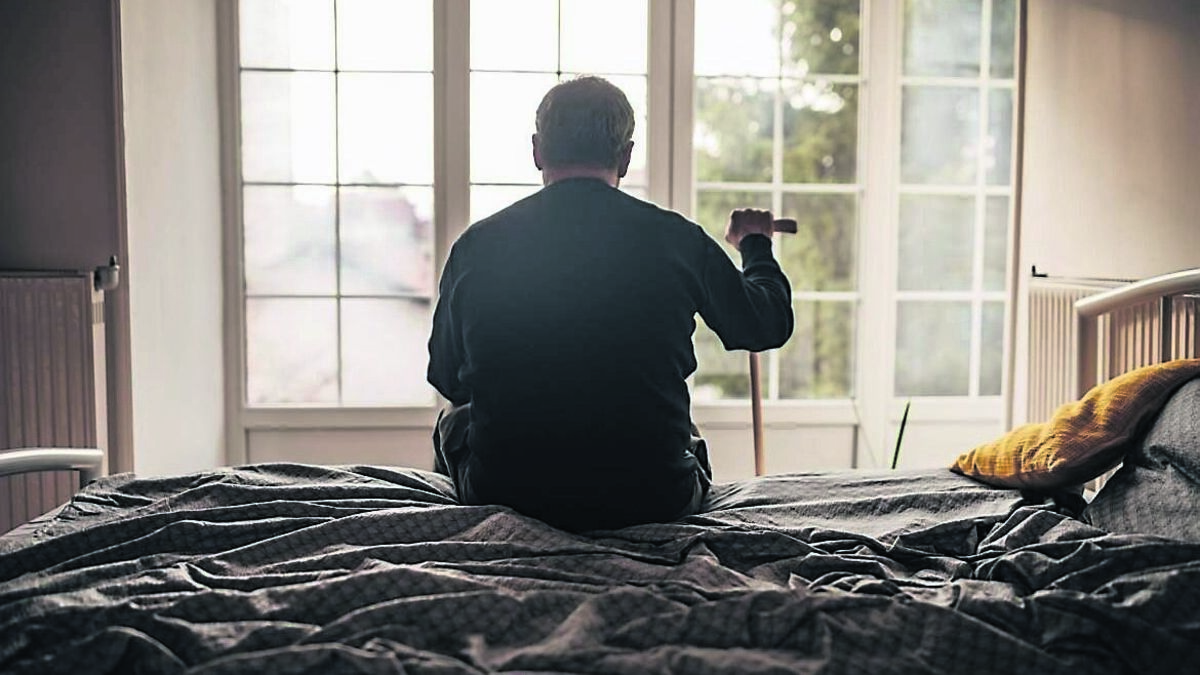
“In the event of another pandemic, be especially mindful of those most impacted by distancing”
THE U.S activist Chelsea Manning has spoken of, during her time in solitary confinement, standing before a mirror talking to and making faces at herself.
WikiLeaks founder Julian Assange, during extradition proceedings after prolonged solitary confinement, struggled to give his age or name and said it was difficult to think properly. Shortly after his removal from confinement, his health and wellbeing significantly improved.
Leopold Trepper, leader of a World War II-era Soviet spy ring, described the mental anguish of not being allowed any communication with other prisoners during a period in a post-war prison camp.
These are only a few examples from countless. Social isolation is not normal for humans, we rely on others, our very sense of selves is dependent on it.
The relationship between social engagement and psychological wellbeing and physical health is well established. But a recent meta-analysis, by Fan Wang and colleagues of Harbin Medical University in China, has developed this much further and drawn on the evidence on its link to the greatest health outcome of all - mortality.
The meta-analysis included data from 90 papers, including 2,200,000 participants. It looked at social isolation and loneliness in relation to death rates in the general population, people with cardiovascular disease (CVD), and those with cancer. Its findings are striking.
Across the population, both social isolation and loneliness were associated with greater risk of death - from all causes (32% and 14% increases respectively) and specifically from cancer (24% and 9%), while social isolation was associated with increased rates in CVD (34%).

Looking separately at different groups, social isolation was linked to increased rates from all causes for CVD patients (28%), and for people with breast cancer (51%).
These figures are tightly controlled - the researchers adjusted to allow for alcohol use levels, depression, and diabetes (and the first two of these might often flow from social isolation - which would likely make the figures higher). Smoking is probably higher in lonely people too.
I find it difficult to read these figures without reflecting on our recent lockdown experiences. We were all required to stay apart as far as possible, especially so for people with underlying medical conditions or depressed immunity (including many people with CVD and cancer). The social isolation we all experienced was exacerbated in those whom this study found to be at specific risk.
Just why social isolation has this effect is not fully clear, and there are likely many mechanisms at play. There is considerable evidence that social engagement/participation makes exercise more likely, and socially isolated people also appear to eat less well.
Social support is also an important resource for us in coping with stress - others’ knowledge can be useful in dealing with problems, and we rely in part on other people for emotional support, understanding or simple distraction. The absence of other people makes life’s stresses harder to bear; and chronic stress is bad news for our physical health.
The bulk of the studies here are from western, industrially developed societies. This is an issue, as it raises questions of whether culture or social norms have an impact on the links between isolation and health - what applies in California need not apply in Cork, still less so in Cambodia! I can’t tell you if the relationship applies globally, but a recent study by Giovanni Rossi, of UCLA in California, and colleagues from universities in many countries, reported on the marked similarities in helping behaviour across very varied cultures - which in turn suggests that helping one another (and sometimes choosing not to help) are evolved behaviours, part of what it means to be human.
Analysing videos of day-to-day interactions of people from diverse societies, all taken in normal domestic settings, they found largely universal patterns. When doing joint chores like preparing a meal, we directly or indirectly ask for help roughly every two minutes. We are six times more likely to help than not when there is a request.
When we help, it is typically without comment; when we decide not to help, we are far more likely to offer a reason than to just say ‘no’ or to ignore the request.
This is small stuff, but most of life and social interaction is made-up of just such small stuff. This shows us that wherever we are, whatever our society, culture, or background, we are effectively the same in many ways. We help. We ask for help. We explain refusals. We work together and try to get along.
I find this comforting; so many forces try to divide people based on ethnicity, language, religion, culture - but ultimately, far, far more unites us than divides us.
When it comes to social engagement, it is built into us - to a point where its absence may increase risk of death itself.
What are the lessons here?
To me, these studies together say we thrive with one another, and people everywhere are largely the same. So if you need help, ask for it. If you want social contact, if you feel lonely, this isn’t weakness - it’s your humanity. Let’s try not to stand by and let loneliness fester.
And in the event of another pandemic (always possible!), let’s be especially mindful of those most impacted by distancing - and that responsibility lies strongly with the powers-that-be as well as with the rest of us.





 App?
App?


