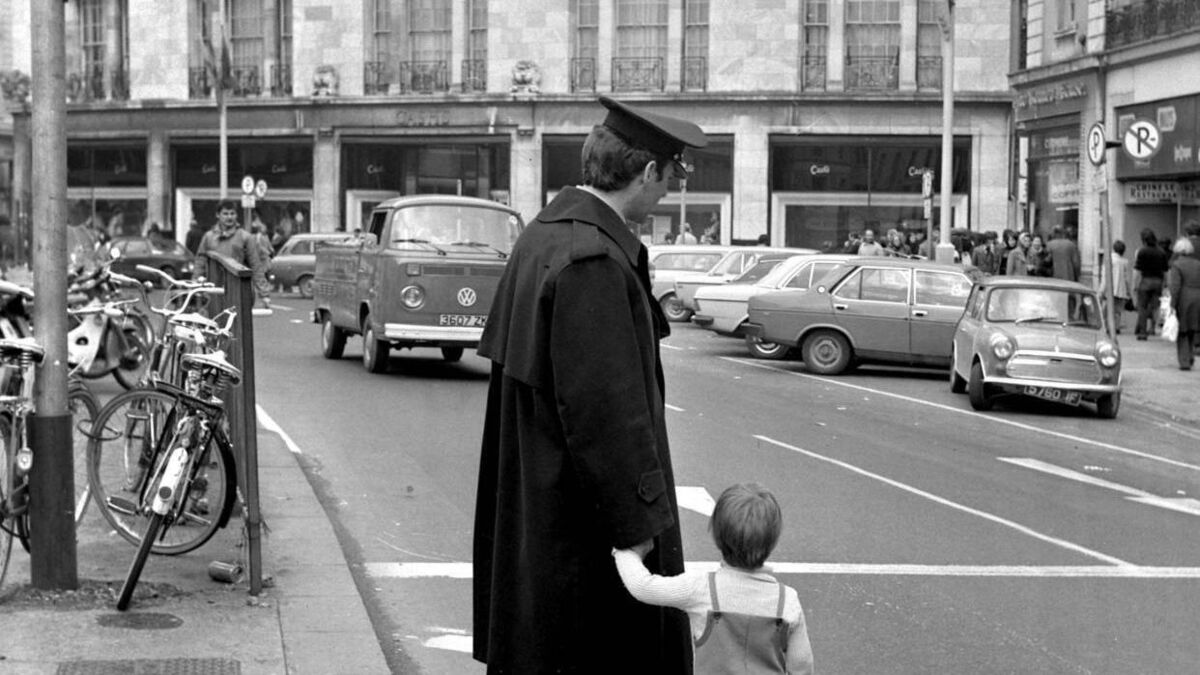
Trevor Laffan: In my teens and during my career, gardaí on the beat ruled the street
We worked together for years, and we both had an interest in developing community engagement.
We gave it a good shot, and I think it’s fair to say we built a solid reputation for trying our best to make a difference in the community.
So, I was a little disappointed to hear of an experience he had in town while waiting for a bus in Patrick Street recently.
He was approached by a lady who recognised him from his policing days. She was reminiscing about the good old days they had in their area with the community gardaí, but bemoaned the fact that gardaí are no longer visible there.
When he got on the bus, another lady chatted to him about the great times they had in the community bus and how reassuring it was for the residents to see him walking around the locality and organising meetings in the neighbourhood to deal with various issues.
Unfortunately, she said, gardaí had since become a rare sight.
Two encounters within 20 minutes of each other, and each telling the same story.
According to the garda website, community policing is alive and well, and while I really hope that’s the case, I have my doubts.
From what I hear, dedicated community gardaí are thin on the ground, if there is even such a thing anymore.
The interactive map on their website invites you to enter your address or eircode to search for your local community garda. I tried it a few times and, on each occasion, it showed me where I live, but failed to identify my community garda - but maybe that was just me.
In my day, there was no need for that technology. Everyone knew who their community garda was because he, or she, was never far away.
As someone who worked in that area for most of my service in An Garda Síochána, I always said community engagement wasn’t complicated. My instructions to community gardaí during my working life were simple; go out and meet the people, see what the issues are, and try to resolve them.
Relationships would develop naturally from that engagement.
I learned that from my own personal experiences of engaging with gardaí while I was growing up, and later on by observing some of the older guys I was fortunate enough to have worked with over the years.
When I was in my teens, a bunch of us went out in Cobh for a few pints and at the end of the night decided to race each other up Westview, one of the steepest hills in the town. It’s where you’ll find the most photogenic houses, sometimes referred to as the deck of cards.
The incline would test a car, so trying to run up it was never going to be easy, especially after a few drinks. Even walking up there now would challenge me, but back then we were young and fit.
It never crossed our minds that we might be disturbing them because we were just thoughtless teenagers.
When we reached the top, there was a squad car waiting for us. Garda Mick McNamara, a local legend who is still hale and hearty and living in the town, rolled down his window and told us to keep the noise down. We didn’t need to be told twice.
Mick gave talks in the primary schools about road safety, and he was also involved in the Community Games at the time, so everybody knew him.
In those days, gardaí were always on patrol. A garda walking around the locality was a common sight.
The late Sergeant Mick McDonnell walked the length and breadth of the town, and you could meet him anywhere on the island.
When I started out in An Garda Síochána in 1979, policing hadn’t changed much from what I had experienced in my youth.
Blackrock in Dublin was my first station and walking the beat was my main duty. I was given a particular area for each shift, day or night, and I was expected to patrol it for eight hours
Anything that happened in that locality during my shift was my responsibility.
It was the same for all new recruits, walking the beat, getting to know the area, meeting people and dealing with issues.
When I went to Blarney in 1983, it was a different set up. As a small country station, the allocation of manpower was nothing like Dublin. There were only a few of us available on any given shift, but the philosophy was the same.
Where possible, have a guy on foot patrol around the village to engage with the public.
In 1990, I transferred to Mayfield just in time to get involved with the national launch of a new community policing model. I was back on foot, meeting people and welcomed into so many homes. The future was looking good.
But things changed. By the late noughties, computerisation was strangling members with paperwork and an abundance of oversight. Priorities shifted.
Community engagement was sacrificed, and I believe we’re still seeing the consequences of that today.






 App?
App?


