25 years on, my proud role in peace process
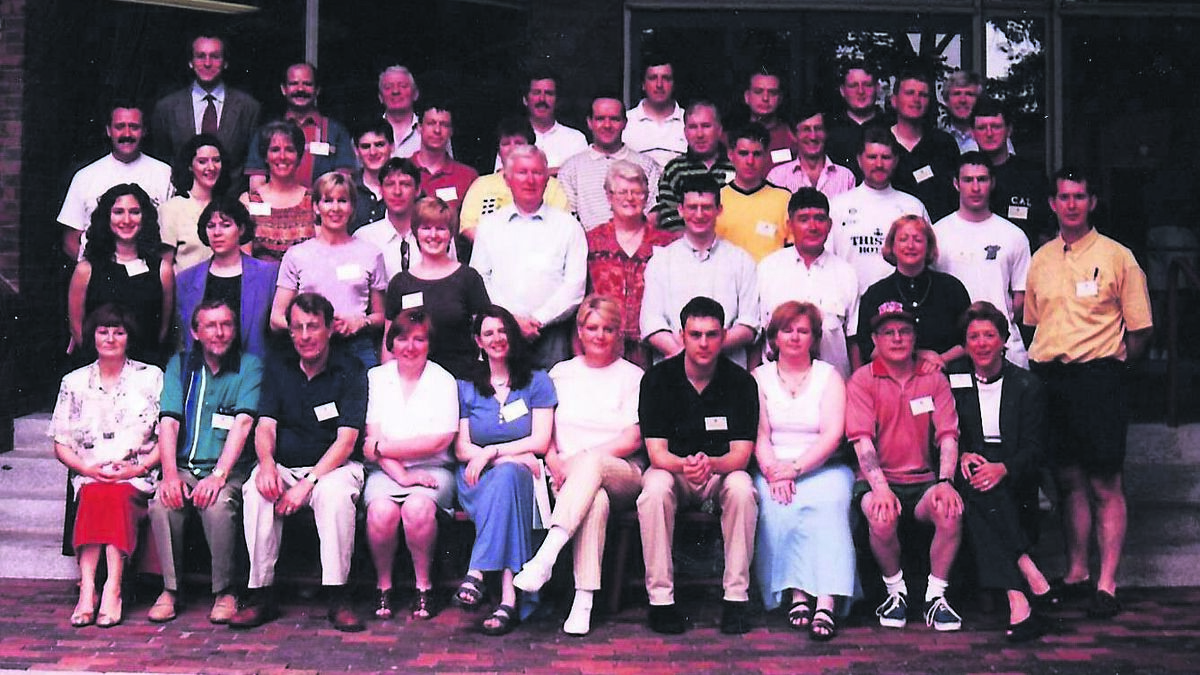
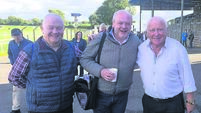
The group of politicians from all parties in the UK and Ireland who attended the JFK School of Government programme in Harvard University, Boston, as part of the peace process, from July 19-24, 1998
TWENTY-FIVE years is a long time looking forward, and a short time looking back.
In the bitter-sweet symphony of life, participating in the peace process in July, 1998, was the highlight of my time in politics.
Having run as a candidate in the 1997 General Election for Mary Harney and the Progressive Democrats, it was a huge privilege to be chosen to represent the party at the JFK School of Government programme in Harvard University, Boston, as part of the peace process from July 19-24, 1998.
Some of the representatives were Austin Currie (Fine Gael), Sean Doherty (Fianna Fáil), Liz McManus (Labour), Edwin Poots (DUP), David Irvine (PUP), Gary McMichael (UDP) and myself.
All political parties, on the island of Ireland and in the UK were represented.
The theme of the programme was ‘A New Political Architecture’, with a focus on building bridges between individuals and communities.
One of my favourite quotes is by Nelson Mandela, when he said: “As I walked out the door to my freedom, I knew that if I didn’t leave the bitterness and hatred behind, that i would still be in prison.”
It was a real privilege to play a small part in the peace process, but the people who played the biggest part are the people who voted in the Good Friday Agreement Referendum.
The Peace Conference in Boston was organised by Tim Philips of the Foundation for a Civil Society, which has become an organisation called Beyond Conflict. The American Ireland Fund was also involved. The support of Irish Americans was, and continues to be, central to the process.
I would like to thank everyone that voted for me, or helped me in any way - I haven’t been involved in politics since 1999, preferring to focus on humanitarian causes.
I’ve enjoyed maintaining my connection to the JFK School of Government, by attending the Kennedy Summer School in September in New Ross, Co. Wexford.
Growing up in the 1970s and ’80s, with the conflict from Northern Ireland on the TV and radio every day, I wondered if a resolution could ever be found.
I believe it would not have happened without the support of Irish Americans.
Irish American politicians, both Republican and Democrat, have played, and continue to play, a vital role in securing the peace.
It’s dangerous to take peace for granted. I believe that the vast majority of people living on this island are tired of violence, and want to find a way of living together, prefering to put their energies into peace and prosperity.

Is violence the least effective way to resolve conflict?
I got to meet John Hume at the Forum for Peace and Reconciliation in Dublin Castle. He is the only recipient of both the Martin Luther King Jnr, and Mahatma Gandhi Peace Prize.
Today, there are many survivors of bombs and bullets living in Northern Ireland.
The survivors that I have met don’t want any other person, or families, to go through the trauma that they have gone through.
Survivors give a different perspective, that has made me view the conflict in a whole new way.
Stephen Travers, a survivor of the Miami Showband Massacre, and Eugene Reavey, who lost his three brothers in the conflict, have set up the Truth and Reconciliation Platform, aka TarP. It aims to o give a voice to survivors, from both communities, who want to share their life-changing experiences, and to warn of the real consequences of using violence as a means of change.
Neither Stephen, Eugene nor their parents wanted retaliation.
The Miami Showband documentary was one of the Top 10 trending Netflix documentaries of 2019, and was nominated for an Emmy Award.
I learned a lot from Richard Moore’s Podcast ‘What About You?’ Richard was 10 years old when he was blinded for life by a rubber bullet fired by a British soldier on May 5, 1972.
Both Richard and his parents did not want any retaliation.
Richard also interviews other survivors of the Troubles, whose life experiences are very moving.
Bobby, Ted, Jean and the Kennedy family have played, and continue to play a vital role in the peace process, by harnessing the goodwill of Irish Americans, both Republican and Democrat.
The recent appointment by President Joe Biden of Joseph Patrick Kennedy II as United States Special Envoy for Northern Ireland in 2022 was a very welcome development.

App?