Damian Boylan: My diagnosis was no surprise..the treatment means 'Celtic curse' has little effect on my life 
As part of World Haemochromatosis Awareness Week, Damian Boylan, a councillor from Blarney, talks about his diagnosis and treatment
Damian Boylan: My diagnosis was no surprise..the treatment means 'Celtic curse' has little effect on my life 

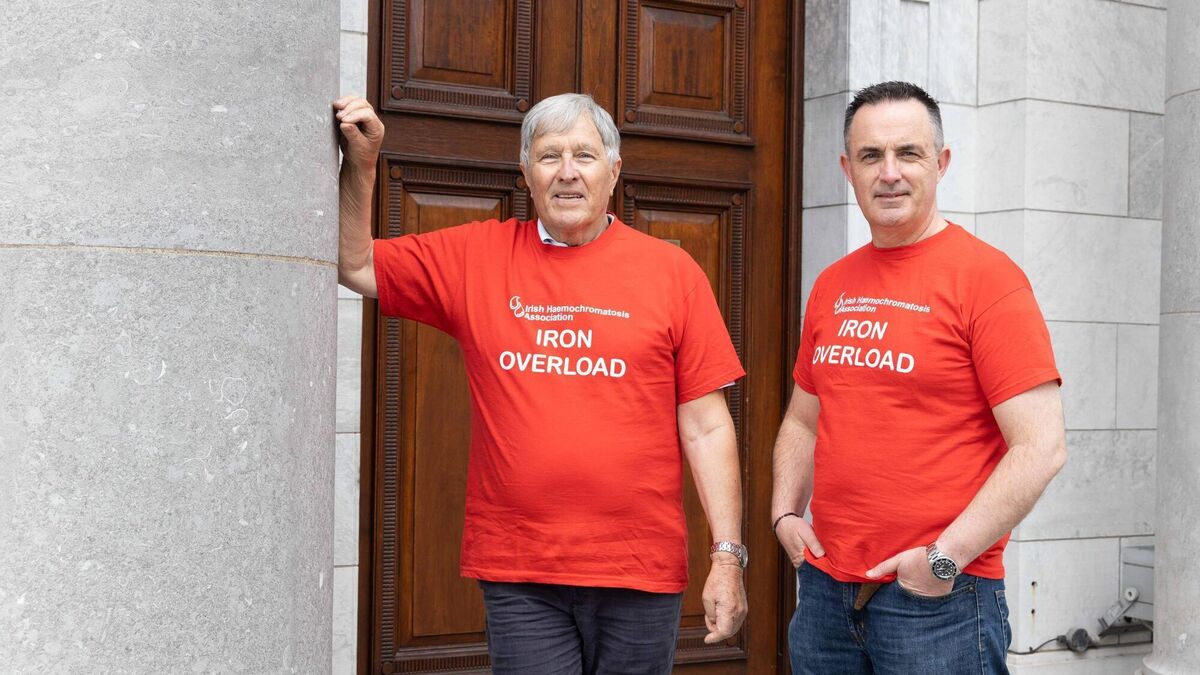
Cllr Damian Boylan and his dad Tony who both have haemochromatosis. Picture: Darragh Kane

I live in Blarney with Brenda, my wife, and we have two children, Kate and Simon. It’s a busy house, made busier by me being a local councillor on Cork City Council.

I was elected in 2019 so the past few years has been an active time representing my local community.

It is 23 years since I was diagnosed with haemochromatosis - a condition that causes the body to absorb too much iron from food.

Both my parents have it and it was their diagnosis that led to both myself and my brothers being tested.

My father had a tough time with it, having dealt with a doctor in the past who didn’t recognise it for what it was and thought his symptoms were down to heavy drinking due to elevated liver function. Thankfully, we have moved on and knowledge within the medical community is now universal.

My diagnosis was no surprise. My mother had investigated haemochromatosis and I understood what the treatment was. Over the years, I have gone from someone who hated needles to someone who isn’t bothered at all.

Venesection (the removal of a unit of blood) happens once every six months and that maintains my ferritin levels at around 40, which is quite good. At his worst, my dad’s levels were up to 4,000.

On a day-to-day basis, because of the work of Dr Matt Murphy and the great team of nurses in the South Infirmary-Victoria University Hospital, I can honestly say haemochromatosis has little or no effect on my life. An annual liver scan, a visit to the outpatient clinic twice annually for venesection, and an annual consult with Dr Murphy keeps me on the straight and narrow.

I have seen the long-term untreated effects of it. The grey skin and the joint pains. I do believe a national screening programme is required. A simple blood test to check iron levels can pinpoint the condition and the treatment is simple and drug- free. There are very few conditions where treatment is so simple and effective. Untreated, this condition can lead to life- changing events and to fatal heart and liver issues.

If you suspect you may have haemochromatosis or have just been diagnosed, I would advise you read the literature provided to you by your doctor and take the treatment seriously.

After that, continue to live your life because the treatment will most definitely leave you feeling better and lead to a longer life.

It’s not something that dictates your life in any huge way, but it can lead to serious illness if you don’t get treatment.

Haemochromatosis is often referred to as the ‘Celtic Curse’. It is most prevalent in the Irish and our descendants in other countries.

We have some excellent medical practitioners who have made this their life’s work and I thank them for that.

Someone you know, or even you personally, may have this and not know it. For something so simple to identify and treat, it would be a shame for a life to end because of a missed diagnosis. Please speak to your doctor about haemochromatosis and ask to be tested.

I was led to believe that my dark skin was the result of a Spanish fisherman becoming part of our family many hundreds of years ago. To all of us with O’Sullivan Beara heritage, I’m telling you now that this may not be true. This Mediterranean hue I have is because of haemochromatosis.

A national strategy for the condition would in the long run save lives, save money for the health service, and grow awareness. I think that we are a country that values the lives of our citizens over all else.

World Haemochromatosis Awareness Week runs to June 7, and the Irish Haemochromatosis Association (IHA) is calling on the public to recognise the symptoms of iron overload, and seek testing earlier.

Ireland has the highest prevalence of the condition in the world, with around one in five people carrying the gene linked to iron overload and about 1 in 83 genetically predisposed to developing haemochromatosis.

The condition causes the body to absorb too much iron from food. Over time, excess iron can build up in vital organs, including the liver, heart, pancreas and joints, potentially leading to irreversible damage if left untreated. Serious complications can include liver disease, heart problems, diabetes and joint damage.

Despite how common it is, haemochromatosis is often missed because the early symptoms can be vague and easily mistaken for stress, ageing or general fatigue. Common warning signs include persistent tiredness, brain fog, abdominal discomfort and joint pain, particularly in the knuckles sometimes referred to as the ‘iron fist’.

The Irish Haemochromatosis Association (IHA), the only registered charity in Ireland dedicated to supporting people living with haemochromatosis and their families, is urging anyone experiencing symptoms to speak with their GP about screening for the condition.

Initial screening involves a simple iron panel blood test to measure iron levels. If Serum Ferritin or Transferrin Saturation (TSAT) levels are raised, a genetic blood test is then recommended.

The IHA is also expanding its work within nurse education, by partnering with the HSE NW nurse education and training team and the Irish General Practice Nurses Educational Association to deliver a pilot venesection training programme for nurses in the community. The aim is to make venesection treatment (regular blood removal used to reduce iron levels) more accessible for patients in community settings.

For further information or support, visit www.haemochromatosis.ie.

More in this section

He's connected in more ways than one Áilín Quinlan: Mother’s experience led her to the manosphere...it’s here too
Cork Views: How I helped to plot a way forward for the EU Cork Views: How I helped to plot a way forward for the EU
Kathriona Devereux: ‘I’d rather go and eat nice food with people than have it dropped from high’ Kathriona Devereux: ‘I’d rather go and eat nice food with people than have it dropped from high’

Sponsored Content

Discover the heart and soul of Irish Whiskey at Midleton Distillery Experience Discover the heart and soul of Irish Whiskey at Midleton Distillery Experience
Aimee Connolly’s content room is pretty in pink Aimee Connolly’s content room is pretty in pink
Gas Networks Ireland, committed to conserving and enhancing biodiversity Gas Networks Ireland, committed to conserving and enhancing biodiversity
Contact Us Cookie Policy Privacy Policy Terms and Conditions

© Examiner Echo Group Limited

Add Echolive.ie to your home screen - easy access to Cork news, views, sport and more