Premier League: VAR exists to eliminate injustice not create it
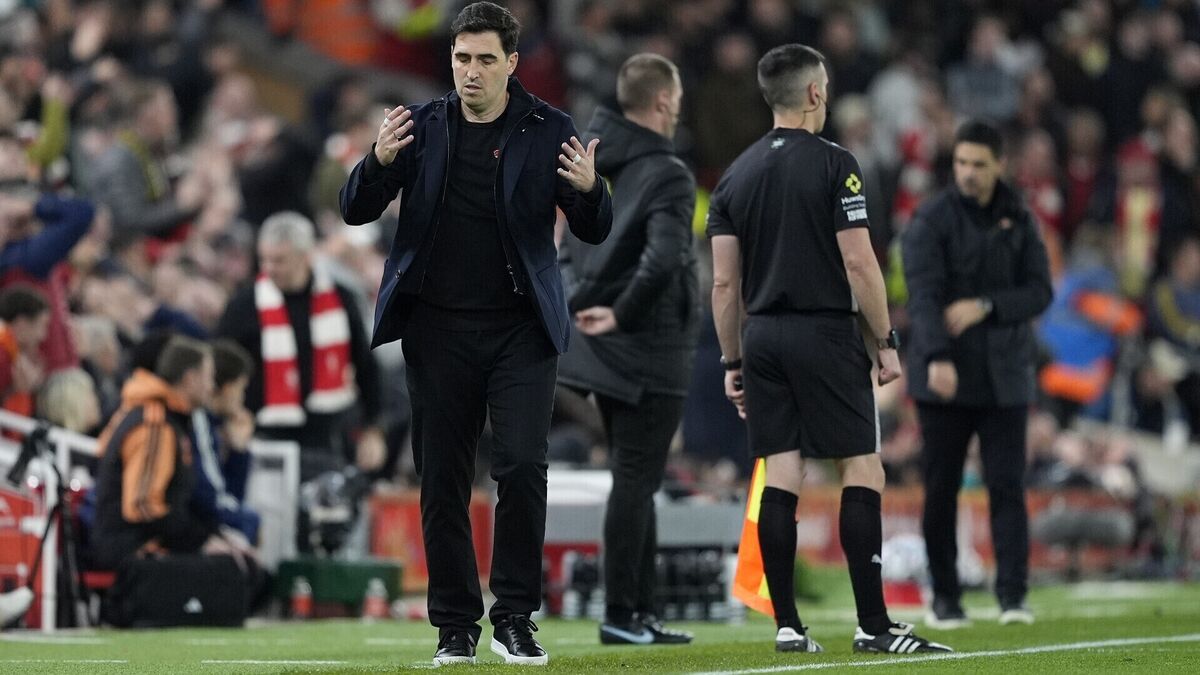
Liverpool manager Andoni Iraola reacts on the touchline during the Premier League match at Anfield, Liverpool. Picture: Peter Byrne/Press Association.
The game of the weekend between Liverpool and Arsenal should have been all about the spectacle: a meeting of the two most recent Premier League champions in a clash that may yet define either side's season.
Instead, it became another fixture overshadowed by confusion surrounding VAR and the decisions of the officials operating it. Once again, supporters were left scratching their heads, wondering how certain conclusions were reached and why, despite weekly controversies, there seems little effort to improve consistency.
The biggest talking point came when Liverpool striker Alexander Isak had his shirt pulled by Arsenal defender Jurrien Timber inside the penalty area.
Isak was millimetres away from connecting with a superb floated cross from Bradley Barcola and, but for the tug on his shirt, appeared certain to make contact and guide the ball goalwards. Even without a touch, the ball came close to finding the net itself.
Replays quickly confirmed the pull and the effect it had on Isak's movement. It was about as strong a case for a penalty as you could make. The evidence was there for everyone to see.
Yet play was waved on by VAR.
Not only was the foul ignored, but so too was the possibility of a red card, given Timber's actions denied what looked a clear goalscoring opportunity.
Some have argued that freeze-frame images exaggerate shirt pulls and that Timber released Isak's shirt almost immediately. But that defence quickly falls apart when you consider how little time it takes for a tug to disrupt a player's movement when attacking a cross. A second? Half a second? Less? At that speed, even the slightest interruption can be decisive.
More importantly, if the same shirt pull occurred anywhere else on the pitch, a free-kick would almost certainly have been awarded.
This is precisely the type of incident VAR was introduced to address. The technology was meant to eliminate the small injustices that escape a referee's view: marginal offsides, mistimed challenges and subtle infringements that prevent goals. Yet despite millions of viewers around the world seeing an obvious foul on replay, the only people who appeared unable to see it were the officials entrusted with the technology.
Others suggested Isak's lack of reaction proved the shirt pull had little effect. But had he thrown himself to the ground and screamed for a decision, he would likely have been accused of simulation or trying to get an opponent sent off.
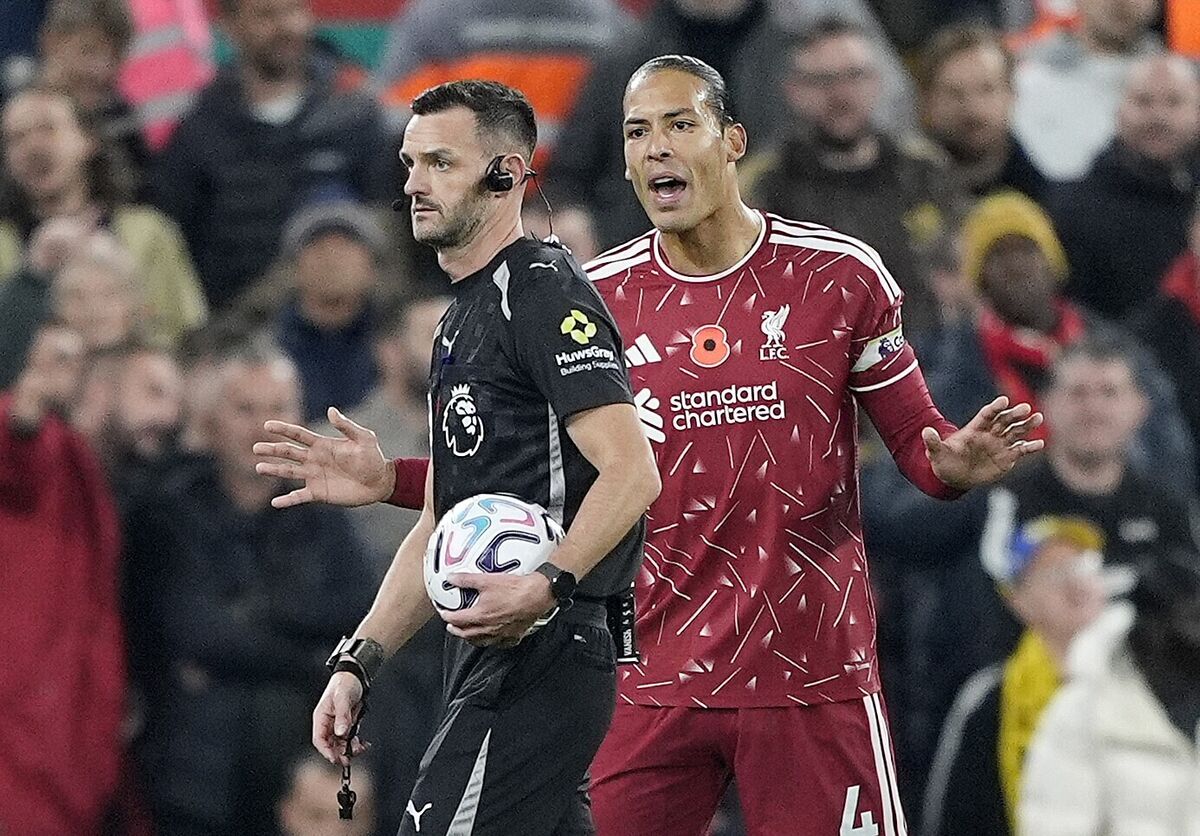
Ironically, that argument resurfaced later in the game.
Following a foul by Alexis Mac Allister on Martin Odegaard, tempers flared between Mac Allister and Arsenal's Noni Madueke. During the confrontation, Madueke moved his head into Mac Allister's face. Once contact was made, the Liverpool midfielder immediately fell to the ground.
In truth, Mac Allister's reaction was embarrassing. There was barely enough contact to trouble a toddler. Yet perhaps he was simply playing the modern game. If staying on your feet can cost you a decision, as it seemingly did Isak, then exaggerating contact begins to look like the smarter option.
By the letter of the law, initiating contact with your head is an offence worthy of punishment. Yet the subsequent VAR discussion raised further questions. According to the released audio, officials recommended yellow cards for both players. However, because Madueke had already been booked, the officials instead instructed the referee to caution Timber and Mac Allister.
How is that justice?
Mac Allister deserved a yellow for his theatrics, but Madueke, who instigated the confrontation and made the contact, escaped punishment because a second booking would have resulted in a dismissal. A teammate effectively took the punishment instead.
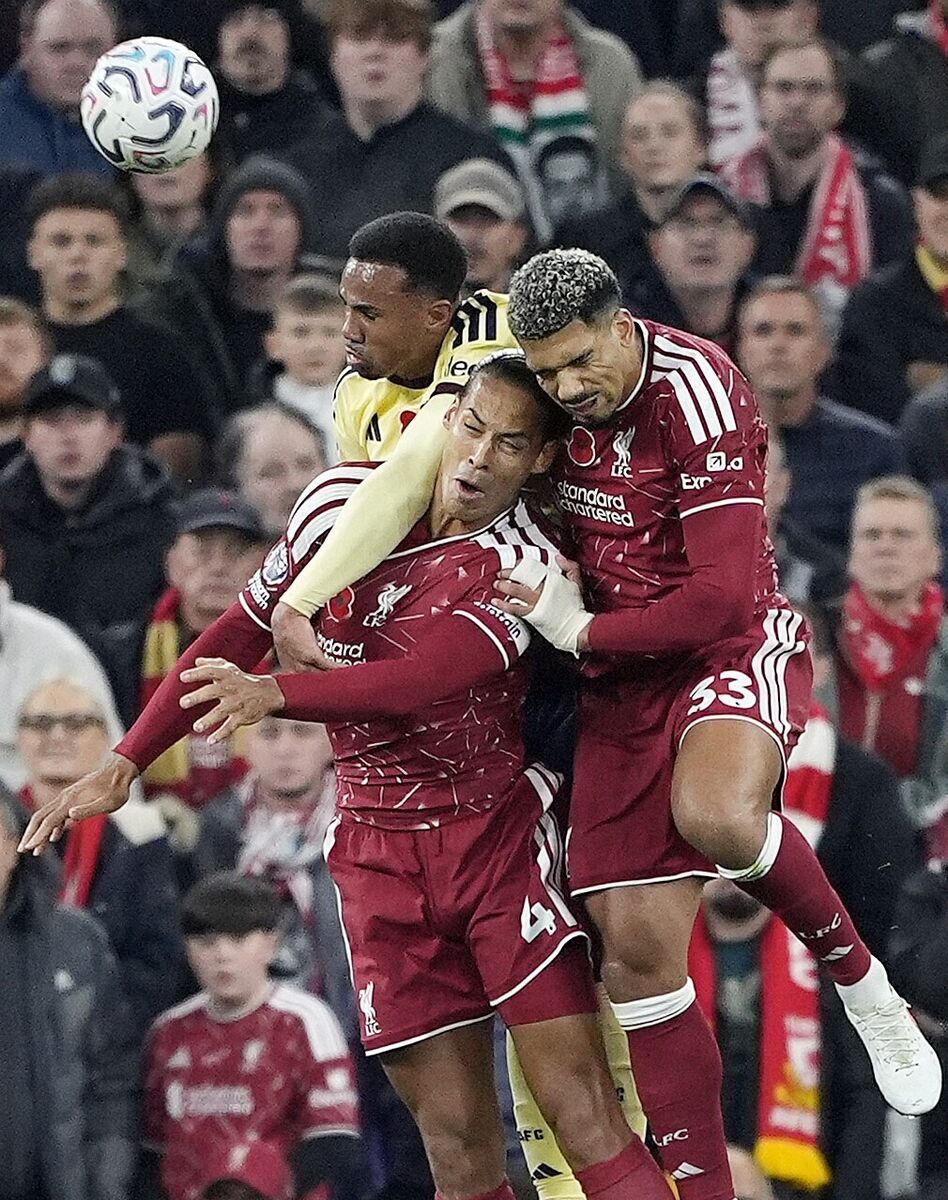
The inconsistencies did not end there.
Christos Tzolis wrapped both arms around Cody Gakpo as the Dutch forward entered the Arsenal penalty area. While it would have been a soft penalty, supporters have seen similar incidents produce spot-kicks and red cards through VAR intervention countless times in recent seasons. On this occasion, however, officials saw things differently.
The same applies to Trey Nyoni's early challenge on Odegaard, when the Liverpool youngster trod on the Arsenal captain's ankle. Had that tackle taken place later in the game, many suspect a red card would have followed. VAR chose not to intervene.
And that remains the central problem.
Football supporters can accept mistakes. What they struggle to accept is inconsistency. One week an incident is deemed worthy of a penalty, red card or suspension; the next week an almost identical situation is ignored.
Until such point as we get the fair use of VAR from fair and properly trained officials, the technology, by no fault of its own, is useless and a waste of time and resources. VAR was introduced to prevent injustice, not to create them.










 App?


