Fitzgibbon Cup teams should get priority access to hurlers in early rounds of the league
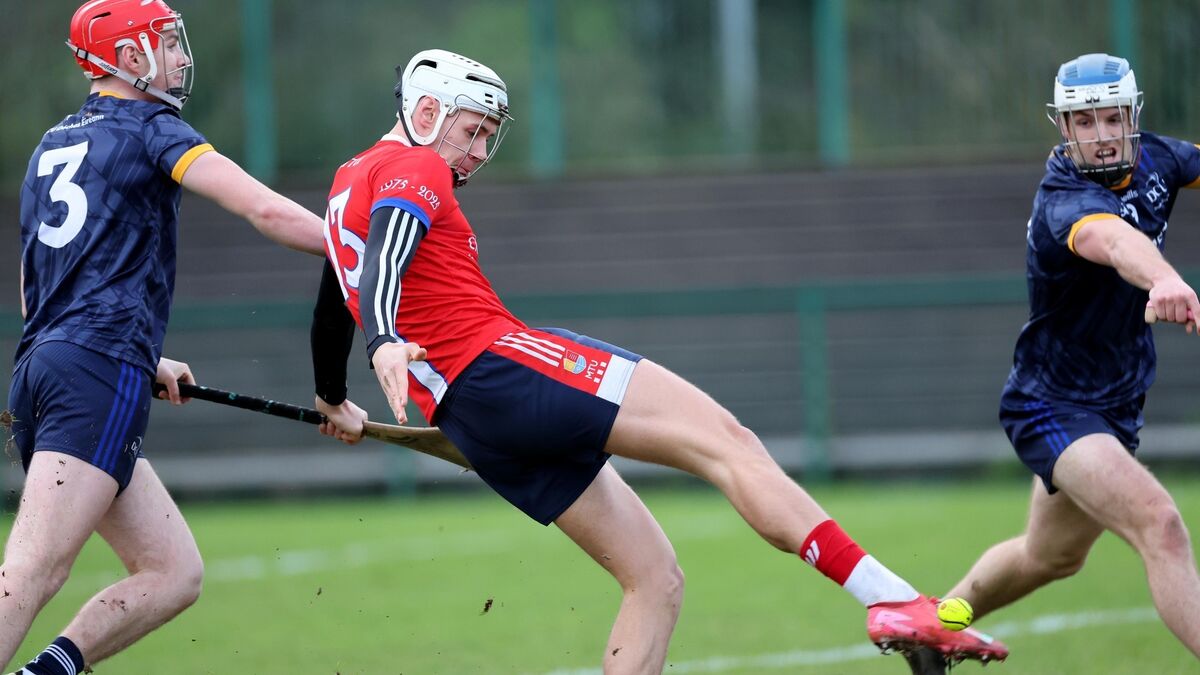
Alan Walsh, MTU Cork, uses his football skills to kick the sliotar away from Sam Bourke and Dan O'Meara, DCU, in the Electric Ireland Fitzgibbon Cup quarter-final. Picture: Jim Coughlan.
We trust that tonight’s first Fitzgibbon Cup finalists to compete at Croke Park in 40 years will receive a better reception than those who partook in the 1981 decider.
That day, Canon O’Brien’s UCC team and UCD both arrived at GAA HQ early to find the gates closed.
With both squads standing side by side on the footpath, an awkward silence fell. It lingered until one Dublin student started singing ‘Molly Malone’, prompting the Corkonians to respond with ‘The Banks of My Own Lovely Lee’ in a full-scale sing-off.
The story is recounted in Dónal McAnallen’s wonderful history of higher education Gaelic games, ‘The Cups That Cheered’. The author notes how, from the outset, social occasions surrounding the tournaments took on equal importance to the matches.
A ‘reception céilí’ was hosted on the Friday for arriving teams, while the Sunday banquet and céilí were the main events.
The competitions have since evolved into ‘serious business’, as the book’s final chapter is titled.
At the same time, shortly after the turn of the millennium, the National Leagues were compressed into a springtime window.
It has become a frequent conversation topic for managers in recent weeks. Liam Cahill’s comments were overshadowed by Ben O’Connor’s post-match remarks on the state of hurling refereeing, but the Tipp manager was clearly unhappy about the clash of schedules.
“I hear talks of maybe an extra group or extra matches in the Fitzgibbon next year. Something will have to give,” he said.
“It is just not feasible to play here in front of the crowds and the level we are playing when fellas have played equally competitive and aggressive games 48 hours before.
“We are talking out both sides of our mouth in the GAA if we continue to allow that to happen in relation to player welfare. It has to work some way better.
“Whether we assign a five- or six-week period for it and just get it played off, and allow Fitzgibbon players to be with their colleges only for that period of time, or whether Fitzgibbon itself just goes to a simple get one chance, if you're beaten, out and finish... It's definitely something that has to be looked at.”
O’Connor also had his say on the matter before the league began.
“That's one of the most frustrating things about it,” he said. “The colleges want their fellas training and we want them in training with us.
“Is that going to happen? Probably not. But that is probably the only solution, because it's the same fellas that are being flogged. It's your top fellas being flogged that have to do too much.”
Offaly manager Johnny Kelly linked an injury sustained by centre-back Donal Shirley against Kilkenny to playing a midweek Fitzgibbon game on an artificial surface.
Limerick manager John Kiely is heavily impacted by UL and Mary I completing an all-Shannonside showpiece for the second time in three years.
“I'd love if it was played before Christmas, of course I would,” he said at the weekend. “But it isn't. It's on now and we have to get on with it.”
In ‘The Cups That Cheered’, McAnallen notes how the fixture issues weren’t instigated by college scheduling, but by the reorganisation of inter-county games dating back over two decades.
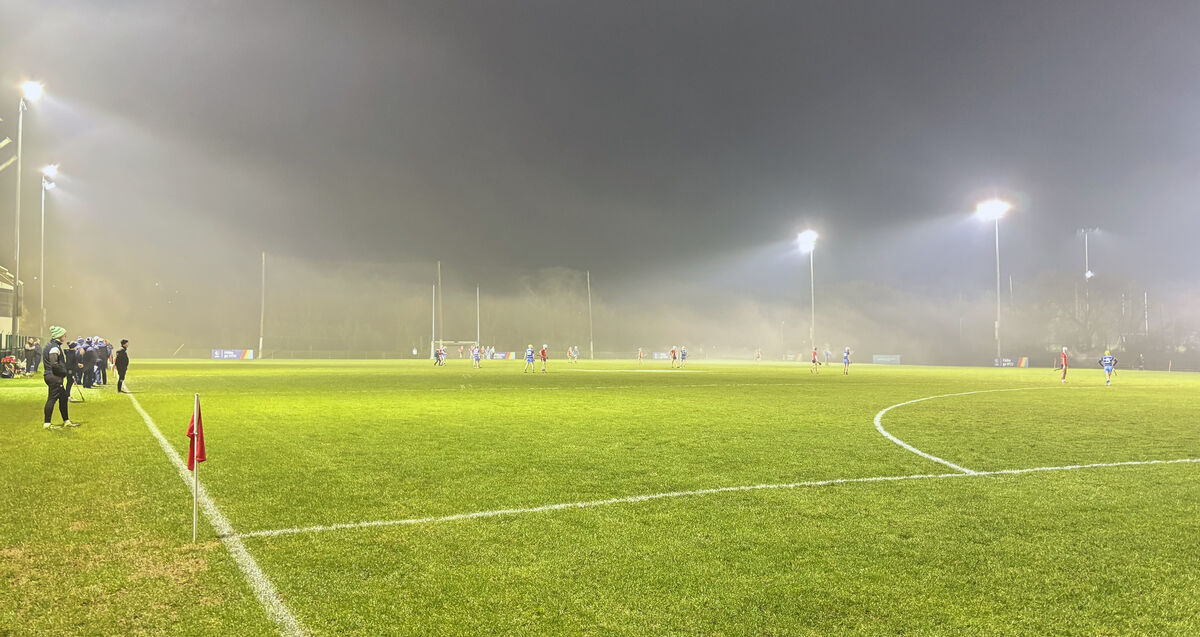
Calls for the Fitzgibbon and Sigerson to be run off before Christmas run into problems concerning college exams and extra clashes with other GAA fixtures.
Former GAA president Nickey Brennan raised the investment by colleges into Gaelic games on the Treaty Talk podcast. Not only are top players on scholarships, many counties are dependent on the high-performance facilities and pitches provided by third-level institutions.
The issue should be more straightforward for hurling to fix. The leagues are primarily a warm-up competition, unlike the cutthroat Divisions 2-4 in football.
As for the venues, while Croke Park is a nice ceremonial return as part of DCU’s hosting, the days of predetermined colleges arranging the finals hark back to the banquets and céilís of old. The practice is out of time.
The last four all-Limerick finals have been held in Dublin, Kerry, Cork, and Waterford. The only all-Cork final fell on the perfect year to be hosted at the Mardyke. A couple of years earlier or later, and it’d have been off to Belfast or Galway. Last year’s Sigerson final was an all-Dublin affair played in Mayo.
Sensible venue selection would benefit players, fans, and the competitions.









 App?
App?


