Christy O'Connor: Supporters engaging in behaviour that goes against spirit of what GAA is about
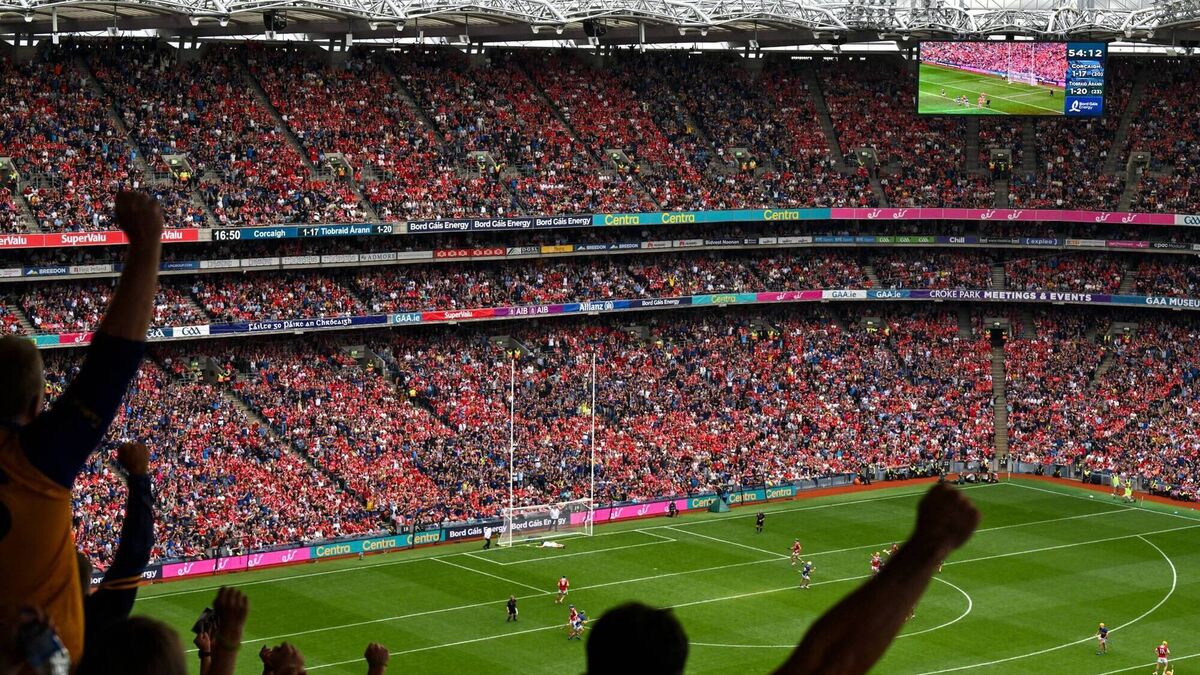
Fans in full voice at Croke Park when Tipp beat Cork last July. Picture: David Fitzgerald/Sportsfile
When Colm Parkinson from ‘ ’ spoke to Liam Cahill after the Cork-Tipperary match in Páirc Ui Chaoimh last Saturday, Parkinson asked the Tipperary manager about his interaction with a section of the crowd after Darragh McCarthy had just taken a free in front of him.
As soon as McCarthy nailed it, Cahill turned around and said something to the crowd.
Understandably, Cahill didn’t reveal what he said, or anything about the exchange, choosing instead to speak about McCarthy’s free-taking routine, the length of which drew the ire of the crowd.
“That’s his style,” said Cahill. “He’s been doing it since he was eight or 10 years of age, maybe younger.”
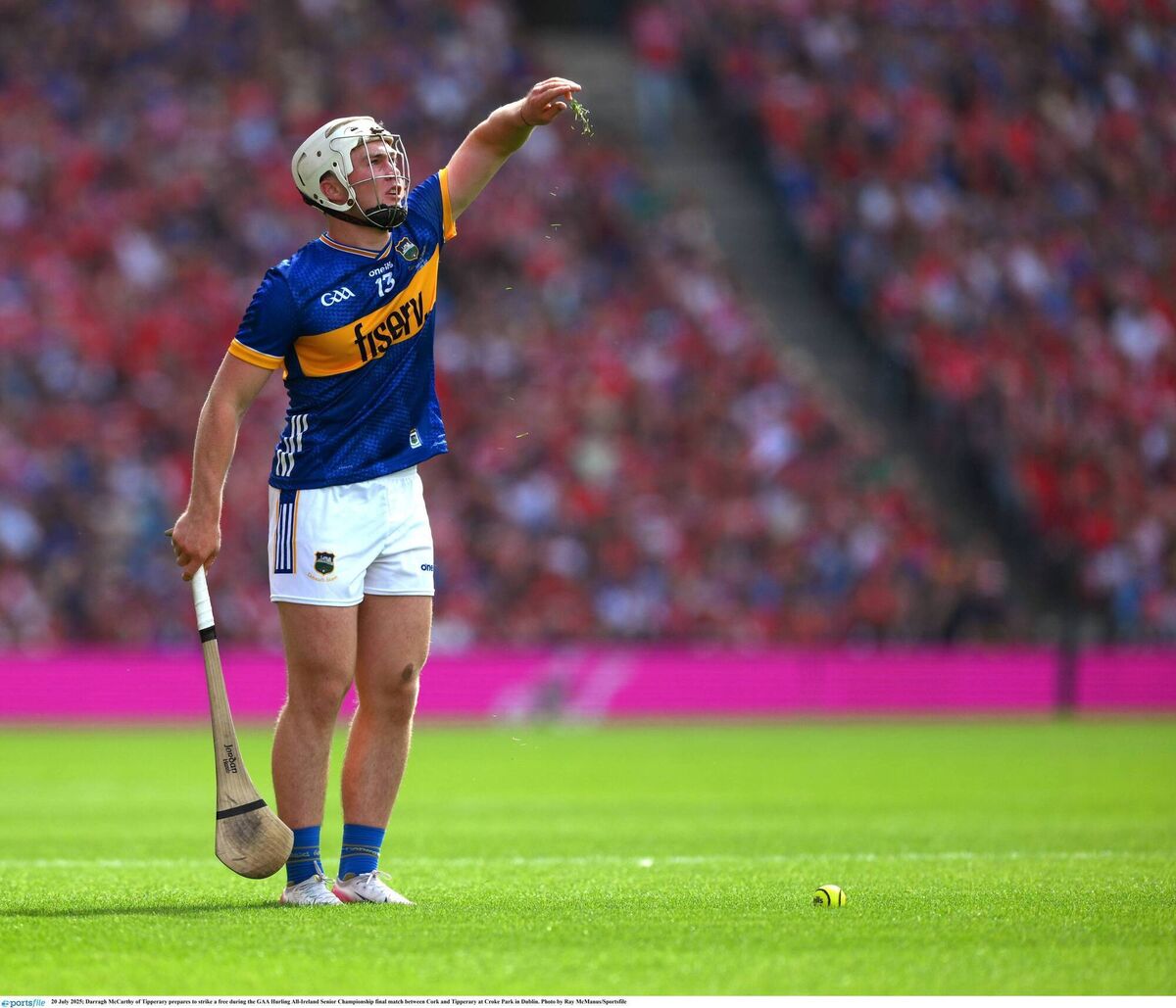
The booing of McCarthy was a stain on an electric occasion because the boorishness wasn’t just restricted to frustration with the length of time he took over the two frees he converted; McCarthy was booed as soon as he entered the pitch in the 55th minute.
McCarthy was returning to the venue for the first time since being sent off against Cork before the throw-in of last April’s round robin match. Some of the Cork supporters hadn’t forgotten, but they weren’t long in reminding McCarthy either in last July’s All-Ireland final when they also booed some of his free-taking.
It made no difference as McCarthy delivered an exhibition for a young player still U20, scoring 1-13, 1-9 from placed balls.
McCarthy does take longer than most free-takers but it still doesn’t excuse booing a young player, whatever the circumstances or the frustration opposition supporters have with his routine.
Speaking on Dalo’s Hurling Show on the , Liam Sheedy was appalled by the actions of sections of the Cork supporters.
"It’s unacceptable,” said Sheedy. “It has no part in our games. It has to stop. I think the GAA need to be really strong on this. There is no honest GAA person who would accept that’s the environment we want our games to be played in."
Unfortunately though, that environment is become too common in GAA, where more players are being booed, jeered and pilloried than ever before.
That conduct certainly extends far further than just some Cork supporters but last Saturday wasn’t the first time that they were fingered for behaviour deemed unfitting for a county of Cork’s proud sporting history and heritage.
After the 2024 All-Ireland semi-final, Aine Fitzgerald, managing editor of the Limerick Leader newspaper and Limerick Live website, wrote a piece about a trend which she’d first noticed in the Cork-Limerick round robin clash two months earlier.
“The booing by the Cork team’s supporters (for the All-Ireland semi-final) was ugly,” wrote Fitzgerald.
“As Limerick supporters we got our first taste of it down in SuperValu Páirc Uí Chaoimh on May 11 (2024)
“The booing by some Cork fans when Limerick players went to take a free left a bitter aftertaste on the lonely road home. Fast forward to July 7 and it was about to get worse.
"The persistent booing by Cork fans when Diarmaid Byrnes and Aaron Gillane went to take a free was just not cool. It wasn’t all Cork supporters but it was a lot of them.
"The booing tarnishes all the fans - many of whom were no doubt scarlet at the goings-on. Let's preserve the dignity of the game by calling booing out for what it is - cheap, childish, nasty and uncalled for.”
Cork supporters could have accused Fitzgerald of sour grapes, or pointed to examples of Limerick fans applying similar verbal heat to Cork players. But that’s not the point. Fitzgerald is right – booing is cheap and nasty and has no place in the game.
Boorishness has become too common a theme at sporting events and, while booing a young GAA player is on a completely different scale to the kind of vitriolic abuse hurled at Europe’s golfers at last year’s Ryder Cup, accepted codes of crowd behaviour at GAA matches have still changed too much from what they should be.
Supporters reflect modern society and increasing belligerence and aggression is becoming too apparent and latent at GAA matches.
Writing on psychology in back in October, Rory Carroll pointed to how some theorists of crowd psychology attribute aggression to “deindividuation”, whereby a sense of anonymity and sensory overload untether people from their sense of individual identity and they do things they ordinarily would not.
Other theorists posit “convergence”, in which the crowd dynamic unleashes individuals’ inner beliefs and values. Either way, the results can be ugly.
Increasing public toxicity can also be linked to repulsive social media feeds, which has added to a climate of normalising unacceptable behaviour. As well as reaffirming the new world against the old, that modern climate has also reconfigured the meaning of success into triumphalism and an absolute win-at-all-costs even amongst supporters.
Supporters in most counties now are engaging in behaviour that completely goes against the spirit of what the GAA should be about.
As well as setting a terrible example for kids, booing, especially persistent booing, tarnishes all fans.
There are ways and means of trying to improve crowd behaviour such as making an example of the worst offenders by ejecting them from the stadium. Yet stewards and officials can only do so much when the chorus is deafening.
That places more personal responsibility on supporters to either desist from what the mob is doing, or to call out booing for what it is – cheap, childish, nasty and uncalled for.






 App?
App?


