Christy O'Connor: Cork GAA focus on upskilling coaches and setting high standards to be a brand leader
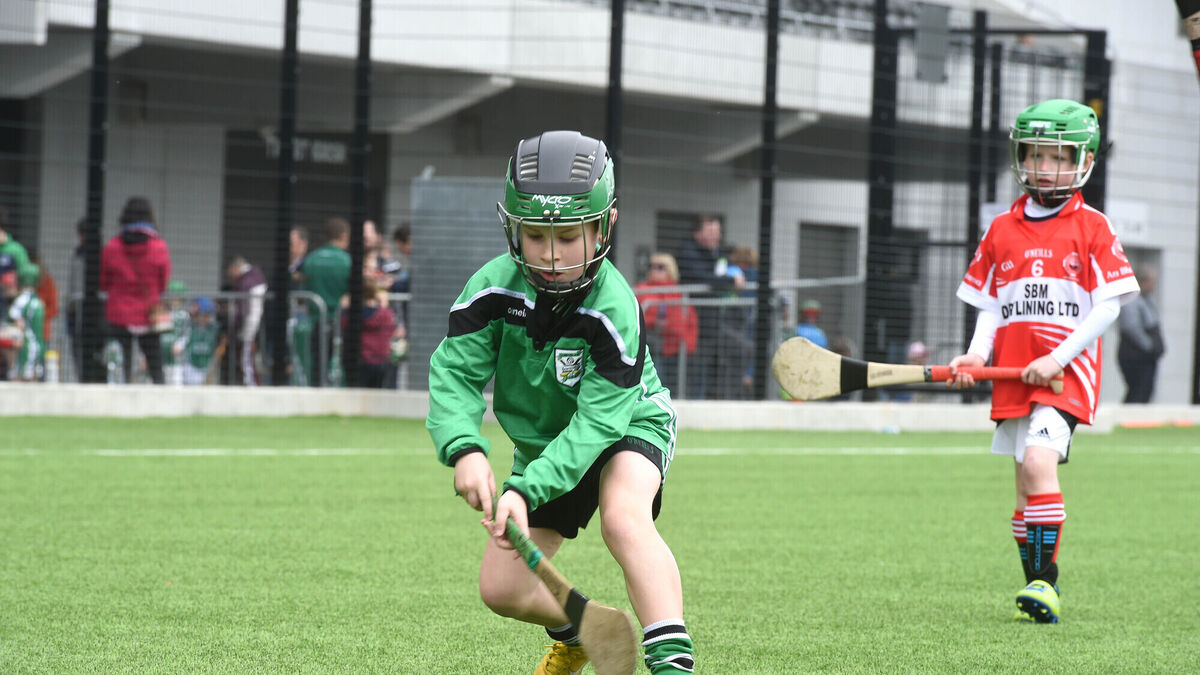
Rebel Óg Monster Blitz action at Páirc Uí Chaoimh. Picture: Larry Cummins.
LAST week, Cork GDA Colm Crowley posted a tweet outlining the massive numbers around the county’s busiest-ever winter coach education programmes.
In total, over 1500 coaches engaged in over 110 coach education sessions. The information on the Cork GAA coach education update between November and February was really impressive, where the data told the extent of the groundwork being done around the county.
There were 32 introduction to coaching Gaelic Games courses with 580 participants; nine coaching workshops with 420 in attendance; seven award 1 courses with 160 coaches involved; four coaching conferences with 340 in attendance; four High-Performance workshops for development squad coaches.
Just a couple of days before Crowley’s tweet, Owen Mooney, Learning and Games Development co-ordinator with Dublin GAA had presented a ‘Time to Play’ workshop for Rebel Óg Coaching in Bishopstown GAA club.
The previous Monday, Cork GAA High Performance had held an event in Páirc Uí Chaoimh on the ‘Practical use of GPS in the club setting’.
It’s been a busy period. Workshops ran throughout February. At the end of January, Cork held an impressive coaching conference on Youth/Adult coaching, where the keynote speakers were Shane Keegan, Michael Fennelly, Paudie Kissane and Kevin Clancy.
There was a ‘Child Coaching Conference’ the previous week, with Ed Coughlan, Wesley O’Brien and Peter Casey. All areas across the spectrum were covered throughout that month as a ‘Nursery Coaching Conference’ was organised on the first week in January. Suitable for coaches, parents and teachers in the 4-7 age groups, the presenters were Brian O’Halloran, Niall Williams and Colm Crowley.
During those three events, 250 coaches were exposed to the expertise of 10 different presenters. It’s hard to ascertain but it’s extremely unlikely that any other county around the country would have exposed their coaches to such a level of detail and expertise in such a short space of time.
On the other hand, it’s also very unlikely that any other county – apart from Dublin - would have those kinds of coaching numbers. Yet Cork has to, considering the massive volume of players and clubs throughout the county.
Players still have to perform on the pitch but there are far less excuses now than Cork might have been able to use in the past.
When the Cork minor hurlers went eight years without even contesting a Munster minor final between 2009-’16, there was no real mystery to the anger which accompanied that drought - because Cork had held themselves back with outdated thinking and a refusal to move with the times.
As more and more forward-thinking counties began to hot-house their best young talent in elite development squads, Cork refused to acknowledge that it was also the most efficient way of asserting their natural advantage of huge playing numbers.
The process was delayed by scepticism and stubborn resistance, which meant that Cork only dabbled in elite development squads at U16 and U17. As most other counties had development squads from U14, Cork were falling completely behind until denial and delusion finally gave way to reality and best practise.
Rebel Óg coming into effect in 2012 allowed the underage structures to move away from a rigid Divisional system to a softer structure in terms of borders which facilitated the creation of better competitions, especially in the Premier grade.
The next part of that process though, was to upskill the coaches. Between 2015-2021, over 8,000 coaches completed courses. The drive has got even stronger again in the last 15 months as Cork are attempting to expose their coaches across all levels to a more High-Performance environment.
Conor Clancy, the lead sports scientist with the Cork senior hurling team, is currently undertaking a PhD study that is aimed at making Cork a brand leader in that area of developing young players.
Clancy’s research in GPS and athletic profiling at county and club level is assisted through his involvement with Cork. Working under high-performance manager Aidan O’Connell, the idea of Clancy’s PhD is to have some sort of framework to help players who are transitioning from 20s or minors, or club teams, to Cork senior panels, Clancy’s research is novel within the GAA, but he is also co-ordinating a data-building system carried out by three MTU and three UL students, where each one is placed within a team from senior down to minor in hurling and football.
The gathering database will help the coaches in the future to get those young players up to an elite senior standard as quickly as possible.
Cork are lucky that they have good people in the right positions to drive their model of education and best practise, but the current system is also strengthening the culture that it is hoping to grow, develop and expand that process.
In so many ways, that culture has to be stronger because of how Gaelic football and hurling are continuously changing and evolving. The fundamentals of the games will always be the same but better coaching behaviours and practises have merely accelerated the pursuit of coaching improvements and, ultimately, better and more rounded players.
And in Cork, so much advanced coach education and coaching practises should ultimately make their teams at all levels better.


 App?
App?


