Cork GAA Jersey Wars final: Vote for St Finbarr's or Kiskeam
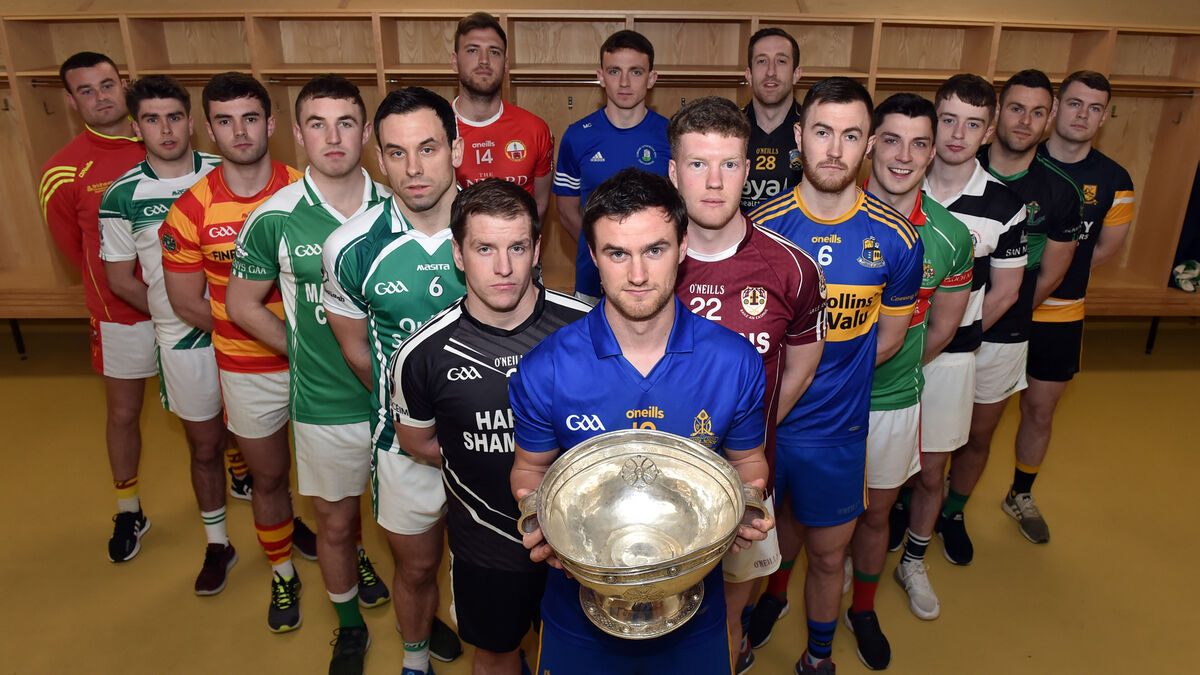
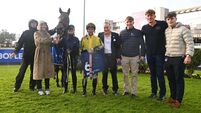
St Finbarr's, with Enda Dennehy holding the Andy Scannell Cup, and Kiskeam, to his right, represented by Diarmuid Fitzgerald, made it to the GAA Jersey Wars final. Picture: Eddie O'Hare
WE'RE down to the last two in our competition to find out what your favourite GAA geansaí is.
Since July, your votes have decided the best design in our Cork GAA Jersey Wars competition.
Our resident jersey expert Denis Hurley compiled a list of 32 clubs, based on those involved in the senior tiers and a selection of wild cards. We put them in alphabetical order and paired them up and we're now down to the final: city powerhouse St Finbarr's against Duhallow outfit Kiskeam.
Full details of the competition are here.
Voting will run from 8am on Saturday for 48 hours on the link below:
The results will be revealed in Tuesday's Echo.
The origins of the choice? The story on the club’s website, which is acknowledged as being unverified, comes from a letter written by Johnny O’Herlihy to Con Neenan in the 1970s.
Johnny had played with the Fr O’Leary Hall hurling team but transferred to the Barrs in 1910 and his father Patrick had played for the club in 1870s. Back then, players often competed in their work clothes, with sashes or caps used for identification. Patrick’s wife happened to be walking through Paddy’s Market on North Main St one Saturday and bought a blue jersey for him for the price of one shilling and sixpence. The following day, he wore it to Cuffe’s Field near the Lough where a decision was being made as to the club’s colours and they were so taken with his blue hue that it was adopted.
Seán Beecher’s book ‘The Blues’ notes that there has also been a suggestion that because the Lough parish church is called The Church of the Immaculate Conception, blue was chosen because blue is always associated with Our Lady.
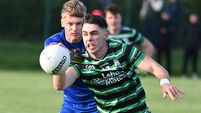
The Barrs’ blue, trimmed with gold, has enjoyed lots of success, with the club the only one in Ireland to have won All-Ireland senior club hurling and football titles. There is one outfit distinction between the two codes, though – white shorts are favoured in hurling while all-blue has prevailed in football since the 1979 county final win over Castlehaven. Previously, football jerseys had a harp whereas hurling ones did not.
For the most recent All-Ireland club title, the 1987 football win, the Barrs were up against Roscommon’s Clann na nGael, who also play in blue and gold and a white set of jerseys was worn. However, after the victory in Croke Park, team captain John Meyler donned a traditional top for the presentation of the cup.

Nowadays, gold jerseys are the second choice – in a modern style compared to the first-choice jersey, which remains unsullied by any superfluous designs. Across the chest is the club name in Irish along with the harp – a sponsor’s name has never appeared on the jerseys in a top-class game, though Ryan’s SuperValu in Togher do enjoy a close relationship with the Barrs and sponsored the off-field gear when the 32-year wait for an SFC title was ended in 2018.
IT'S perhaps unsurprising that the New Zealand rugby team should provide the inspiration for Kiskeam’s colours, though for the first 20 years of the club’s existence, they lined out in a blue jersey with yellow sash.
Founded in the mid-1940s, Kiskeam did win the Duhallow novice title in 1947 but otherwise success was hard to come by for the club situated close to the Cork/Kerry border.
Having reached the 1960 Duhallow junior final, Kiskeam enjoyed an eight-point lead over Castlemagner at one stage but lost out and then, following a heavy defeat to the same opposition in 1963, one Kiskeam player walking off the field suggested that the blue and yellow jerseys should be burned.
Whether or not the garments met such a fiery fate is unknown, but what is certain is they were not seen again as the colours were replaced. Prior to the start of the 1964 season, a change was afoot, as then-club treasurer and current president John P Murphy told John Tarrant in 2020.
“It came up at a club meeting,” he said.
The transformation in fortunes was immediate as the club won the Duhallow title for the first time in 1964 and went all the way to county glory. A period competing at intermediate level followed and, while they did drop back to junior, the 1990s saw them regularly challenging for divisional honours.
In 1994, 1996, 1997, 1999 and 2000, they won the Duhallow junior football title, reaching the county final in 1994, 1997 and 2000, while there were divisional final losses in 1991 and 1995. Eventually, they went all the way in the county in 2002 – reaching the Munster club final – and when the intermediate grade was split in two for 2006, Kiskeam were placed in the new premier intermediate championship.

Ten years later was to prove to be a memorable one, as the club achieved a place in the senior championship with victory in the PIFC. After a first-round defeat to Na Piarsaigh, Kiskeam regrouped with wins over Castletownbere and Mallow before turning the tables on Piarsaigh at the quarter-final stage.
Another win, against Béal Átha’n Ghaorthaidh, set up a final clash with Fermoy, who also wear an all-black kit, trimmed in amber. The North Cork side wore red and white for the final while Kiskeam donned a reversal of their usual jerseys, white with black accents, but it didn’t affect them unduly as they triumphed by 2-12 to 0-14 in Páirc Uí Rinn.
Wins over Aghada and Carbery were highlights of the first year up while there was a memorable victory over Mallow in 2019, but the end of that year saw a restructuring with Kiskeam placed in the new Senior A grade, from where they will look to progress in 2021. Public house The Harp & Shamrock provide shirt sponsorship.


 App?
App?


