Cork's Bessborough: Between 1943 and 1944 there was a reported 82% infant mortality rate
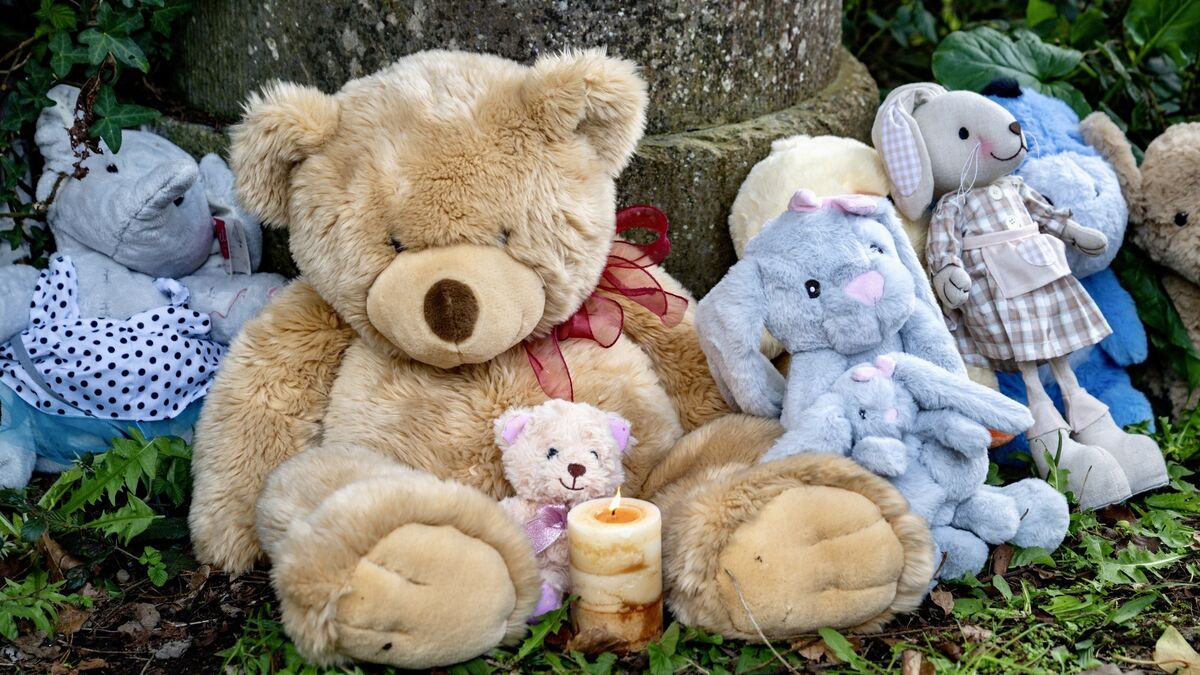
The gates of Bessborough were covered with teddy bears during a vigil which saw scores of people gather to protest Cork City Council’s approval of 140 apartments for the site. Picture: Chani Anderson.
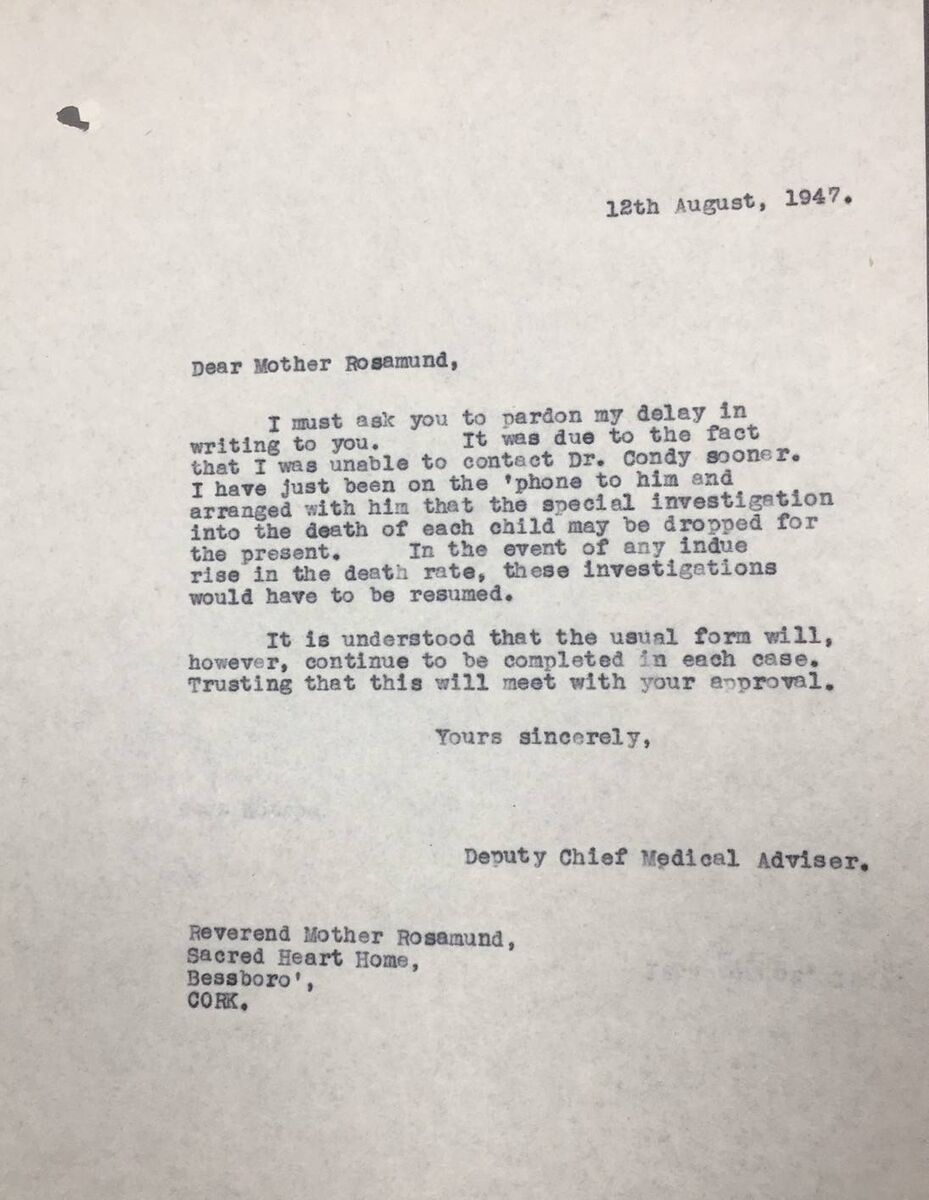
THE papers of Dr James Deeny are neatly stored in cardboard box files, bound in tidy ribbons, in the archive of the Royal College of Surgeons Ireland archive in Dublin.
In among a mixture of random correspondence and carbon-copied replies to long-lost letters is a note to the head of a Cork mother and baby institution, revealing a quiet decision to draw a discrete veil over the deaths of almost 700 babies there.
The letter states that its author has arranged “that the special investigation into the death of each child may be dropped for the present”. It warns that should the death rate there rise again, “those investigations would have to be resumed.” This was, in all probability, approved at the highest levels of the Irish government.
James Deeny, a Lurgan-born doctor, served as Ireland’s chief medical advisor from 1944 until 1962, stepping temporarily aside from the role from 1950 to 1953 — in part due to disagreements with then health minister Noël Browne.
When he was appointed, the country’s two biggest health problems were tuberculosis — Ireland’s TB levels were the worst in Western Europe — and a high infant and maternal mortality rate.
At the time, the United Kingdom was embroiled in the Second World War and had an infant mortality rate of 4.9%. Ireland’s rate was 6.6%.
In his 1989 memoir To Cure And To Care, Deeny wrote: “Going through returns for infant deaths in Cork, I noticed there was something unusual and traced the matter to a home for unmarried mothers at Bessborough outside the city.
“I found that in the previous year some 180 babies had been born there and that considerably more than 100 had died.”
Bessborough had become a mother and baby home in 1922, and by the end of 1944, the time Deeny was probably looking at the figures, 623 children had been officially certified as having died at the home or after discharge from there. By year’s end, 1945, that number was 659. Marasmus — severe malnutrition — was a recurring cause of death.
In the period between April 1943 and March 1944, 124 babies were either born at Bessborough or admitted there after birth, while 102 children were officially certified as having died there, with inspection reports citing an 82% infant mortality rate in the home.
A June 1941 government inspection had noted that the nun in charge, Superioress Martina Gleeson, had no qualifications in supervising maternity care. It also noted a “tendency to discourage breastfeeding” and suggested this might be partly responsible for Bessborough’s soaring infant mortality rate.
Responding, Mother Gleeson denied this, saying that women were in fact forced to breastfeed.
In August 1943, a subsequent inspection report, written by government inspector Alice Litster, found that, of the 27 babies in the day nursery aged between three weeks to nine months, only eight were breastfed and only three fully.
“The greater number were miserable scraps of humanity, wizened, some emaciated and almost all had rash and sores all over their bodies, faces, hands, and heads,” she wrote.
Responding, Bessborough’s medical officer, Dr JT O’Connor, blamed the mothers, claiming: “In the majority of cases the mothers are inclined to be fretful and have no love for their infants.” This, O’Connor felt, resulted in “illegitimate” children sometimes failing to digest breast milk.
Fianna Fáil founder-member Dr Conn Ward was parliamentary secretary at the Department of Local Government and Public Health, in effect minister for health. Deeny’s boss, he directed in 1944 that “for the time being”, no expectant mother should be sent to Bessborough, ordering they instead be referred to the County Home.
Bishop Daniel Cohalan of Cork responded angrily to Ward’s February 1945 request that Mother Gleeson be replaced, but Ward’s office replied that should the Bessborough deaths leak to the public, it would result in a “public scandal”.
This was an unusual show of defiance from Ward, a staunch Catholic who had, a year earlier, banned the sale of tampons — lest they cause sexual arousal in women — on the insistence of Archbishop McQuaid.
Deeny subsequently travelled to Bessborough, and inspected the “spotlessly clean” home.
“I marched up and down and around about and could not make out what was wrong; at last I took a notion and stripped all the babies and, unusually for a chief medical adviser, examined them,” Deeny wrote years later.
“Every baby had some purulent infection of the skin and all had green diarrhoea, carefully covered up.
“Without any legal authority I closed the place down and sacked the matron, a nun, and got rid of the medical officer. The deaths had been going on for years. They had done nothing about it, had accepted the situation and were quite complacent about it.”
Bishop Cohalan reported Deeny’s actions to the papal nuncio, Paschal Robinson, who visited the taoiseach, Éamon de Valera. He showed the nuncio Deeny’s report, and Robinson backed down.
“Later, when the place had been disinfected and repainted,” Deeny wrote, “the order supplied a new matron and we appointed a new doctor.” Mother Rosemonde was appointed to Bessborough in September 1945.
In Deeny’s archives, a handwritten note to Ward reads: “We might give the new Rev Mother, who appears to be very capable, a chance to pull Bessboro together before we press for a withdrawal of the maternity licence”.
Under Mother Rosemonde, the Bessborough death toll would drop from 36 in 1945 to 15 in 1946, rising to 20 in 1947, before going down to seven children in 1948, eight in 1949 and three in 1950.
Thereafter, the annual death toll remained in single digits.
Deeny’s papers show he travelled to Cork on Thursday, August 29, 1946, where his first meeting was with Dr Condy, county medical officer, at Condy’s South Mall office.
Bessborough is next mentioned in Deeny’s papers in an August 18, 1947, letter to Mother Rosemonde.
“I have just been on the ’phone to [Condy] and arranged with him that the special investigation into the death of each child may be dropped for the present.
“In the event of any [undue] rise in the death rate, those investigations would have to be resumed.”
Given Éamon de Valera’s familiarity with Bessborough, it seems very unlikely that the decision to drop the threat of an investigation was made without the taoiseach’s knowledge.
Whether there ever was a real prospect of an investigation is an open question.
Hundreds of children died too in Castlepollard and Sean Ross Abbey, both run by the same order; in the Tuam Home, run by the Bon Secours order, and in St Patrick’s on the Navan Rd, run by the Daughters of Charity.
Would the State have wanted to pull on the thread of child deaths in one institution?
As with Ward’s “public scandal” threat to Bishop Cohalan three years earlier, it seems at least debatable whether the State had an appetite for exposing hundreds of infant deaths in a system it ran hand-in-glove with the Church.
The position of minister for health was formally established in 1947, with James Ryan its inaugural incumbent.
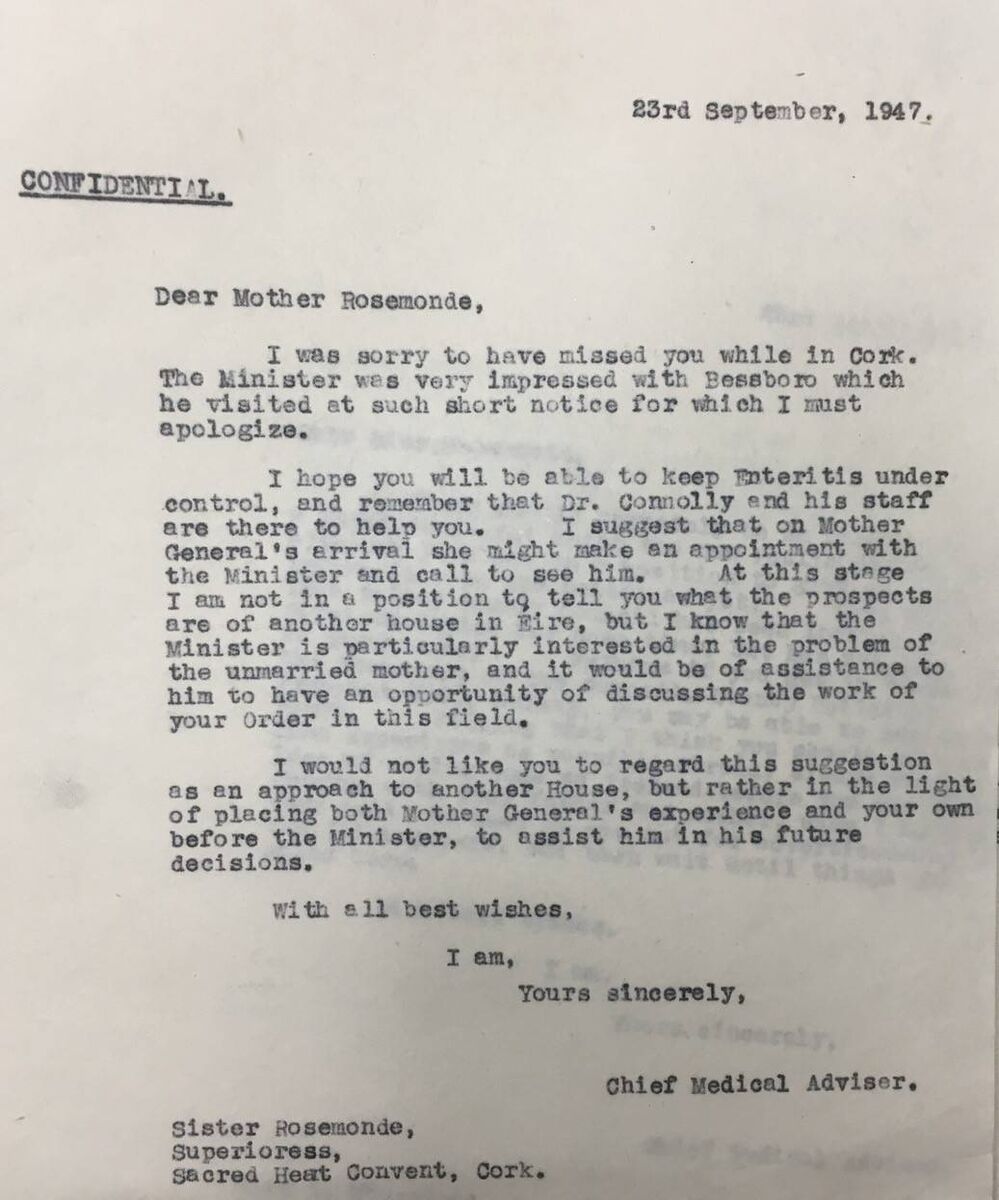
He visited Bessborough in September 1947. It appears to have been a surprise visit, because, in a letter that month to Mother Rosemonde, Deeny says: “The minister was very impressed with Bessboro which he visited at such short notice for which I must apologise”.
Deeny says he hopes Rosemonde “will be able to keep enteritis under control”, and reminds her that, “Dr Connolly and his staff are there to help you”.
Deeny then refers to a planned visit by the head of the Congregation of the Sacred Hearts of Jesus and Mary to Ireland, suggesting that upon the mother general’s arrival she make an appointment to meet with Ryan.
In his response, Deeny reveals the purpose of that requested meeting: A month after the State abandoned its threatened investigation, the congregation was pitching to run another mother and baby institution.
“At this stage,” Deeny wrote, “I am not in a position to tell you what the prospects are of another house in Éire, but I know that the minister is particularly interested in the problem of the unmarried mother, and it would be of assistance to him to have an opportunity of discussing the work of your order in this field.”
No further mother and baby institutions were opened in Ireland, and the following year, in October 1948, Deeny wrote to Mother Rosemonde to congratulate her on her reappointment.
Eight decades ago, the State abandoned a threatened investigation into the Bessborough mother and baby institution, despite the deaths of nearly 700 children. Donal O’Keeffe looks at a quiet conspiracy likely approved at the highest levels of government.

App?