Council issues warning after Portuguese man o’ war spotted along Cork coastline
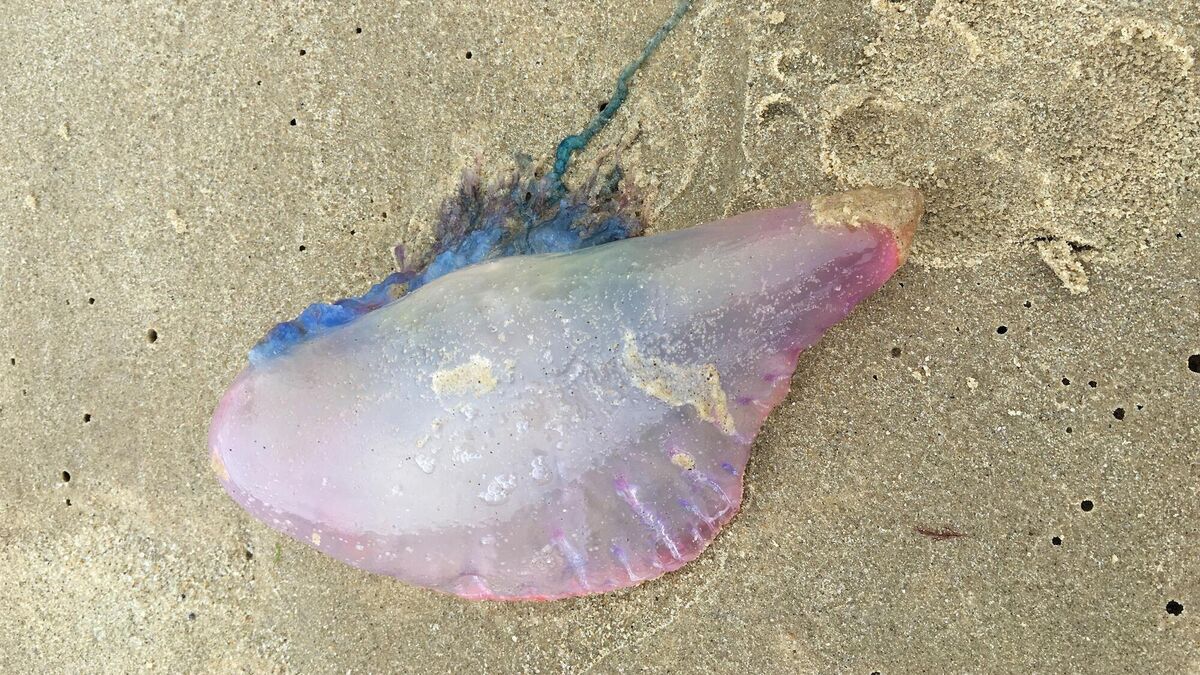
The man o’war is covered in venom-filled nematocysts which it uses to paralyse and kill fish, and which can cause very painful stings to humans, and which can even prove fatal in cases of severe reaction.
Cork County Council has said it has received reports of Portuguese man o’ war jellyfish-like creatures being washed up on Cork beaches, and it has warned people not to touch them, or to allow their pets to touch them.
In the past days, several such creatures have been reported on Cork beaches, including at Long Strand beach in Rosscarbery and at Inchydoney beach.
The Portuguese man o’ war is not, technically, a jellyfish, as it is rather a colony of creatures which travel together, but its sting can be as deadly as that of any jellyfish.
The man o’war is covered in venom-filled nematocysts which it uses to paralyse and kill fish, and which can cause very painful stings to humans, and which can even prove fatal in cases of severe reaction.
Water Safety Ireland has said there has been an increase sightings of such sea creatures on Irish coasts and beaches, with the Portuguese man o’war and the lion’s mane jellyfish the most frequent sea creatures spotted.
According to Water Safety Ireland, there have been more jellyfish cropping up in Irish coasts and beaches over the past seven years – this is due to the warming of sea waters, and over-fishing off Irish coasts, resulting in fewer predators to keep the number of jellyfish at a manageable level.
If you do see a jellyfish like creature, here’s what Water Safety Ireland says you should do:
- If you sight one, you should contact the local authorities and they will bury them, as even when dead, the venom from such sea creatures can remain active for several days.
- Try to ensure you don’t get stung yourself when helping others.
- Remove any attached tentacles with a gloved hand, stick, or towel.
- Do not rub the affected area, as this could cause more venom to be released.
- Rinse the affected area with copious amounts of sea-water (do not use fresh water, vinegar, alcohol or urine).
- Apply a “dry cold pack” to the area (i.e. place a cold pack or ice inside a plastic bag and then wrap this package in a t-shirt or other piece of cloth).
- Use hot water for Portuguese man o’war stings at around 45 degrees for 20 minutes.
- Seek medical attention if there is anything other than minor discomfort.
- If you suffer from swelling, breathing difficulties, palpitation or chest tightness after being stung, go to the nearest emergency department urgently.







 App?
App?


