Books: Saluting Cork’s young warriors
In a new book, Boyhood’s Fire: Na Fianna Éireann At War, 1916-1986, author JAMES DURNEY reveals how Ireland’s youngest revolutionaries embraced the fight for freedom. Here, he gives an insight into how the group developed in Cork
Books: Saluting Cork’s young warriors

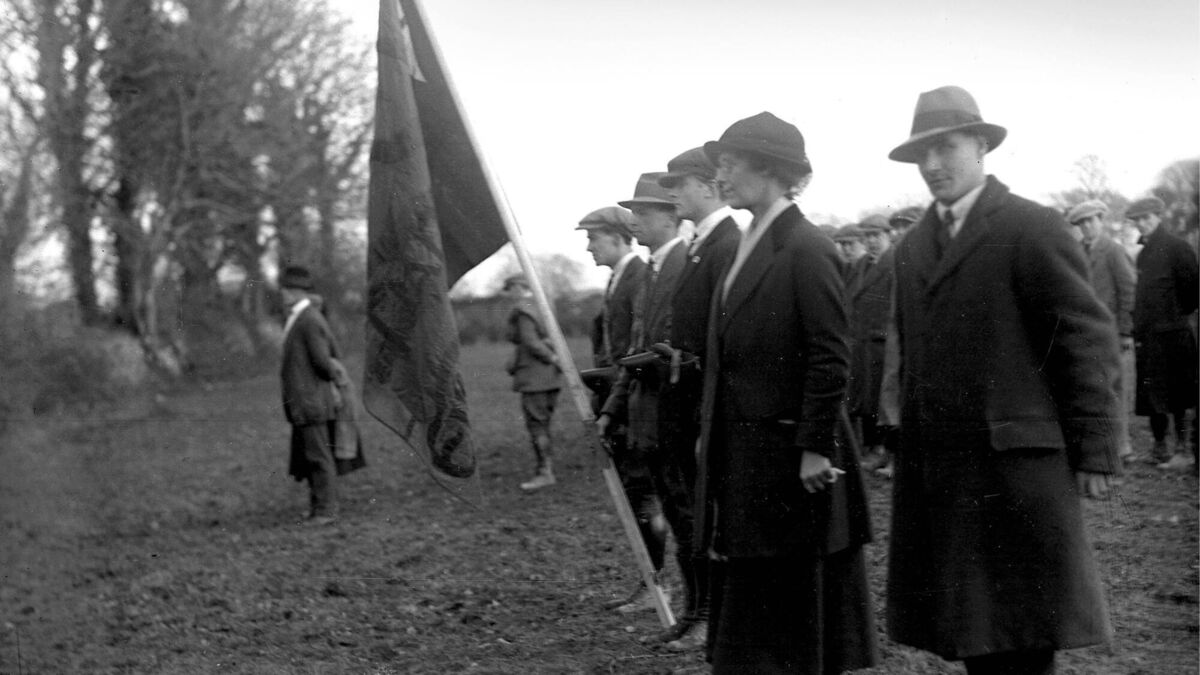
A Na Fianna Éireann rally takes place outside Cork city around 1915, in the early years of the organisation. Tadgh Barry, of Blarney Street, became chairman of the Cork Sluagh in June , 1914. 

On August 16, 1909, the Irish National Boy Scouts (Na Fianna Éireann) was formed by two nationalist activists, Bulmer Hobson and Countess Constance Markievicz.
It was intended as an alternative to directly counteract the influence of Sir Robert Baden-Powell’s British Boy Scout movement in Ireland.

Na Fianna Éireann membership was open to male children from eight years old to 18, regardless of class, creed, or political party.

While the Fianna was initially for boys, some girls did join, although, by 1922, membership had been limited to boys aged between 12 and 18.

Each member was given the title Fian (warrior) and the boys were offered a combination of military training, outdoor pursuits, and Irish cultural activities.

The aim of the semi-military movement was to train the youth of Ireland for armed conflict against British rule.

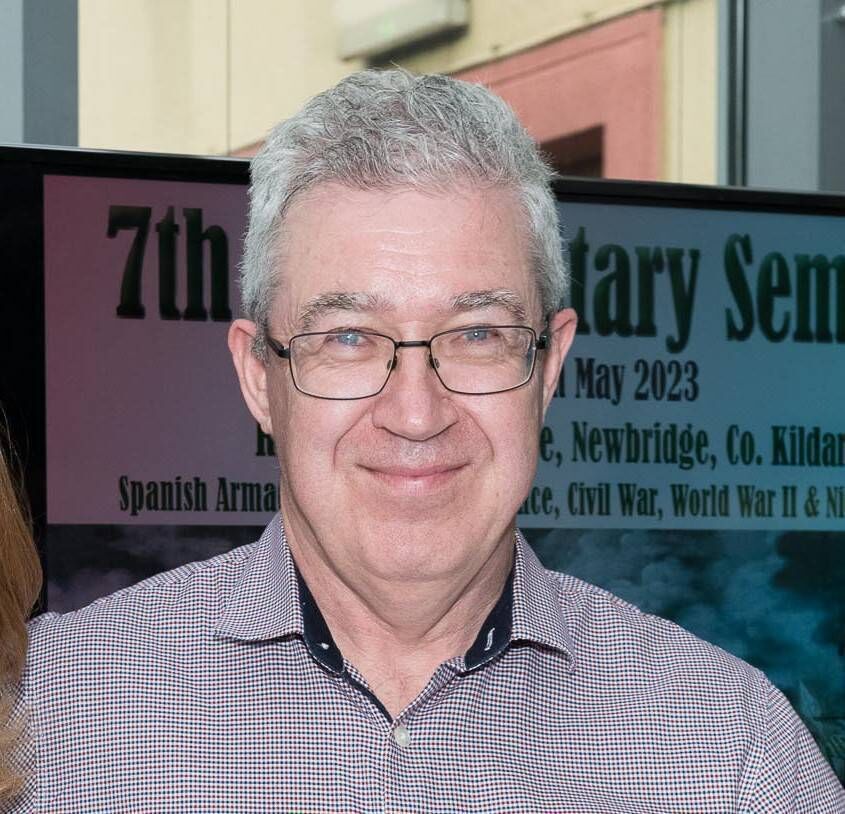
James Durney, author of Boyhood’s Fire: Na Fianna Éireann At War, 1916-1986

Within weeks, a growing number of boys were meeting at Camden Street Hall in Dublin every Tuesday and Thursday evening for military drill.
Limerick-born Con Colbert, who had enrolled at the inaugural meeting, was the first instructor in elementary drill formations for the first troop, or branch.

The boys also received drill instruction from Seán Kavanagh, a former member of the British Army.

Regular activities included weekly meetings, route marches, camping trips, and céilí dances.

Within a year, there were five sluaighte (troops) in Dublin, and branches in Waterford, Belfast and Clonmel; the first Ard-Fheis (high assembly) had also been held.

Subsequently, Na Fianna Éireann developed branches in 19 counties in Ireland as well as branches in Glasgow and Liverpool.

******

In Cork city, a Fianna sluagh had been started by the IRB’s O’Growney branch in 1914.

Tadhg Barry, from Blarney Street, was involved from the beginning in training the youths, aged from 12 to 17 and numbering over 30.

The sluagh paraded twice weekly, conducted a route march on Sundays, and had weekend camps during school holidays.

In June, 1914, Barry became chairman of the Cork sluagh. He said it was an opportune time “as with their fathers and their elder brothers flocking to the ranks of the Volunteers, the younger boys should prepare for the time when they too would take their place in Ireland’s National Army”.

The Cork Fianna started to become more militant, according to Seán Healy and Liam O’Callaghan. “After, it became more of a military body and a training ground for the Volunteers.”

Prior to this, the sluagh had a scoutmaster at its head, but in 1915 Healy became captain, a purely military title.

Eventually, the growing number of members necessitated a division into two sluaighte, one on the north side of the River Lee and another on the south side of the city.

Weapons handling for boys so young was dangerous.

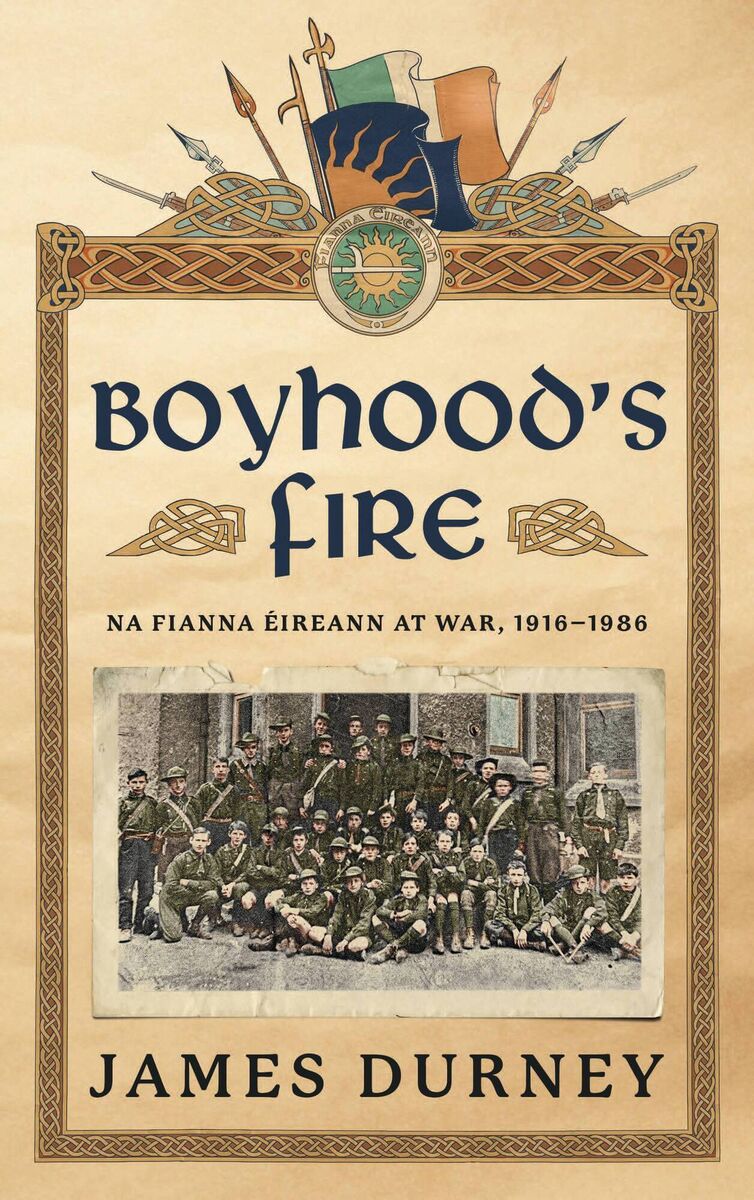
The new book, Boyhood’s Fire: Na Fianna Éireann At War, 1916-1986 documents the Irish National Boy Scouts, founded in 1909

Fianna Commandant Séamus Courtney, 21, Cork, died of illness, on July 22, 1918, and while preparing for the colour party, another Fianna member, Section Leader Joe Reid, 17, Cork, died in an accidental shooting when cleaning a revolver.

The crown forces were responsible for the death of Fianna Squad Leader Patrick Hanley, 17, who was shot dead by the Royal Irish Constabulary (RIC) on November 18, 1920, in reprisal for the killing of RIC Sergeant James O’Donoghue.

Two Black and Tans smashed in the front door of a house on Broad Street, Cork city, ran up the stairs and burst through the door of a first-floor room where Stephen Coleman was in bed with his wife and young child.

One turned a flashlight on the bed’s occupants and then fired a revolver, wounding Coleman in the arm.

The two raiders then ran up to the second floor and into the back room where Patrick Hanley and John Kenny were sleeping. They jumped out of bed and Hanley, standing in the doorway of the bedroom, said: “Oh, God, sir, don’t shoot me. I’m an orphan and my mother and sister’s only support.”

One of the policemen fired and, when that shot missed, he fired again, hitting Hanley just above the heart, killing him instantly.

Conditions in the jails and internment camps run by the Provisional Government were not even on a par with those of the British during the War of Independence and were responsible for the deaths of far more republicans than those of the ‘ould enemy’.

Illness after incarceration was a common reason for a premature death. Richard Noonan, 18, of Cork, died of illness, on October 11, 1922, while James Pyne, 19, of Cork, died of illness at home, on November 11, 1924, a year after his release.

******

The Irish Volunteers were formed in Dublin in November, 1913. Young men who were in the Fianna and had gained experience in the organisation were subsequently appointed as Volunteer officers.

The expertise of the Fianna in military training was much sought after by the Volunteers, as many had by then had several years’ training in military drill, signalling, and weapons handling.

Through an arms committee, the Irish Volunteers succeeded in purchasing 1,500 Mauser rifles with 49,000 rounds of ammunition from a German arms dealer.

One of those involved in the committee, Erskine Childers, agreed to transport most of the cargo onboard his yacht, the Asgard, to Howth harbour, where Volunteers would be on hand on July 26 to accept a shipment of 900 rifles and 29,000 rounds of ammunition.

Na Fianna played a significant role in unloading and transporting the arms and ammunition to safety, and worked well in conjunction with the Volunteers at the Howth gun-running. Now armed, the Republican movement was ready for rebellion.

On April 24, 1916, 1,600 men, women and children assembled in Dublin and proclaimed an Irish Republic. They occupied a series of locations around the city that had been chosen for their strategic importance.

Dozens of the rebels were youthful members of Na Fianna Éireann.

During Easter Week, the Fianna took part in all the major fighting in the city and four of them were killed in action – including 14-year-old Seán Healy, the youngest rebel to die in the Easter Rising.

Throughout the Irish revolution of 1916–23, Na Fianna Éireann recruited, trained, and nurtured a core of young republican activists who made an essential contribution to the Irish Republican Army’s (IRA’s) armed struggle.

The Fianna embraced the Irish revolution, the fight for freedom that had eluded previous generations.

Many of the leading members of the IRA in the War of Independence had been experienced members of the Fianna, including Paddy O’Daly, Liam Mellows, and Roger McCorley.

James Durney is an award-winning author of more than 30 books on Irish national and local history, including Jailbreak: Great Irish Republican Escapes 1865–1983 (Merrion Press, 2024).

Boyhood’s Fire: Na Fianna Éireann At War, 1916-1986, by James Durney, is published by Merrion Press.
more Politics articles

Cork Views: We need political leadership to combat racism Cork Views: We need political leadership to combat racism
Less than a quarter of MD Chair roles went to women Less than a quarter of MD Chair roles went to women
Road Sign at the Northern Ireland border with the Irish Republic welcoming people to Northern Ireland and a reminder that speed Cork Views: Join us on a journey to bring about Irish unity

More in this section

TV: Brennan brothers at our service for new run TV: Brennan brothers at our service for new run
TV: Cork town marks 9/11, 25 years after tragedy TV: Cork town marks 9/11, 25 years after tragedy
Julie & Barry Wedding of the Week: Cork couple first met as children at caravan park in Skibbereen

Sponsored Content

Big Beach Clean 2026: Final call to join 7,000 Clean Coasts volunteers  Big Beach Clean 2026: Final call to join 7,000 Clean Coasts volunteers 
CS Skoda September 2026 In every hidden detail, Tapestry for Ireland captures who we are
When it comes to supporting education for children with special needs, every little helps a lot When it comes to supporting education for children with special needs, every little helps a lot
Contact Us Cookie Policy Privacy Policy Terms and Conditions

© Examiner Echo Group Limited

Add Echolive.ie to your home screen - easy access to Cork news, views, sport and more