How Cork Migrant Centre is working to help young people find their place 
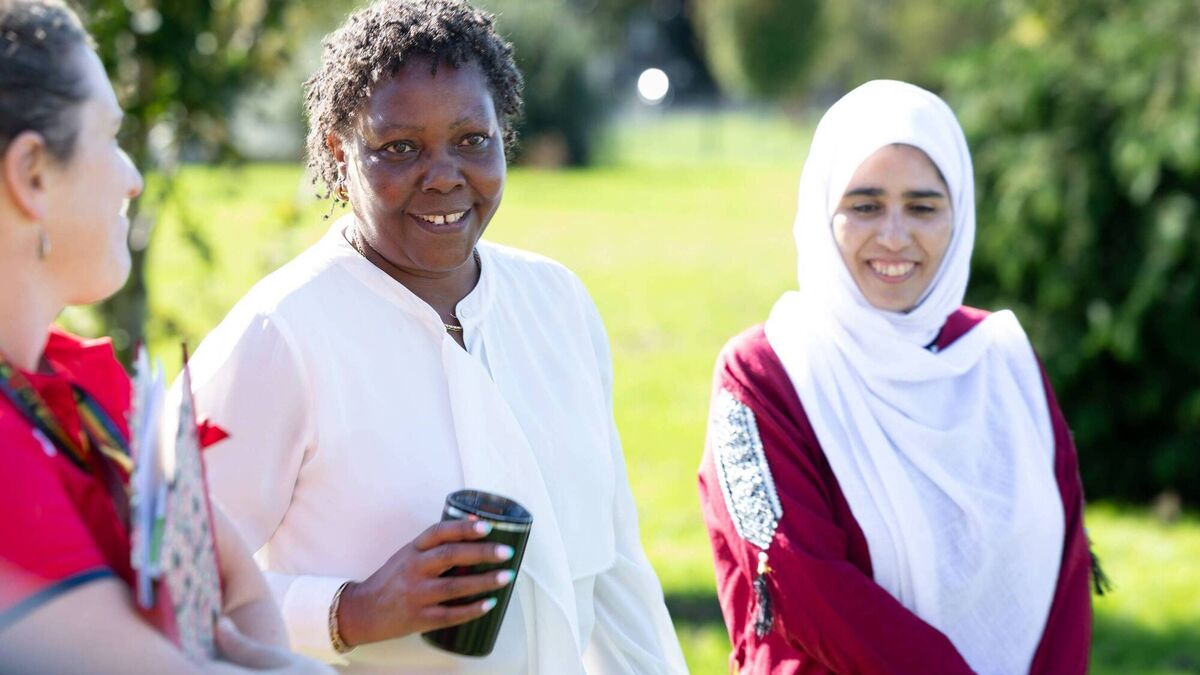
The Cork Migrant Centre is working to help support young migrants and connect them with their communities. MARGARET DONNELLAN finds out more about their work.
How Cork Migrant Centre is working to help young people find their place 

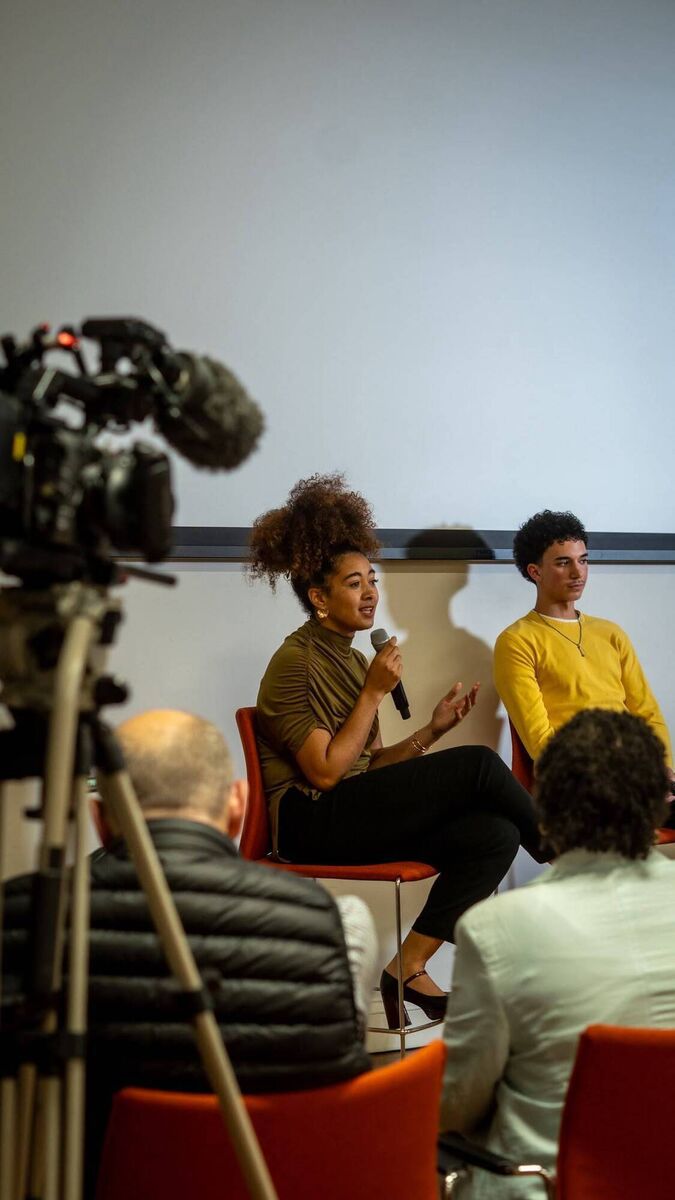
Dr Naomi Masheti (centre), of Cork Migrant Centre, says they have witnessed great support from the local community.

Cork Migrant Centre operates as a wellbeing and integration hub within the grounds of Nano Nagle Place in Cork city.
The Centre creates a safe space for immigrants seeking respite from day-to-day challenges, provides them with information on access to services, and supports them in achieving their full potential. For young people in particular, the programmes provided by Cork Migrant Centre can be of huge benefit.

One such initiative, the Sauti Youth Group, brings young migrants from varied backgrounds together and supports them to express themselves creatively, an opportunity that might not otherwise be afforded to them.

“People talk about integrating, but you forget there are so many vulnerabilities,” says Dr Naomi Masheti, Programme Manager at Cork Migrant Centre. 

“Migrating really brings people’s self-esteem, their confidence, to the ground. It’s very hard to even integrate when you’re so low. So, you need a space where you can build that fast, and that’s what these spaces are doing.”

The Sauti Youth Group helps the young Cork Migrant Centre service users to celebrate their identities, nurture their sense of belonging, channel their experiences, and enrich their communities through music, poetry, comedy and sport – whatever their creative passion may be. The group, which hosts about 45 young people every week, was recently the focus of a documentary series on Virgin Media One. My Ireland Too followed the journeys of young people navigating the challenges and opportunities of growing up as immigrants in modern Ireland.

“The filming [for the documentary] was done over the whole of last year,” explains Naomi, who was pleased to see the ethos of Cork Migrant Centre shine through the series. “One of the things that we say is very strong for us at the Migrant Centre is social justice. It cuts through our work. We use a strength-based model, because a lot of charities use the model where it’s ‘poor refugees, look at them, they need to be helped’. But we use the human rights perspective where we say it’s about the respect, the dignity of people. It’s about their strength; it’s about seeing what’s great about them”.

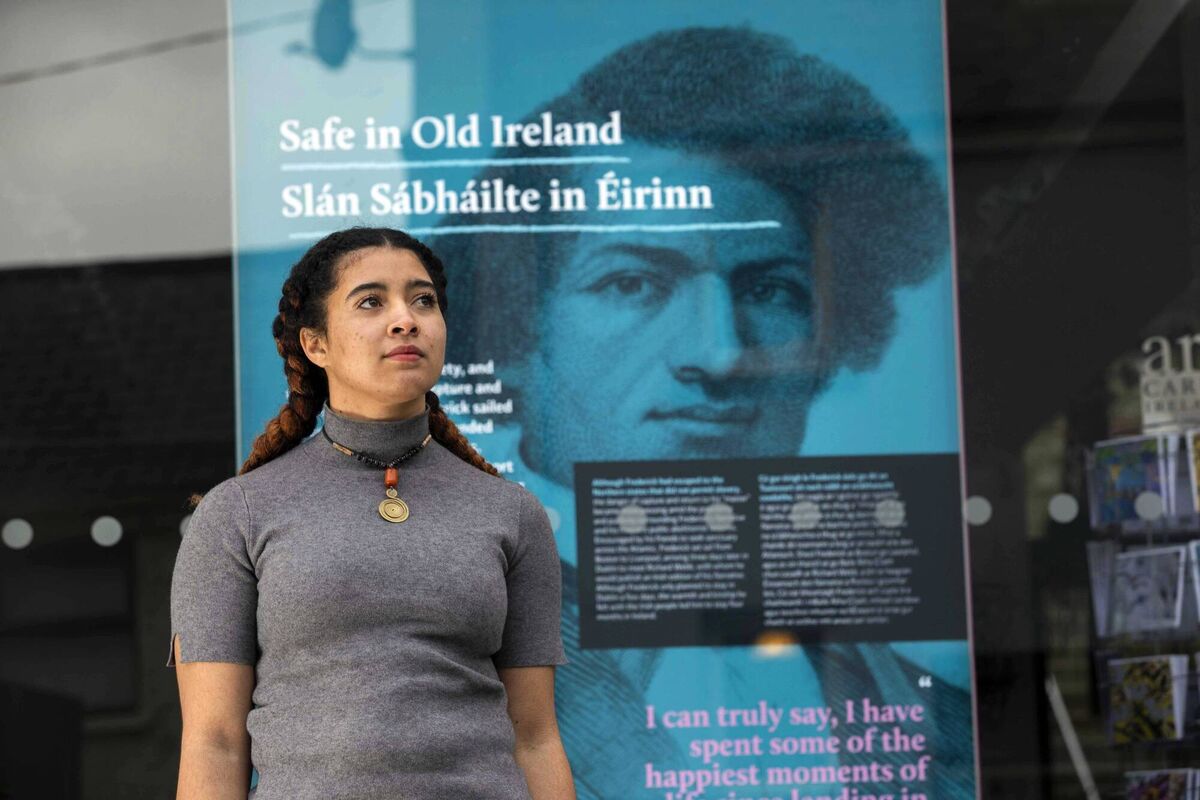
Fionnuala O'Connell of Cork Migrant Cent. Picture Clare Keogh

To protect the young people, much of the documentary is told through the lens of the programme mentors at Cork Migrant Centre. One such mentor at the time was Fionnuala O’Connell, who features prominently on the show.

Born to an Irish father and a Liberian mother, Fionnuala moved back and forth between Co Laois and Liberia in her childhood. “People like Fionnuala,” says Naomi of the mentors at the youth group, “you know, they’ve been there, done that. They are leading the young people, they are talking to them, and saying there’s nothing you’re experiencing that we haven’t experienced. And that’s why the group has become really successful.”

Fionnuala moved to Cork when she started university. When she was growing up in the rural midlands, she had no space like the Cork Migrant Centre to explore her own complex feelings on identity and belonging. “That was the biggest motivation,” she explains of her reasons for getting involved with the youth group. “You always want to create something that you didn’t have, and you want the next generation to have more access to things.”

The youth group was not without its critics at the start, with some parents concerned that it would distract their children from academic responsibilities. “I remember when we started with the creative stuff,” says Fionnuala, “a lot of the parents were like, ‘oh, but they need to be doing their homework!’ But my style was always like, ‘if they can perform a poem, if they can sit down and write music, then they can do a speech or a debate’.

“For a lot of the young people, we try to get them to find a balance between creativity and putting the work back into school.”

Fionnuala O'Connell, Cork Migrant Centre

Fionnuala is passionate about the benefits for young migrants in having a creative outlet. Creativity, she believes, fosters integration.

Fionnuala explains: “I think that creativity becomes like a building block or a bridge to connecting to the community, because once you create something, you elicit a response. People connect to it, and then they start recognising themselves in the story or the creativity. And I feel like that recognition is what can help with building that community and inclusion. It’s a dialogue. You create something and someone sees it and hears it and connects, and all of a sudden you’re now connected by this shared thing.”

Creativity as a tool for self-expression is also vital for young people. “I think a lot of young people struggle in finding the words to articulate nuanced feelings and emotions. Creativity, it doesn’t force you to be very direct. You can talk about a plant, or a plant losing its leaves, and talk about how you’re feeling after a bad day.”

Young migrants navigate numerous challenges in their day-to-day lives, with many finding solace in the youth group. “There’s some vulnerabilities that we don’t understand,” explains Naomi. “Things like transport are very difficult for them. Then, in the direct provision centres, the rule is that if you’re not there at dinner time, they don’t keep the dinner for you. But teenagers don’t like bringing attention to themselves, so they’re not going to say that to you. People fall through the cracks and there are vulnerabilities that you don’t see.”

The youth group helps the young people – from various different countries, cultures and religious backgrounds – to find common ground with each other. As Fionnuala points out: “[The group] was kind of the foundation to get them to get along with each other, because a lot of them never talked to each other in the centre before we started putting them together in creative groups.”

Naomi agrees: “Everybody understands everybody else. They’re all living in this situation, so there’s no drama. And I think that from that, we’ve seen that they become so confident that they are able to progress to other things.”

Racism and discrimination are other unfortunate facts of life for the service users at Cork Migrant Centre. The youth group can be a safe space for the young people to process their experiences. “It’s only there that you can talk about the discrimination,” says Naomi, “because a thing about discrimination is that a lot of the time it can be really subtle. There’s a lot of understanding [in the youth group] and it is a space where no-one will deny or minimise your experience.”

Despite the challenges faced by young migrants, their futures, Naomi and Fionnuala both believe, are full of potential. “The sky is the limit,” Naomi stresses.

“What we see with our kids is that, first of all, migrants have a really positive attitude towards education. Education is the way out and the way to move forward.”

Indeed, Cork Migrant Centre sees a very high percentage of young service users progressing to third level education.

Fionnuala sees a lot of collaborative opportunities for young people in Cork: “There’s a lot of projects and festivals that are opening up and they want to showcase diversity in all its forms.

“I think Cork is starting to get really good at looking for opportunities to include young people and people from different backgrounds and showcase their cultures.”

Fionnuala has also observed increasing opportunities for young migrants – women, in particular – to get involved in politics. “I feel like politics and leadership opportunities are there,” she says. “They just need to be showcased a bit more, and I think communities need to show that they are going to support their young women and people from migrant backgrounds that step into these positions.”

Naomi is keen to acknowledge the support that Cork Migrant Centre has received from the local community. “We are living with a lot of anti-immigrant sentiments, and they are growing every day,” she says.

“You see the far right and their voices, and to me these voices are fewer, but they’re very loud. But we’ve also had really, really good supporters. We couldn’t have even started without the goodwill that we have in the community.”

“I feel like it’s just reminding people that integration is a two-way street,” Fionnuala concludes. “As much as people from migrant backgrounds put themselves forward to do things and engage with the community, the community also has to take a step towards them. It’s almost like a dance you have to do. You can’t just go on the dance floor when there’s no music or no partner.”


More in this section

Cork's former health spa that was envy of the world Cork's former health spa that was envy of the world
TV: Recalling the musical traditions around 1798 TV: Recalling the musical traditions around 1798
Bill Murray's TV tour goes to Cork golf course Bill Murray's TV tour goes to Cork golf course

Sponsored Content

CS ESB Networks Oct 2026 Got a smart meter? Time to unlock its value with an ESB Networks online account
 ‘I don’t feel like myself any more’. Why Irish women are missing the signs of menopause ‘I don’t feel like myself any more’. Why Irish women are missing the signs of menopause
New build, renovation or replacement? Seven window and door decisions to make before comparing quotes in Ireland New build, renovation or replacement? Seven window and door decisions to make before comparing quotes in Ireland
Contact Us Cookie Policy Privacy Policy Terms and Conditions

© Examiner Echo Group Limited

Add Echolive.ie to your home screen - easy access to Cork news, views, sport and more