Cork mum: Telling me my son is a ‘medical mystery’ is not good enough
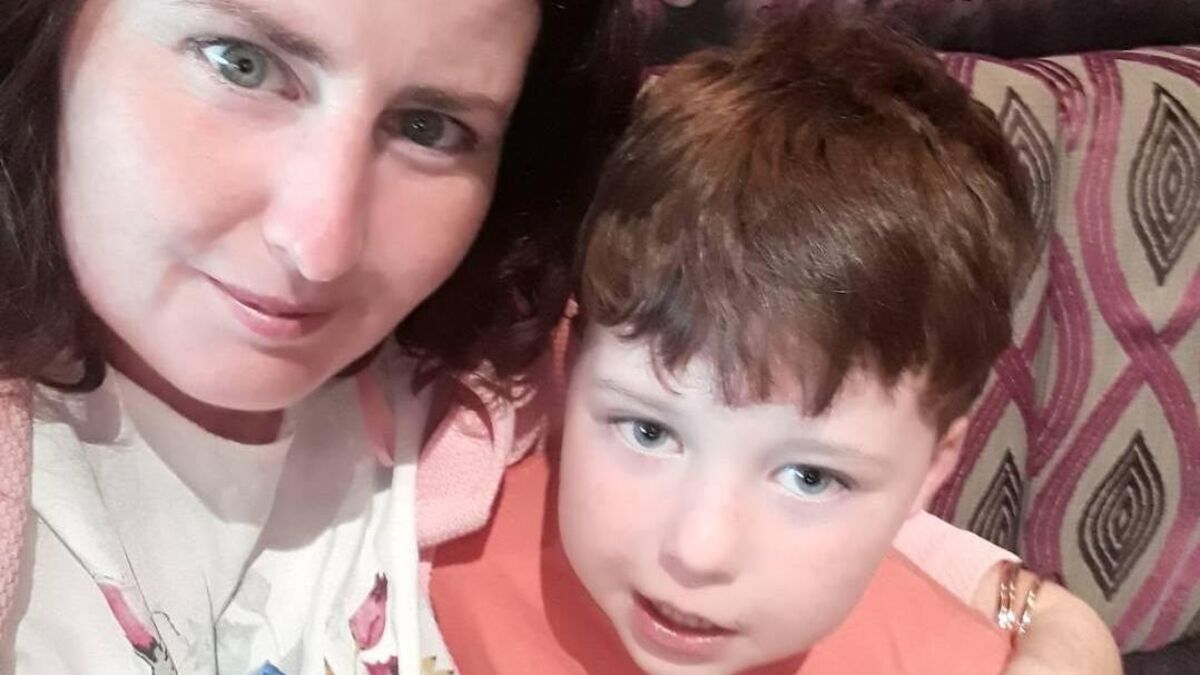
Connor Sweeney, age eight with mum Julie.
WHEN Connor Sweeney, aged eight, led a prayer at his First Holy Communion, he received huge praise.
“He spoke so well and with such confidence, we were so proud of him,” says mum, Julie, who is a secondary school teacher from Mallow.
Connor is a person with the genetic condition called 22q11 deletion, which he was diagnosed with age six-and-a-half, having presented with various, ongoing health issues from six months old.
“The pregnancy was healthy, and Connor was born healthy,” says Julie, who is married to Jonathan. Connor has an older brother and an older sister.
“There was nothing untoward to worry about,” recalls Julie of Connor’s arrival.
But things changed.
Then Connor got his first chest infection and that was the start of a horrendous three year period of him being sick, and in and out of hospital with multiple chest infections.
Conor was dealing with a lot of medical issues as well as chest infections, fever convulsions, and chronic asthma as well as issues around speech and language.
“As a toddler, he had numerous hospital admissions, often going to hospital in the ambulance. It was full on,” says Julie.
“Connor was screened for Cystic Fibrosis in the Mercy Hospital. That was ruled out,” says Julie.
“He went through auto-immune screening and blood tests, but the reason for his multiple chest infections was not discovered. I think a crucial step was missed as nobody brought up genetics.
“Conor was treated for what he was at hospital for on the day, but there was nobody looking to find out why he was in and out of hospital so much.”
Instead of starting local primary school, Connor did Junior Infants and Senior Infants at a language class.
“At five, he was non-verbal and couldn’t communicate,” says Julie.
“I recognised that when he was two. He was not able to go to mainstream school with his friends. There are 45 language classes in the country, and we were lucky that there is one in Mallow. It is over-subscribed, and it is difficult to get in, but he did.”
Connor did well at the language school.
“He thrived,” says Julie. “They were magical classes. Connor was assigned to a specific class of his level geared towards language.”
Julie learned something important.
“A speech and language therapist (SLT) suggested that we look into getting a paediatric review for Connor. She said because of the chest infections, he had a weak immune system. That was true,” says Julie.
We often had a laugh that Connor was like a childhood encyclopaedia; the GP confirmed that he had chicken pox twice because of his compromised immune system.
The SLT was a great help.
“She gave me the lingo to know what to ask for in terms of medical services for Connor. I feel let down that no-one else from the medical community whom we had seen had recommended the pathway of a paediatric review before then.”
From there, Connor underwent blood tests at the paediatric neurology department in CUH.
“At the first appointment, Connor had 13 vials of blood taken. I also underwent a blood test,” says Julie.
“Six months later, we received some test results.
“It was six months after that again that Connor received a clinical diagnosis of 22q11 deletion.
“I was on my own at the appointment,” says Julie.
“I remember the neurologist spoke of congenital heart defects and scoliosis. Connor was pulling out of me. It was all so hard to take in. It was scary stuff.”
Recalling the moment she was informed about Connor’s diagnosis, Julie says: “I got a horrendous handout so poorly photocopied, stapled and handed to me. I took a couple of reads of it and I realised that the pages weren’t even in sequence. I had to pull it back together.”
It got more scary.
“Furthermore, I was left to explain Connor’s diagnosis to my husband. There was no human empathy.
I couldn’t think straight. I had a print-out but no signpost for the next step.
Julie took the next step herself.
“I googled 22q11 and after a period of time, I found a support network and a number for me to ring, something that I should have been given in the hospital.
“I made contact with Ann Lawlor in Dublin, whose own child had 22q11.”
Ann was a source of knowledge.
“I was never signposted to any support services,” says Julie.
“I myself found a support group, also Rare Diseases Ireland and the genetics clinic at CHI Crumlin, which I had to ask Connor to be referred to.
“I asked Ann all about Connor’s experiences with convulsions, asthma, and chicken pox. Ann had years of experience with 22q11. She put my mind at ease.”
Time passed.
“More than a year later, Connor, Jonathan and I were called to an appointment at CHI Crumlin,” says Julie.
“Jonathan underwent a blood test. My blood tests had come back negative for 22q11. Around nine months later, due to delays caused by the cyber-attack on the HSE, Jonathan’s test came back positive for 22q11. Our other two children went on to be genetically tested at CHI Crumlin.”
According to Julie, more and more parents are being diagnosed after their children, and the ramifications are significant.
We struggled with big, impactful issues, like what impact does this have on Jonathan’s work and what are his supports?
How is Connor doing now?
“He is in mainstream school in Ballyhass National School,” says Julie.
“School can be tough, Connor is a bit behind his peers but he is happy and he has support in school with a part-time SNA.”
Is Connor, being the youngest, the boss of the house?
Julie laughs.
“He is a very happy child, his older brother and sister are very good to him. They missed out when we had to cancel holidays due to Connor’s hospitalisations over the years. We could never go abroad.
“The other two gave up a lot when our time and focus was on Connor.”
What now for the youngster?
“We hope he progresses as much as he can,” says Julie.
“We really don’t know in the long term. He will have on-going screening. Right now his eyes are an issue.”
A rare disease diagnosis can turn your world upside down.
“You enter a different world,” says Julie. “A secret world with medical jargon that you don’t always understand.”
You have to be tough.
"You have to fight the educational system and you have to fight the HSE,” says Julie.
As a family, all that is very time-consuming on a family. Yet, there is no other way.
Connor oozes positivity.
“He has such confidence,” says Julie. “He is a confident little fellow.”
Connor has a great attitude too, which helps.
“His attitude is important,” says Julie. “It’s like, ‘this is me’, I can’t change that. You adapt to me!”
Well said, Connor!
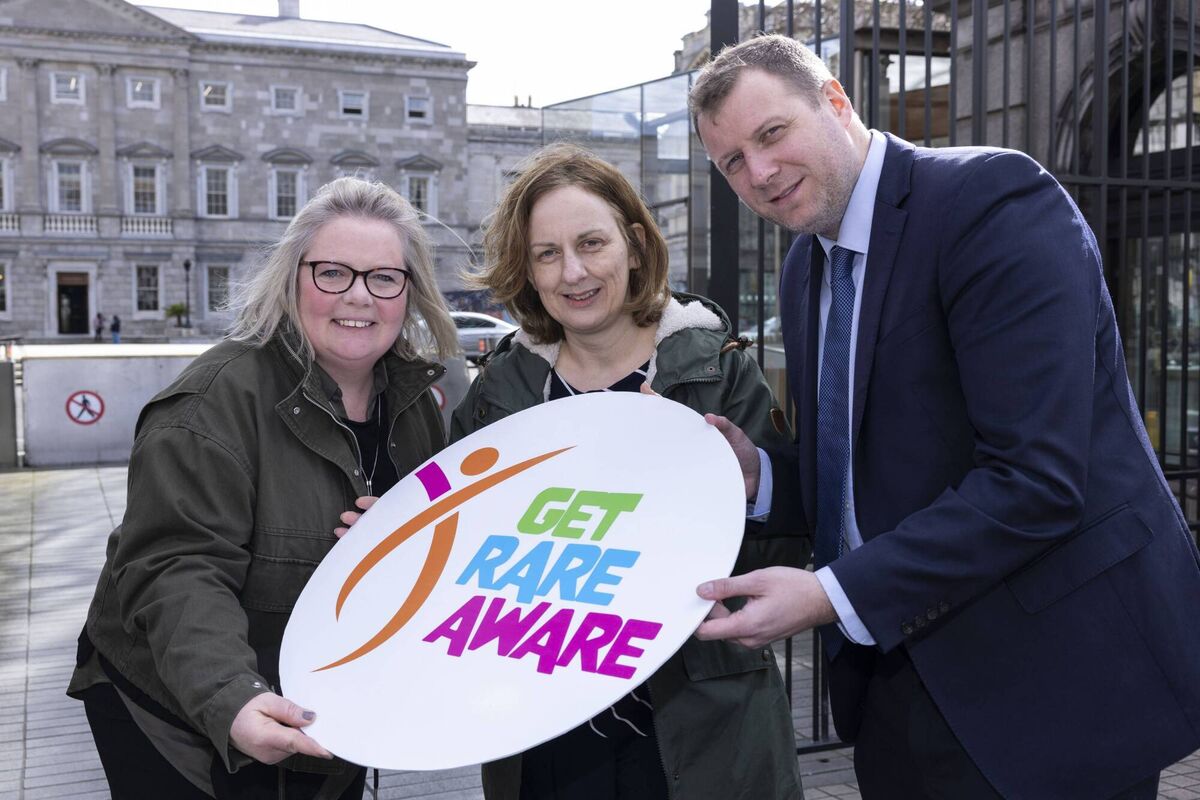
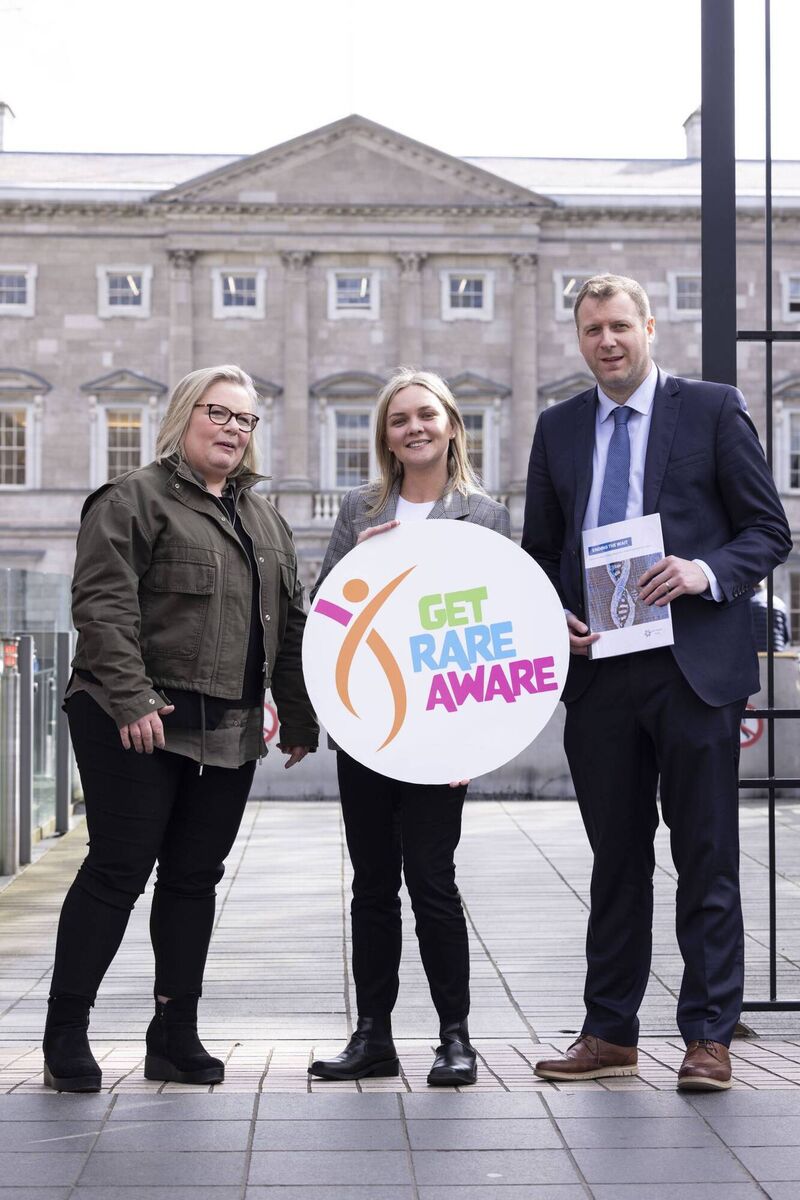
GET AWARE CAMPAIGN
Julie is involved in Rare Disease Ireland’s (RDI) Get Aware Campaign.
“Our experience highlights the importance of a proper genetic referral,” she says.
“Why didn’t one of the doctors or medical consultants refer Connor earlier?
“Why weren’t both me and Connor’s dad tested at the same time?
“Why wasn’t I signposted to a paediatric review earlier and also to genetic services at Crumlin?
“Our experience also highlights a serious lack of structural supports, such as counselling and information.
“A doctor referring to Connor’s case as a ‘medical mystery’ isn’t good enough,” says Julie.
“Nor is a poorly put-together handout.”
The Get Aware campaign is calling on politicians, including in Cork, to take action and press the government to deliver on its promise in the Programme for Government to ‘support the medical genetics service’ at CHI at Crumlin by accelerating the allocation of resources to reduce the waiting list for routine genetic services.”
For more information about the Get Rare Aware campaign, visit: www.getaware.ie.
For further information about the online information events, including how to register to attend, go to: www.rdi.ie/gra







 App?
App?


