In his own words: The life and times of the late Cork music legend Seán Ó Sé
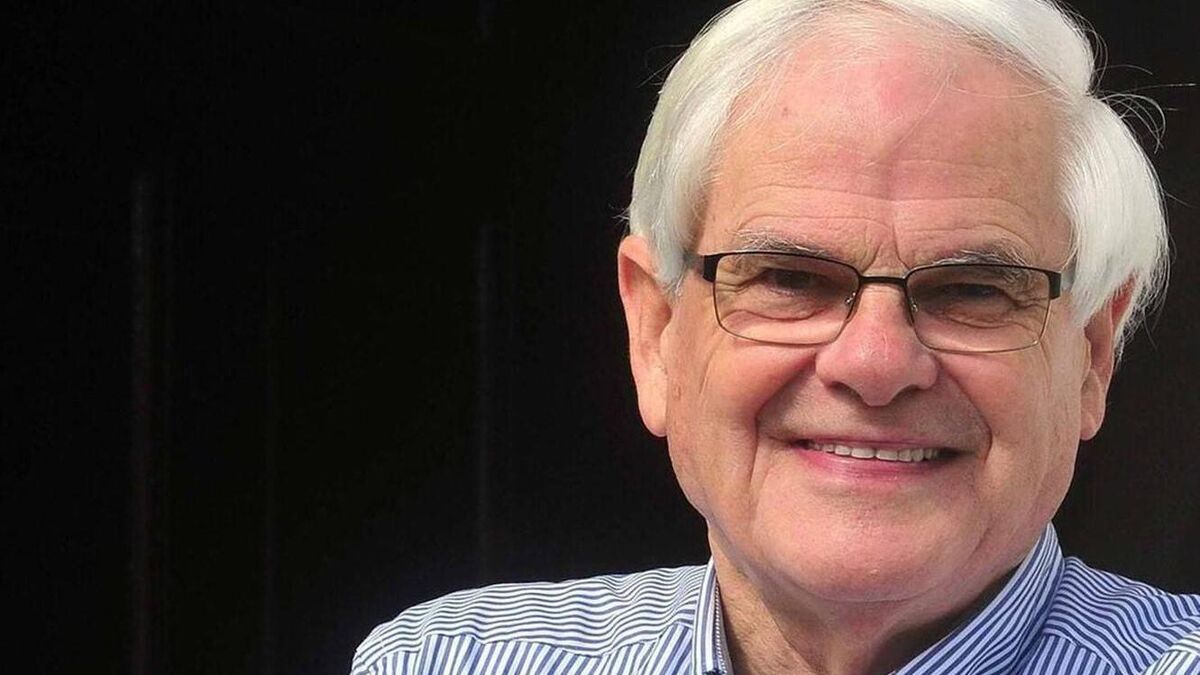
Mention Seán Ó Sé to anyone from Cork, and his teaching and musical legacies will be referenced in equal measure of awe.
Singer, raconteur, and proud Cork man, Seán Ó Sé's ever-enquiring mind was born and honed in his childhood home of Ballylickey, located, he says, “three miles outside Bantry to the west, on the Glengarrif Road, the most easterly inlet in Bantry Bay.”
His natural gift for storytelling and his unique way of speaking, a melding of both Irish and English words and idioms, connects him to the great seanchaís that have gone before.
He is blessed with a great knowledge of all things local, from GAA and farming to all five generations of any particular family tree, and an impeccable memory to boot.
Mention Seán Ó Sé to anyone from Cork, and his teaching and musical legacies will be referenced in equal measure of awe.
“I come from a teaching family,” he says.
“My mother, father, sister, aunts, and uncles were all teachers. Teaching put bread and butter on our table, and my singing added a little bit of jam along the way,” he laughs.
Growing up in an all-Irish-speaking home, Seán didn’t utter his first word of English until he went to school, aged six.
“I live in an English-speaking part of the country now. However, if I go to any Gaeltacht area, the Irish comes back immediately. And I love that.”
His paternal grandfather had travelled over the Healy Pass to Adrigole to get married and farm.
“To supplement his farming earnings, my grandfather became a carman,” explains Seán.
“At that time, every farmer made his own churns of butter, which were buried in the bog. About once a month, they would dig up the butter firkins, load them onto my grandfather’s horse and car to be transported to the Cork Butter Exchange market, near Shandon. The return trip took two days.
“Interestingly, at that time, the price of butter in Europe was actually determined by the price set for it at the Cork Butter Market,” says Seán.
On his grandfather’s return from the city, Seán’s own father, Con, recalls running through the fields to greet him to see if he had “any new songs brought from Cork.”
Con was the youngest of nine children.
“I recall the Clare piper, Séamus Ennis, driving into our yard in a Black Ford Prefect, one night in 1947, to record both of them for a folk programme called Turkey in the Straw for the BBC.”
Years later, Seán himself was recording some acapella Irish folk songs for the BBC when, during a session break, he mentioned to the archive manager about his father’s 1947 recording. Before the session was done, Seán was overwhelmed to be given a 78rpm recording of his father.
Precious, given that his own father had never heard it himself.
It’s obvious that Seán’s father played a pivotal role in his life – from passing on his love of music and singing to coaching him to pass the difficult scholarship-entrance exams to Coláiste Íosagáin, a preparatory secondary school, which ultimately led Seán to St Patrick’s teacher-training college in Dublin, where, after two years, he graduated, the youngest primary school teacher in Ireland.
Seán was teaching in Baltinglass, Co Wicklow when his father passed away.
Soon after, he moved closer to Cork, spending five years in Bandon Boys Primary School where, he says, he “learned more about teaching and running a school from principal Liam Ó Donnchadha than he did in two years at St Pat’s”.
From there, Seán moved to the ‘new school’ in the ‘Red City’ of Cathedral Road.
Then in 1980, he got the principalship of the newly opened St Mary’s on the Hill in Knocknaheeny.
“I was principal there from 1980 to 1993, the happiest years of my teaching career,” says Seán.
“When I left, we had 987 children enrolled and were one of the biggest schools in Ireland.
Seán doesn’t strike you as someone who set out with a pre-set game plan.
Looking back on it, the arc of his incredible life journey seems to have had an organic flow to it.
It wasn’t just happenstance, however.
His charisma and joie-de-vivre, and genuine interest in people, things and places, generated its own gravitational pull.
“I wasn’t a great student and because I failed Latin, I couldn’t do a degree,” he says, much to his mother’s chagrin.
Instead, he studied singing with John T. Horne at the Cork School of Music.
Ultimately, however, Seán credits Mr Horne’s training with the longevity of his vocal health.
“‘Mr Ó Sé,’ he told me when I was finishing up, ‘I’ve given you a voice that, should you live to be a great age, will still be with you when all the pleasurable pursuits of your youth will only be happy memories’.” Seán’s big break came in 1959 when he won the traditional singing competition at Feis na Múmhan, Cork.
First prize was a slot on the Newcomers to the Microphone programme on RTÉ Radio 1, in which he was a ‘bag of nerves’.
From there, he was offered the entire summer season with the Cabaret, entertaining American visitors alongside notable musicians like harpist Kathleen Watkins.
A demo to Gael Linn Records of , a song he had first heard in Coláiste Iosogáin many years before, brought him to the attention of Seán Ó Riada.
Already a major star on the Irish musical scene, following the release of his Mise Éire film, Ó Riada was looking for a singer for his recently formed Ceoltóirí Chualann, a trailblazing collective of some of Ireland’s finest musicians, who redefined the landscape for Irish music and, more broadly, for Irish culture, around the world.
An impressive figure with an imposing reputation, Ó Riada and Seán had an instant, mutual affection.
Seán recalls that first meeting.
“It was a very windy day. He got out of a dark green Jaguar, ZJ666, buttoned a gabardine coat around him. He was smoking the biggest cigar I ever saw.”
After a rendition of the Poc, and a verse of , Ó Riada suggested they record both songs immediately that day.
“Do you know, it’s a nice thing to hear a Cork man sing with a Cork accent,” Ó Riada remarked.
That initial meeting led to “seven marvellous years” of collaboration, recording, and broadcasting between the two Corkmen and Ceoltóirí Chualann, culminating in the Ó Riada sa Gaiety concert in 1969, which was attended by President DeValera.
When Ó Riada died at the tender age of 44, Seán lost a dear friend.
However, he still enjoys working with Peadar, Ó Riada’s son, and they have over 60 old Irish songs recorded already.
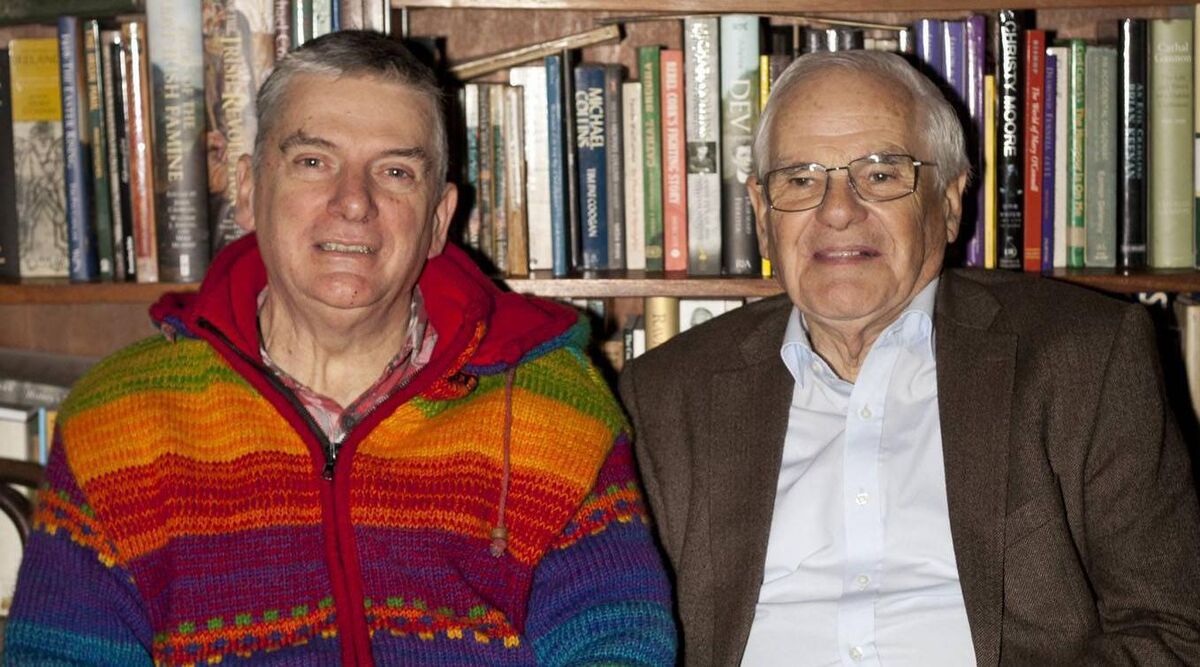
He has performed both at home and on international expeditions, often on behalf of the Irish Government or Gael Linn.
“My favourite place was New Orleans,” says Seán, “but Russia, China, Cuba and New York were fascinating too.”
Father to Áine, Con and Íde and granddad to Méabh, Seán and Ciara, he credits Eileen, his beloved wife of 57 years, as the backbone of his success.
“She reared the children while I was off gallivanting and she kept the home fires burning.”
Seán Ó Sé continues to be associated with .
When it was first released in 1963, it became the first Irish language hit record for Gael Linn, catapulting Seán into the public spotlight.
At a time when traditional music was marginalised, recording an album of Irish music was hardly considered a commercially sound decision. Its ubiquitous success surprised everyone.
61 years later, it is still sung at every community event and gathering in Ireland and to this day.


 App?
App?


