Cork woman: ‘Palliative care is not what you think... it can be about living well’
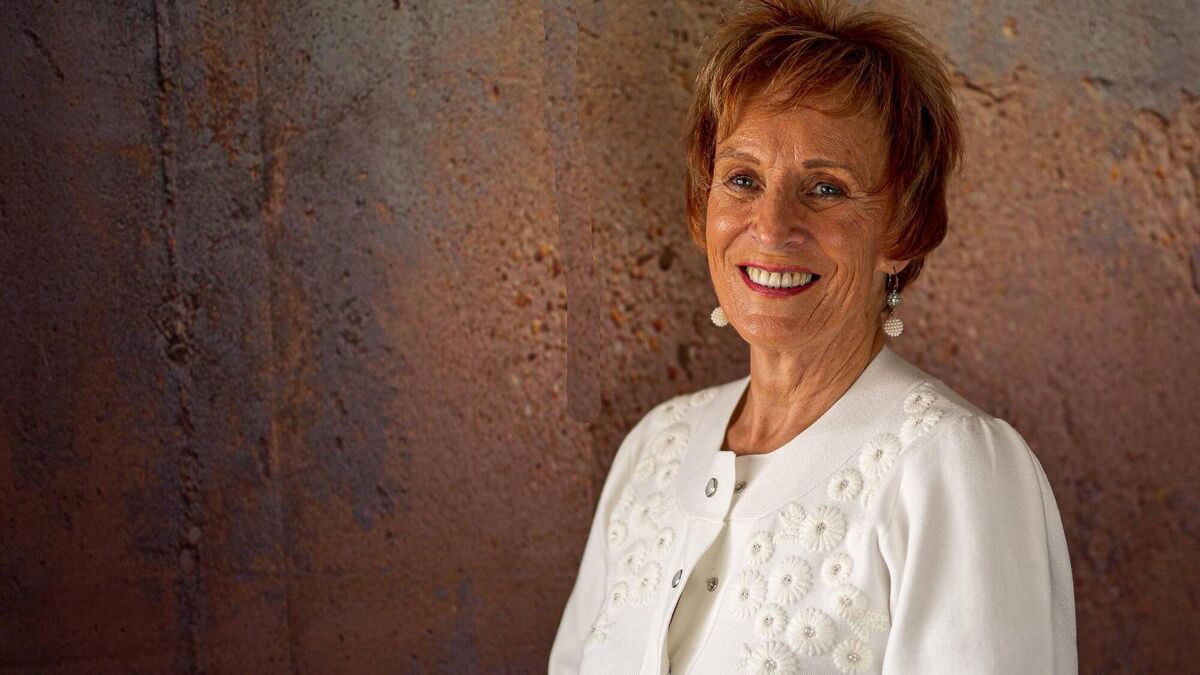
Cork woman Marian O’Mahony first learned about palliative care when her son, Brian, was diagnosed with leukaemia at 18. Now, she’s adding her voice to a new campaign to raise awareness of palliative care. She tells MARGARET DONNELLAN what this care meant for her family in her son’s final months.
Cork woman: ‘Palliative care is not what you think... it can be about living well’

Marian O’Mahony says palliative care is often not what people think, and while people associate it with dying, it is really more about living.

Marian O’Mahony and her family had, as she puts it, “a rather abrupt introduction to palliative care” back in 2001 when her son, Brian, was diagnosed with leukaemia at the age of 18.

Brian died just three months after his diagnosis, and for him and his family, the support of the palliative care team proved invaluable.

So much so, that Bishopstown-based Marian is now a palliative care advocate and volunteer.

Twenty-five years ago, however, it was all new to her.

“I honestly didn’t know much about the term palliative care,” she reflects. “I was introduced to it in the hospital when Brian had pain, and they told me that the hospice could manage it better.”

New research by the All-Ireland Institute of Hospice and Palliative Care (AIIHPC), with whom Marian volunteers, has found that eight out of ten adults in Ireland would want access to palliative care if they needed it, but only one-third know where to find information.

Palliative Care Week is taking place until September 12, with the campaign theme, ‘It’s Not What You Think’. The AIIHPC wants to dispel misconceptions around palliative care and encourage open conversations about how these vital supports improve daily quality of life for people with life-limiting conditions, as well as their families.

“Palliative care is not what you think it is. We associate it with dying, but really it is more about living. In my case, the advantage of palliative care was that they were able to take better care of Brian’s needs,” says Marian.

There is an important distinction between the role of a hospital and the role of palliative care. “When you go to hospital, whether you have appendicitis or cancer or anything, their role is to treat the disease, make you better, and send you home... Their concentration is on the disease. What’s different about palliative care is that you can still get treatment for your disease as best as possible, to keep you as well as possible, but palliative care is about you as a person.”

A common myth surrounding palliative care is that patients are actively dying, often bed-bound, and heavily medicated. This is not the case, says Marian. “Palliative care is all about living. It’s about living the best life you can and taking care of you emotionally and spiritually.”

In Ireland, palliative care is delivered by multidisciplinary teams, including but not limited to GPs, public health nurses, pharmacists, chaplains, social workers and allied health practitioners such as physiotherapists and speech and language therapists. Contrary to another common misconception that all palliative care takes place in a hospice or hospital, it can also be accessed in the community. Marian’s son Brian received care at home, and she fondly remembers the help he and the whole family received from their team.

“The public health nurse in our case was absolutely outstanding,” she says. “I remember her suggesting that he needed a new bed, a hospital bed. I was saying ‘well, I just got him a new mattress recently’, but she said it would be better. And oh, the difference it made to have a hospital bed under him. The difference it made to have a hoist. He could get himself in and out of bed, whereas otherwise I had to lift him – and he was six foot tall! The independence of being able to get in and out of bed was so important.”

A focus on independence is common in palliative care, which takes a holistic approach to health that doesn’t just manage the physical side of a patient’s condition, but also their social, emotional and spiritual well-being. Palliative care patients can be supported by their teams to take weekends away, attend events that are important to them, and engage in other activities that they would have enjoyed before they became ill.

Brian died in June, 2001, but he still managed to celebrate his 19th birthday that May.

“When his birthday came up, he was really ill,” Marian recalls. “He couldn’t get up. He couldn’t lift his head off the pillow. I said to the nurse when she came by, ‘Is there anything you could give him, anything you could do so that he get up out of bed and be with his friends for his birthday?’ So they put him on a massive dose of steroids and we were able to bring him down to the Bishopstown Bar and he had a pint!”

“Being able to celebrate his birthday like any other teenager was hugely important for Brian and his family, and it was made possible through palliative care. It’s what palliative care is, Marian notes. “It’s about living your best life... Your goal [when diagnosed with a life-limiting illness] becomes to live well, not to necessarily live long”.

A crucial part of the ‘It’s Not What You Think’ campaign is about encouraging people all over Ireland to have important conversations about their own wishes for palliative or end-of-life care. “It’s about taking more charge of yourself and of your own life.”

The HSE has a number of resources to help people to record their wishes for care, and a Palliative Care Hub has been developed by AIIPHC and other key stakeholders to help people from a variety of backgrounds access and find information and resources.

“The important thing for you to do is to decide what you want,” says Marian, who was involved with the development of the Hub in her capacity as a member of the AIIHPC’s Voices4Care volunteers group.

“Even before you become ill, you can decide at any point in time to make your wishes known. There are various documents on the HSE website or the Palliative Care Hub that will help you answer all these questions so you can make a summary of what you’d like to happen”.

Marian has written a book about her own journey with Brian’s cancer and palliative care, entitled Goodbye, My Son. She volunteers tirelessly to ensure that the voices of patients and their families are heard and represented in all key policy decisions surrounding palliative care in Ireland.

What message would she pass on to anyone embarking on a palliative care journey – be it as a patient themselves, or for a loved one?

“I would remind them that palliative care is about living. It is about living your best life,” she says. “It supports everybody. It supports the carer, it supports the person who’s going through it. And most people, actually, when they end up in palliative care, end up saying – and I would have said the same - ‘I wish we had this sooner’.”

More in this section

My Career: 'I worked with Zig and Zag and on Come Dine With Me...now I'm in communications' My Career: 'I worked with Zig and Zag and on Come Dine With Me...now I'm in communications'
Julie Helen: Congrats to Pat Kinsella..Cork schools are so much richer because of his work Julie Helen: Congrats to Pat Kinsella..Cork schools are so much richer because of his work
‘It means a lot to us': Sheehan family to run Echo Mini Marathon in memory of their mum ‘It means a lot to us': Sheehan family to run Echo Mini Marathon in memory of their mum

Sponsored Content

Big Beach Clean 2026: Final call to join 7,000 Clean Coasts volunteers  Big Beach Clean 2026: Final call to join 7,000 Clean Coasts volunteers 
CS Skoda September 2026 In every hidden detail, Tapestry for Ireland captures who we are
When it comes to supporting education for children with special needs, every little helps a lot When it comes to supporting education for children with special needs, every little helps a lot
Contact Us Cookie Policy Privacy Policy Terms and Conditions

© Examiner Echo Group Limited

Add Echolive.ie to your home screen - easy access to Cork news, views, sport and more