Cork TD: 'I don't want my story to be about 'beating' epilepsy..I haven't beaten anything'
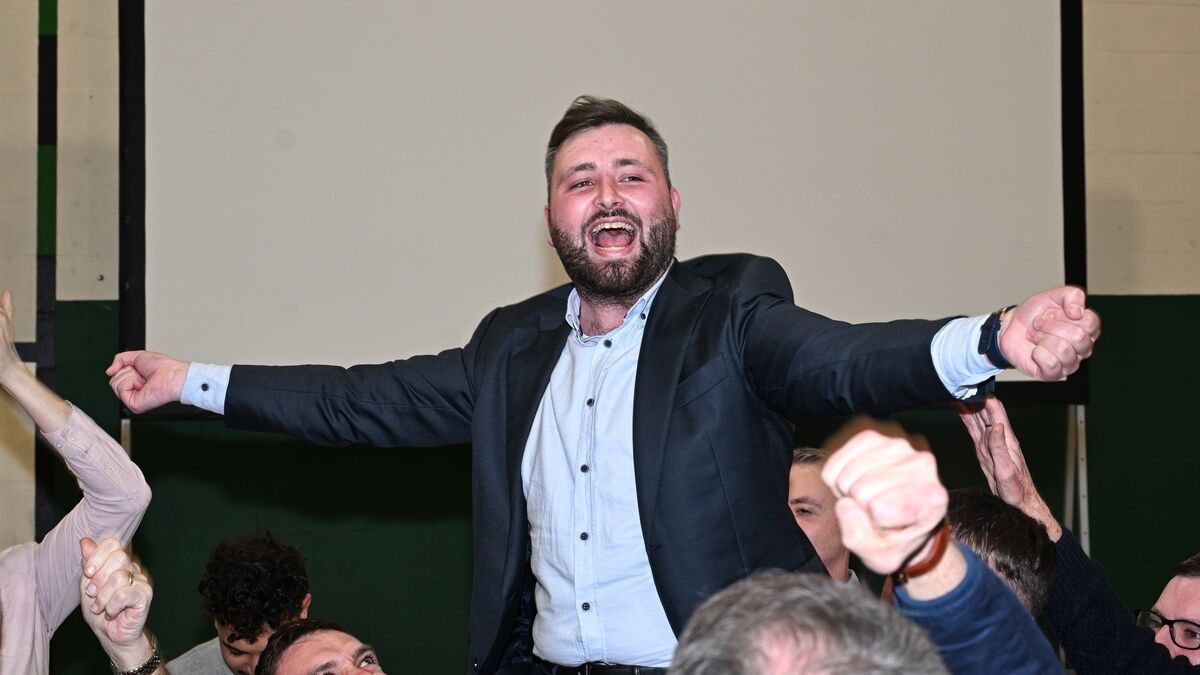
Eoghan Kenny celebrates winning a seat for Cork North Central at the 2024 General Election. He went public about his epilepsy shortly before polling day. Picture Chani Anderson
I never planned to talk publicly about my epilepsy. Now I know why I should.
For most of my life, I was never sick. I genuinely don’t think I missed a day of school. I was young, healthy and, like most people that age, I probably just assumed that was how life would continue.
Then, when I was 21, things started happening that I couldn’t explain. I would wake up on the floor after falling out of bed, confused about how I had got there. Other times, things just didn’t feel right, strange moments of confusion where I would find myself thinking: what just happened there?
I knew something wasn’t right. And for at least six months, I did nothing about it.
Looking back, I should have gone straight to my GP. But if I’m being fair to my 21-year-old self, there was fear there too. Going to a doctor meant accepting something might actually be wrong. I wasn’t sure I wanted to know.
Eventually, that decision was taken out of my hands.
I had my first major daytime seizure while completely alone. I was found on the floor and rushed to hospital. It was during covid, so nobody could come in with me. There were tests, scans and conversations with doctors, eventually followed by words I never expected to hear at 21: I had epilepsy. Suddenly, I had a neurological condition to understand, appointments to attend, and medication to take.
Today, I take eight tablets every day. They come everywhere with me.
I’ve had about 15 or 16 seizures in the five years since my diagnosis and, thankfully, I am approaching two years seizure-free. But even when epilepsy is controlled, you never completely forget it is there.
Sometimes, I’m particularly tired and catch myself wondering: am I just tired, or is this a sign of something? I don’t go through life waiting for another seizure, but the possibility sits in the back of my mind.
For the first few years, I kept my epilepsy relatively private. I wasn’t ashamed. What worried me was how others might react. Would they see me differently professionally? Would they question if I could handle pressure? As I became more involved in politics, those questions became harder to ignore.
Epilepsy also took away something that is very easy to take for granted: independence.
For a long time, I couldn’t drive. If you live and work in County Cork, that is not a small thing. I relied on other people to get about.
My friends and family never once made me feel a burden, but sometimes I felt like one. Looking back, I realise just how much of their lives they quietly rearranged so that epilepsy didn’t stop me living mine. I owe them more than I can adequately put into words.
Then, three years after my diagnosis, my epilepsy became public in circumstances I could never have planned. A week before the 2024 General Election, I had a seizure in the RTÉ studios. I had been canvassing relentlessly for 13 weeks. I needed to recover, but also to decide what I was going to tell people.
I remember sitting at my desk on the Tuesday night going back and forth. Until then, I had largely controlled who knew I had epilepsy. Now I was considering telling everyone.
Would people think I wasn’t capable of doing the job? Would they think the pressure would be too much? Would they see the epilepsy before they saw me?
Eventually, I decided to be open.
People in Cork North Central were days away from deciding whether to trust me to represent them in Dáil Éireann, I felt I owed them honesty. So I told people I had epilepsy.
After three years of worrying about what might happen if everybody knew, suddenly everybody knew. And something unexpected happened. People contacted me about their own epilepsy, and about children, partners, siblings and friends who experienced seizures. People told me stories they perhaps hadn’t spoken about very often themselves.
A week later, the people of Cork North Central gave me the enormous privilege of electing me to Dáil Éireann. That week changed my relationship with epilepsy. Something I had worried might cause people to see me as less capable became something I no longer felt I needed to hide.
Five years after my diagnosis, I understand that talking about epilepsy matters for reasons that go well beyond my own experience.
A seizure can happen anywhere. If the person beside you suddenly had one, would you know what to do? I think far more of us should. That is where my personal experience meets my politics.
Earlier this year, I introduced the Medical Emergencies in Schools Bill 2026, which seeks to ensure school staff have the basic training and confidence to respond when a medical emergency happens, including a seizure.
As a former teacher, Labour’s education spokesperson, and somebody living with epilepsy, this is deeply personal to me.
Labour believes every school should have clear medical emergency procedures and staff should have access to training to respond to emergencies such as seizures. That means Government giving schools the resources and support to do it.
But there is a wider challenge. People living with epilepsy need timely access to specialist neurological care, reliable access to medication, and supports to live independently.
Labour wants an Irish health service where neurological care is properly resourced, so people can access diagnosis and specialist treatment without unacceptable delays, and where organisations such as Epilepsy Ireland are recognised and supported. Because living with epilepsy should not mean putting the rest of your life on hold.
I know how fortunate I am. My epilepsy now feels controlled. I am finally able to drive again. That isn’t everyone’s experience. I don’t want my experience to become a story about ‘beating’ epilepsy. I haven’t beaten anything. I’ve simply reached a point where, thankfully, my epilepsy feels controlled.
For that, I owe an enormous debt to my GP, my consultant and Epilepsy Ireland, and to my friends and family who have walked every part of this road with me.
On September 19, I will speak at the Epilepsy Ireland National Conference at the International Hotel in Cork about my experience.
Having epilepsy and being capable are not mutually exclusive. If speaking openly makes it easier for somebody else to talk about their epilepsy, challenges some of the stigma around the condition, or encourages somebody to learn what to do if they witness a seizure, then making something so personal public has been worth it.





 App?
App?


