Katherine O'Donnell: ‘I learned so much about a country that I thought I already knew well’
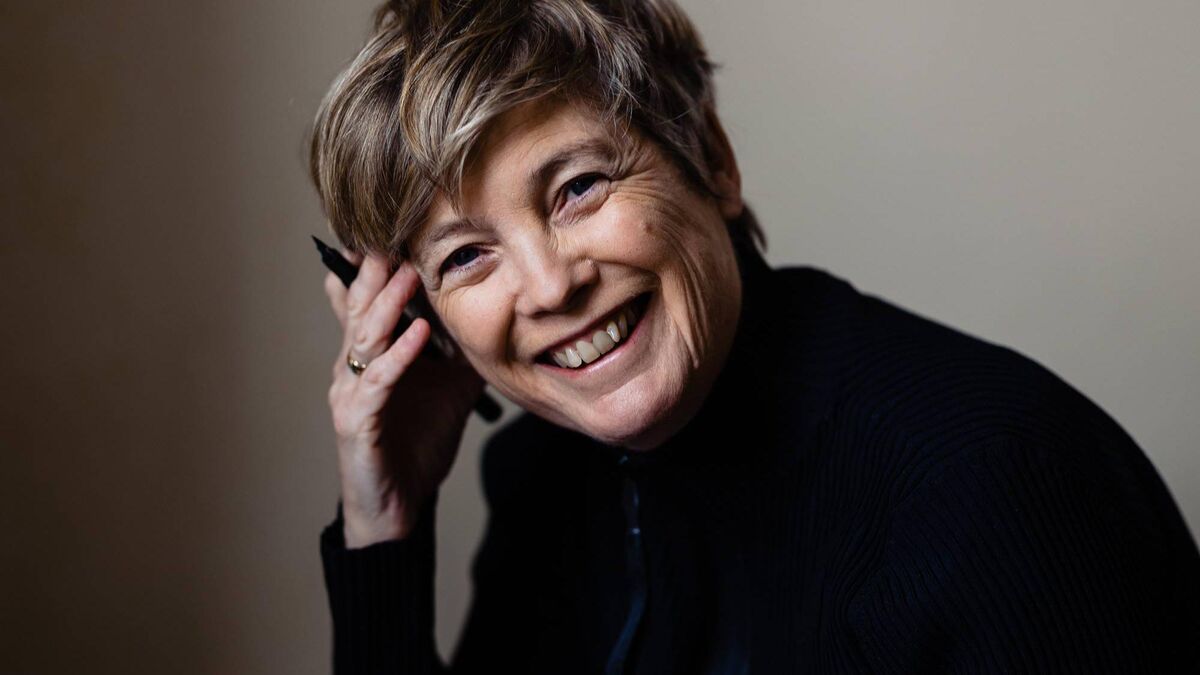
Katherine O’Donnell is involved in a panel discussion, Beyond the Rainbow, at the West Cork Literary Festival on July 15.
As a philosophy professor at University College Dublin, Katherine O’Donnell is predominantly based in the capital these days.
However, the writer, academic and activist, who will speak at this year’s West Cork Literary Festival, was born in Haulbowline. “My dad was in the naval service. I spent my first eight years there”, she recalls. “Very happy times”.
Katherine completed her PhD at University College Cork and spent time at the English Department in the University of California at Berkeley before joining the Women’s Studies Centre at UCD in the late 1990s. Now Professor of the History of Ideas at the institution, she acknowledges that her job title is intriguing.
“All of my research has been about trying to understand things historically,” Katherine explains. “By that, I mean under what forces and pressures ideas changed and new events and possibilities came into being.”
Her academic work, she summarises, delves into the 18th and 19th centuries to consider how ideas, some of which persist today, “come to be and how they have influenced, impacted, and changed people’s way of being”.
As well as her academic day job, Katherine also writes fiction and published her first novel, , in 2023. She will take part in a panel discussion, ‘Beyond the Rainbow’, at this summer’s West Cork Literary Festival, which will explore new writing from the LGBTQAI+ community. What can attendees expect from this event? “Good craic!” says Katherine.
Despite dealing with heavy themes, her book, , is itself good craic in parts. It skilfully strikes a fine balance between joy and devastation, with a sweeping narrative that explores issues including the undocumented Irish in America, the 1980s AIDS epidemic, and the 2015 marriage equality referendum.
This is all viewed through the lens of lively protagonist Ro McCarthy, a Cork woman who explores her sexuality and becomes an AIDS activist in 1980s Boston.
Katherine was somewhat surprised by the overwhelmingly positive reception for Ro. “I didn’t like Ro as much as everybody else!” she admits. “I thought of her as a bit naive and a bit flawed, and a bit duplicitous! I seem to be in a minority of one – people just find her really, really lovable.
While the character of Ro may be one of a kind – and entirely fictional – Katherine herself is no stranger to activism. However, having a bit of distance from the nature of the campaigning in helped to give her the perspective she felt she needed to write it. “I wasn’t involved as an AIDS activist,” she explains. “I was a bit young, but I did know people who were involved. And I wasn’t illegal in America, but I knew about it, and I was a witness to some of it.”
Katherine has, however, earned a reputation for her own activism on various issues, including LGBTQ rights and, for more than a decade, justice for survivors of the Magdalene Laundries.
“When I was in the Centre for Women’s Studies [at UCD], I got very involved with four other people,” she says. These people - Claire McGettrick, Maeve O’Rourke, James Smith and Mari Steed - were all involved with campaigning for an official apology from the Irish Government and a redress scheme for survivors of the Laundries.
“I remember saying, at the time, to Maeve O’Rourke - this was in 2010 – that we basically had three years to get this,” recalls Katherine, “and we’d have to retire it if we didn’t manage to do it. We had a very good campaign worked out. I remember Maeve saying, ‘three years? You think it’s going to take us three years?’ It did, of course.”
Katherine’s main role in the Justice for Magdalenes Research group was taking the oral histories of survivors and witnesses to the Laundries, a job she never took lightly.
“That was one of the most amazing experiences of my life,” she says. “
Katherine and her colleagues in the campaign group were sceptical of their chances at success. “It was tough,” she says, “because we really didn’t know if we would get an apology or a redress scheme. It looks inevitable now, but it just really didn’t look inevitable at all [at the time]”.
For many of the survivors, however, just being listened to was success in their eyes.
“I think most of them didn’t think we’d get anything,” Katherine recalls. “And in a very strange way, they didn’t care, because the fact that they’d met us and we cared seemed to be more than they’d ever thought possible.”
The last few decades in Ireland have heralded significant social change in many of the areas that Katherine has campaigned on. Progress, however, is not linear.
With her background in human rights activism and academic work in the history of ideas, how does Katherine believe we can ensure Ireland doesn’t slide backwards?
“There’s a couple of things that really have to stay alive,” she considers. “We need really good journalists. We need teachers in schools to be well paid and respected and primary schools and secondary schools to be really good at what they do, which I think is very healthy in Ireland.”
A significant campaign win for Justice for Magdalenes Research has been the introduction of the history of mother and baby homes to the national curriculum at Junior Cert level.
“One of the things the Magdalene movement has been saying,” Katherine explains, “is get this story, this history, into the curriculum and once the children learn about it, they’ll take care of business.”
The political sphere, Katherine concludes, is also essential.
“We need really good politicians. Good elections and good politicians. You need all of those three things to be in a really healthy state, and that will allow us to be kind to each other. These will be the best conditions for kindness to arise.”
- Katherine O’Donnell, professor and activist, will be at the West Cork Literary Festival on Wednesday, July 15 at 3pm in The Maritime Hotel for ‘Beyond the Rainbow’, an Irish Writers Centre panel discussion alongside Andrew Cunning and Adiba Jaigirdar.
- The West Cork Literary Festival takes place from July 10 to 17. See www.westcorkliteraryfestival.ie





 App?
App?


