Books: Uncovering the secrets of Cork women kept in Our Lady's hospital
For her new book, author Doireann Ní Ghríofa tells COLETTE SHERIDAN how she delved into the case studies of women who were sent to Our Lady’s Hospital a century ago
Books: Uncovering the secrets of Cork women kept in Our Lady's hospital

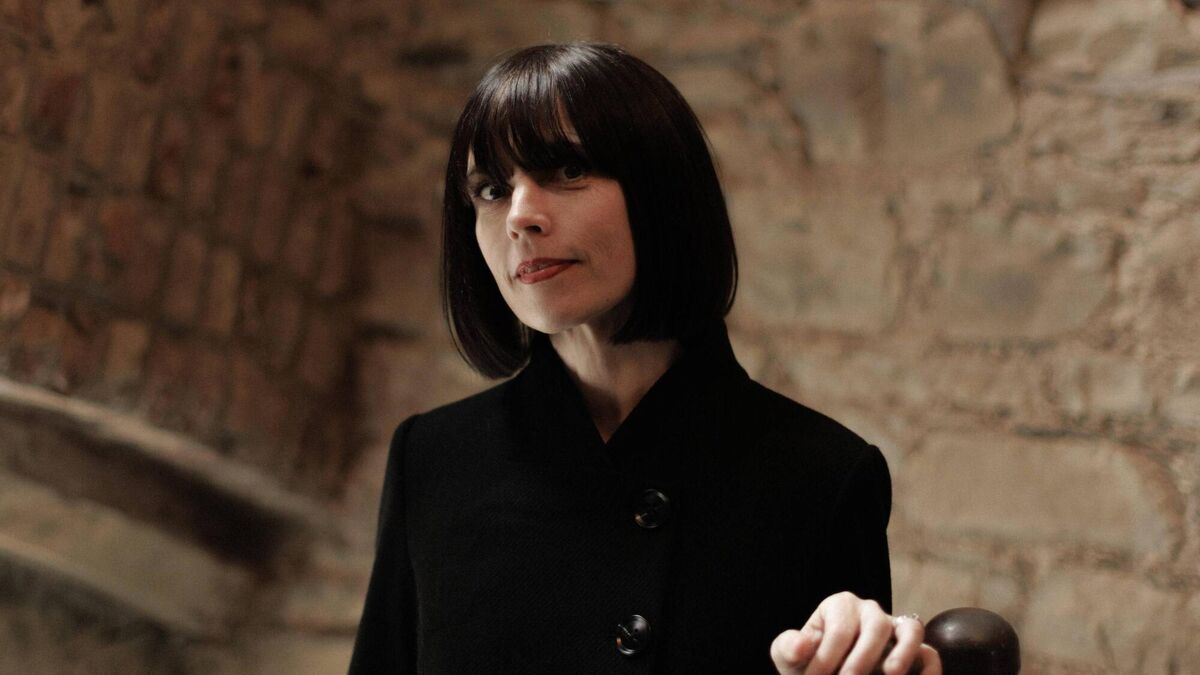
Author Doireann Ní Ghríofa. Picture by Bríd O'Donovan

Award-winning County Cork-based writer, Doireann Ní Ghríofa, has written a book centred in Our Lady’s Hospital on the Lee Road, entitled Said The Dead.

Now the site of new apartments with further development planned, the former psychiatric hospital in the Shanakiel area of the city, overlooking the River Lee, looms large on Cork’s western horizon.

Doireann, always conscious of the gothic asylum, says that had she been born in another decade, she might have been a patient there.

Having suffered from depression and made two suicide attempts, Doireann says the idea for her book had been brewing for a while.

When she heard that casebooks from the hospital had been saved “by an amazing group of psychiatric nurses who were working in the hospital when it started to be closed down,” she became intrigued by the patients that had been admitted to Our Lady’s, some never to leave.

“It was a very foresighted decision to save the historical artefacts from the building,” she says.

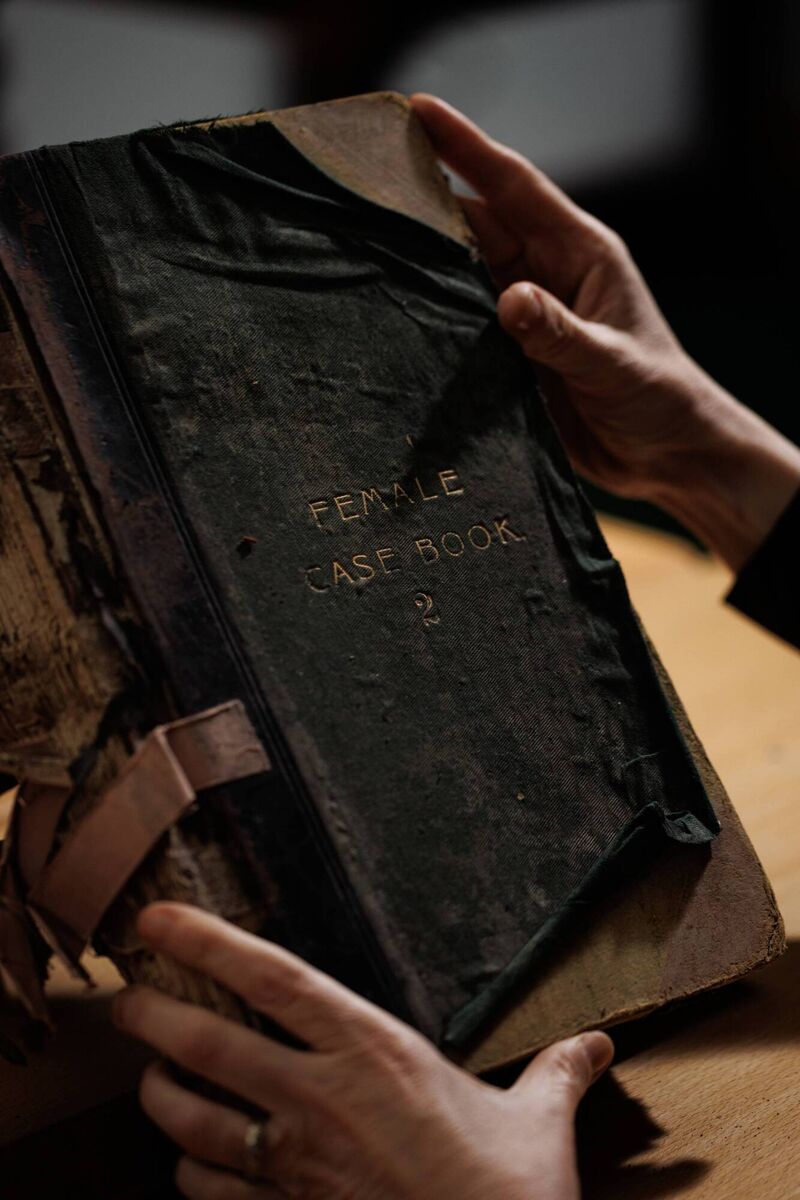
“They started collecting the casebooks and ledgers, all these really old documents that are so vital to the history of Cork. They were stored in the cellar of the building. You can imagine how damp it was. The documents were badly damaged.

“There were hundreds of books and boxes,” says Doireann. “Consider even the manual labour of carrying them up and transporting them.

“At the time, the Cork City and County archives were located where Triskel Christchurch is now. The nurses donated them to the archive which is now in Blackpool. That means the casebooks and ledgers have been donated to the Cork public.

“The Cork City and County Archives is a remarkable custodian of a really important part of Cork’s history.”

Doireann diligently took notes from the casebooks, in pencil, as pens are not allowed in the archive for fear that ink might mark the documents.

The period that she has researched and written about is from 1890 to 1920. She writes from the point of view of ‘the Reader,’ her alter ego, and uses the imagined voices of the patients and staff members.

“If you were a woman walking up that hill to be admitted to that hospital in, say, 1909 versus 1962, the difference is just vast,” Doireann says.

“There are so many points in the hospital’s history when it was an extremely dark place and it was very difficult for the people who were being held there.

“The history of psychiatry as it used to be practiced is a very difficult history to tell.”

The oldest casebooks in the archives are inscribed in copperplate with the name of the relevant medical officer and date.

Each individual section begins with a handwritten name (Doireann only uses the Christian names of the patients in her book to protect their privacy).

The patients’ addresses, ages, and occupations are stated in the casebooks.

Doireann recoiled when she read the doctors’ scrawls describing patients as ‘very dull and stupid’, or ‘a feeble little woman;’ ‘dirty and mischievous’, ‘very self-pitying’ and ‘hypochondriac’.

Years might pass before another entry was made about some patients, sometimes with the bald comment, ‘no change’.

A Female Case Book recovered from Our Lady’s Hospital.

But, despite the absence of a sense of a real person, all the Marys and Kates, the Ellens and the Catherines were alive in Doireann’s mind.

What pleasantly surprised the author was that in the period she was focusing on, some of the women would recover after several weeks or months and return to their ordinary lives.

“That was really moving. There were so many women dealing with what we would almost immediately recognise as issues to do with postnatal depression. Someone would develop suicidal thoughts in the weeks after giving birth.

“A woman would seek help at the asylum and would stay there for weeks or months with the doctor writing across her file, ‘Discharged Recovered’.”

Doireann had laboured under the assumption that the people who were brought to the asylum “were held there for their whole lives. That sometimes happened in the period I was looking at. It’s tragic that a life lost was lived in an institution. But there were other times when people recovered and went home.”

To flesh out the various women in her book, Doireann traced them through other archives such as births, marriages, and deaths. There were also the censuses and newspaper cuttings.

“I was able to trace the shape of someone’s life as they returned to it,” she says. “The stay in hospital wasn’t all-defining for a lot of these people who spent a brief period there. But there were a lot of stories with very sad endings.”

In what Doireann describes as ‘radical’, Dr Lucia Strangman was appointed in the late 1890s to the hospital, known then as Cork District Lunatic Asylum.

“It was so rare to have a woman doctor, let alone one of the earliest psychiatrists in the whole of the country, appointed.

“Dr Strangman was radical in the way she treated her patients. When she picked up her pen to write about the women sitting in front of her, she wrote with attentiveness to their humanity and with such detail. Her empathy carried over.

“She could never have imagined that a stranger like me would come to these notes a century later to piece together this period of history.

“Dr Strangman was progressive for her time,” says Doireann whose book honours the people that passed through the doors of the hospital.

Asked if she fears ghosts, Doireann, who explored the parts of the hospital that were accessible to her, says she has no fear of the people she has written about.

“I’ve been through similar struggles myself. I like to think we can bear witness to someone who is struggling and enduring and doing their best.

“I think everyone has painful moments. All any of us can do is get through the hard days and the hard years, sometimes just getting through hour by hour.”

Said The Dead, by Doireann Ní Ghríofa, is published by Faber & Faber.
More in this section

Cork author: ‘I’m renting in my 40s... I’m lucky to still be able to live here’ Cork author: ‘I’m renting in my 40s... I’m lucky to still be able to live here’
Cork v Meath - GAA Football All-Ireland Senior Championship Round 1 TV sport round-up: World Cup continues and footballers face showdown with Mayo
TV: Irish pioneer who helped found USA remembered TV: Irish pioneer who helped found USA remembered

Sponsored Content

Young woman managing finances at home with phone and piggy bank Government Personal Investment Account must target mainstream savers
Powering performance: South East Technological University is shaping sporting success Powering performance: South East Technological University is shaping sporting success
Portrait smiling senior woman making purchases in the supermarket selecting checking a product. Caucasian elderly customer in gr Safe2Eat 2026: Helping Irish people make safer, smarter food choices this summer
Contact Us Cookie Policy Privacy Policy Terms and Conditions

© Examiner Echo Group Limited

Add Echolive.ie to your home screen - easy access to Cork news, views, sport and more