Mary Crilly: ‘When I was asked to get involved in setting up the centre, I felt I had nothing to offer’
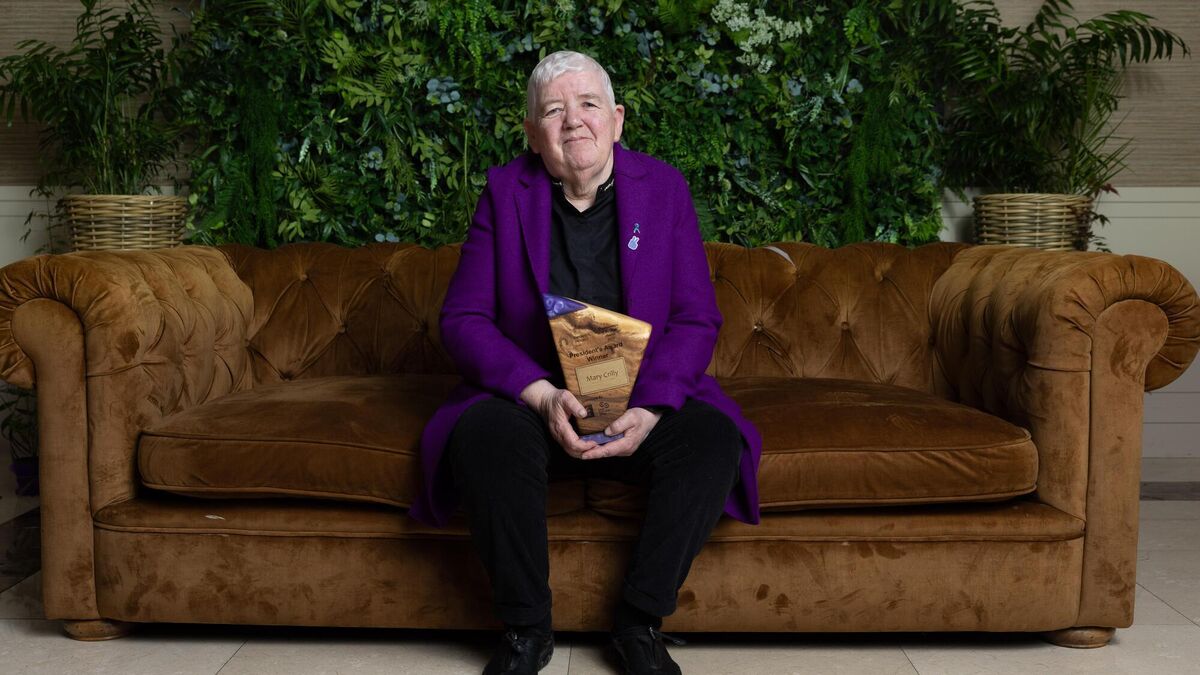
Mary Crilly was presented with the President’s Award at the Network Cork awards at the weekend, recognising the enormous contribution she has made to the lives of women across Cork. As she prepares to retire, she tells EMMA CONNOLLY how she didn’t feel she had anything to offer when it came to helping set up what was the Cork Rape Crisis Centre.
Mary Crilly: ‘When I was asked to get involved in setting up the centre, I felt I had nothing to offer’

Recipient of the President's Award, Mary Crilly, Sexual Violence Centre Cork at the Network Cork Businesswoman of the Year Awards 2026 in the Kingsley Hotel. Picture: Darragh Kane

When Mary Crilly was first asked to get involved to help set up what was originally the Cork Rape Crisis Centre in the early 1980s, she genuinely felt like she had nothing to offer.
Fast forward 40 years and her contribution has been enormous; from changing outcomes for abused women and men, advocating for them, providing counselling, changing societal perceptions, and so much more.

Mary is retiring from her position as head of what’s now called the Sexual Health Centre Cork, based at Camden Quay, at the end of August.

She was honoured with this year’s President’s Award by Network Cork at their annual awards ceremony on Saturday night.

Network President Diane Higgins explained how the award is given to someone outside of the organisation who embodies the values of Network Ireland – leading, supporting and collaborating.

“I chose Mary Crilly on the year of her retirement to acknowledge the work she has done for women within our community for the last 43 years. Mary is a leading light who has paved the way for change in the lives of thousands of women in Cork and across the country through the centre, as well as through her awareness campaigns and her lobbying work on legislative reform,” said Diane.

“Mary told me of how she started with a phone that was kept in a filing cabinet that they had access to a couple of days a week, and their volunteers used this to run a rape crisis helpline.

“Many countries still don’t have the services that the Sexual Health Centre in Cork provides today, but in the Ireland of the time, setting up a centre like this was ahead of its time and took determination and passion. She described these early years to me as a lonely time when nobody wanted to know about it, but said that, luckily, times have changed. I believe that Mary was instrumental in making some of those changes happen with her advocacy, her passionate campaigning for women’s rights and legislation to protect them, such as the recent legislation in stalking,” said Diane.

With such a milestone approaching for Mary, it’s a time for reflection.

“I was born in Fairview, Dublin. My father died of TB when I was 10, and my mother was left with four children, trying to hold down a couple of jobs and keep everything going,” said Mary.

“The school I went to only went up as far as Group Cert because the expectation was that no one attending that school would be doing a Leaving Cert.

“The first time I went to university as a student was when I was 50. I didn’t come from the kind of background where that was a given, far from it, it wasn’t even considered,” she said.

She started out working in the civil service, the social welfare department, and after getting married and moving to Cork in 1977, she worked in the Labour Exchange.

“I was living in a big housing estate on the South Douglas Road, Greenhills Court, the neighbours were great, but I felt quite isolated at that stage. My relationship was all but gone, I had two young daughters, and someone living in the estate came up to me one day and asked if I’d be interested in helping with a group, a rape crisis group, that was starting up.

“That was in 1982, but at that stage I felt I had nothing to offer,” she remembers.

Fortunately for the countless people she’s helped over the past four decades, she stepped forward regardless, volunteering with the group first in the Quay Co-op, which opened in 1983, with the aforementioned phone in a filing cabinet, then when it moved to MacCurtain Street.

Cork was a very different place then, and the idea of a rape crisis centre was still a very alien one. “Without being crude about it, there was a feeling that only ‘hoors’ get raped – there was an idea that domestic violence took place within a family, and everything else was the woman’s fault, but everyone knew abuse was rampant; they just weren’t talking about it or doing anything to stop it.

“So, it was rough being prepared to put your head out there, but the injustice of it kept me going, even if I felt a bit overwhelmed initially.

“I’d been abused myself as a 13-year-old and that was something I wasn’t owning or acknowledging. I was in denial like a lot of people. When I look back, I think that’s what was keeping me involved,” she said.

Mary, who would have been in her 20s, said she remembers “going through a stage having vicious and frightening panic attacks”.

“It was part of what was going on for me at the time, my marriage breakdown, wondering was I good enough for my children,” she said.

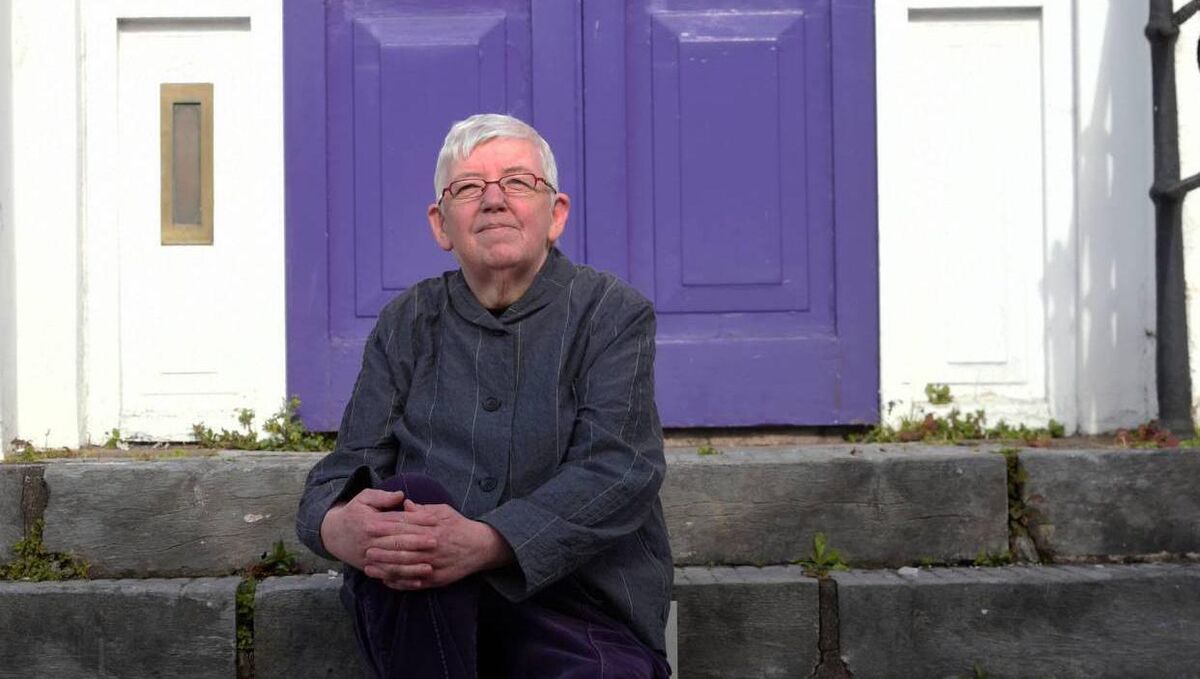
Mary Crilly outside the Sexual Violence Centre.  Picture: Larry Cummins

What kept her so committed to her volunteering and advocacy work?
“The victim-blaming, how wrong that was; that kept me going, to find justice,” she said.

Looking back, it’s a case of a lot done, a lot more to do; a lot has changed, and a lot more needs to be changed.

“The victim’s treatment by gardaí in court is like night and day, compared to 40 years ago. That change has been phenomenal, but the legal system is archaic... If I ever leave my soul anywhere, it will be in the courthouse, having been at more than 200 cases. Things are changing, but the system everyone has to operate in needs to be overhauled. I’ve been talking about this for 30 years. There’s a less than 10% conviction rate, so who is it working for?”

More positively, Mary said that for the most part, women and men are now believed when they report a rape, and that’s a big change.

“But still rape isn’t always looked at as a black and white issue – there cannot be any grey areas, and by treating it as such, we’re enabling rape. Ultimately, it’s about making the world safer, and I don’t think it’s getting safer, there’s still so much tolerated.”

What are her plans for retirement?

A laugh suggests there won’t be too much downtime on the 71-year-old’s hands!

“I’m finishing micro-managing of the centre, but I’m keeping on working on our campaigns, or I’d go mad!” she said.

She played a vital role in stalking being treated as a crime, and is now working on the issue of spiking of drinks.

For the past two years, she’s been involved in an initiative called SafeGigs – working to make gigs and nightlife safer, for everyone.

“We want to eliminate discrimination and sexual violence in nightlife by creating a zero-tolerance environment for all forms of violence and unacceptable behaviour,” said Mary, who will be attending Electric Picnic, gigs in Marley Park, and elsewhere this summer.

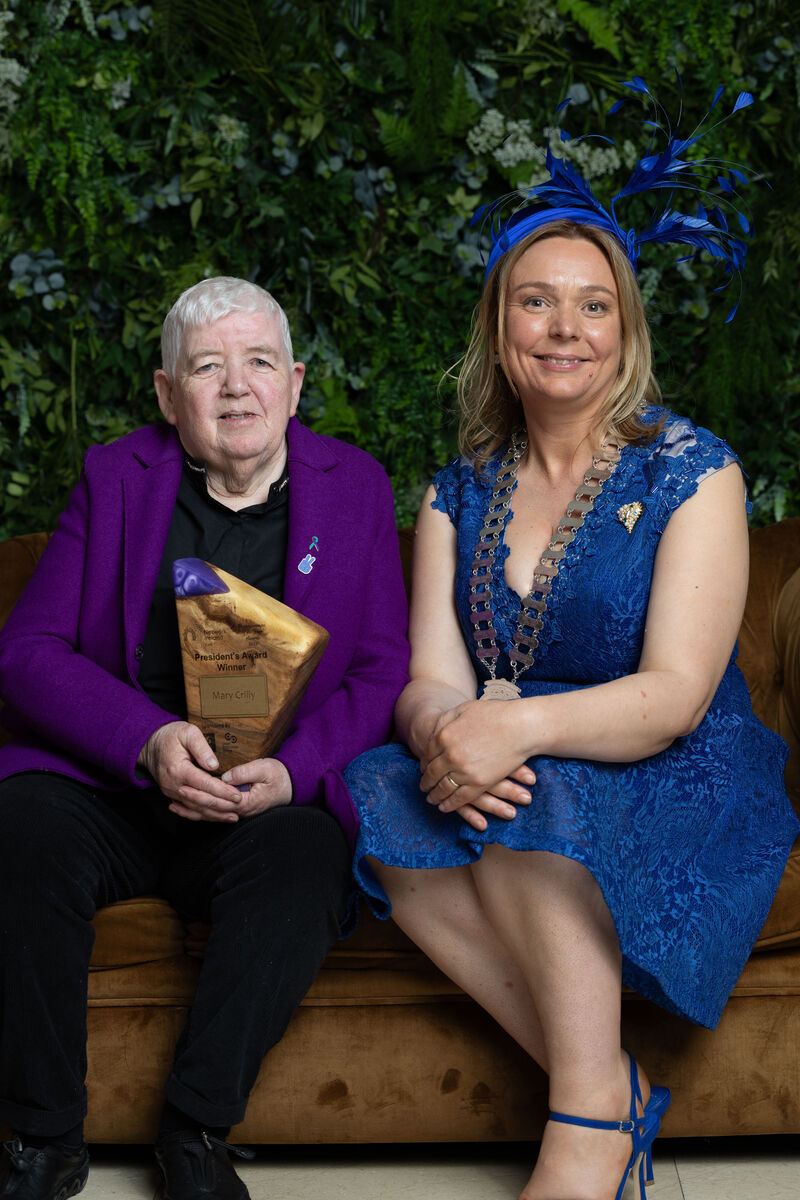
President of Network Cork Diane Higgins with recipient of the President's Award Mary Crilly, Sexual Violence Centre Cork at the Network Cork Businesswoman of the Year Awards 2026 in the Kingsley Hotel. Picture: Darragh Kane

She’s looking forward to more free time for her three grandchildren – two in Norway and one in Cork. “I’m Mamó to them, the Irish word. I love being a grandparent. I’ve always loved kids. I’ve no hobbies – it’s just work and the kids my whole life!”


What would she like her legacy to be?

“To stop the victim-blaming. I know I can’t stop all the abuse that’s happening, but if we stop for one second and say ‘it definitely wasn’t her fault...’ I think we can get to that place.

“Forty years ago, survivors of child abuse or any kind of sexual abuse wouldn’t have gone public, and now they are, and that’s a massive change. It’s normalising and highlighting it, and helping to show that it’s not their shame.”

Winning the president’s award, was a ‘privilege’, she said. So was meeting everyone who came through their doors over the years.

“50% of those coming to us are abused as children, the rest are raped, stalked and suffering violence and it’s been a phenomenal privilege to meet every one of them.

“They are survivors. They’re looking for hope, and they’ve given me hope.”

Read More

More in this section

Cork etiquette expert: ‘I think there’s a shift to putting away the phones’ Cork etiquette expert: ‘I think there’s a shift to putting away the phones’
West Cork Literary Festival Director: People ask if I am a writer...not unless you include spreadsheets West Cork Literary Festival Director: People ask if I am a writer...not unless you include spreadsheets
My Career: ‘Raising three small kids while working full-time was my biggest challenge’ My Career: ‘Raising three small kids while working full-time was my biggest challenge’

Sponsored Content

City Tiles and Bathrooms: Latest trends and timeless colours City Tiles and Bathrooms: Latest trends and timeless colours
Step into nature during National Biodiversity Week Step into nature during National Biodiversity Week
55 years of Cork Simon Soup Run: The light that has never gone out 55 years of Cork Simon Soup Run: The light that has never gone out
Contact Us Cookie Policy Privacy Policy Terms and Conditions

© Examiner Echo Group Limited

Add Echolive.ie to your home screen - easy access to Cork news, views, sport and more