‘My work gives me a strong sense of purpose’
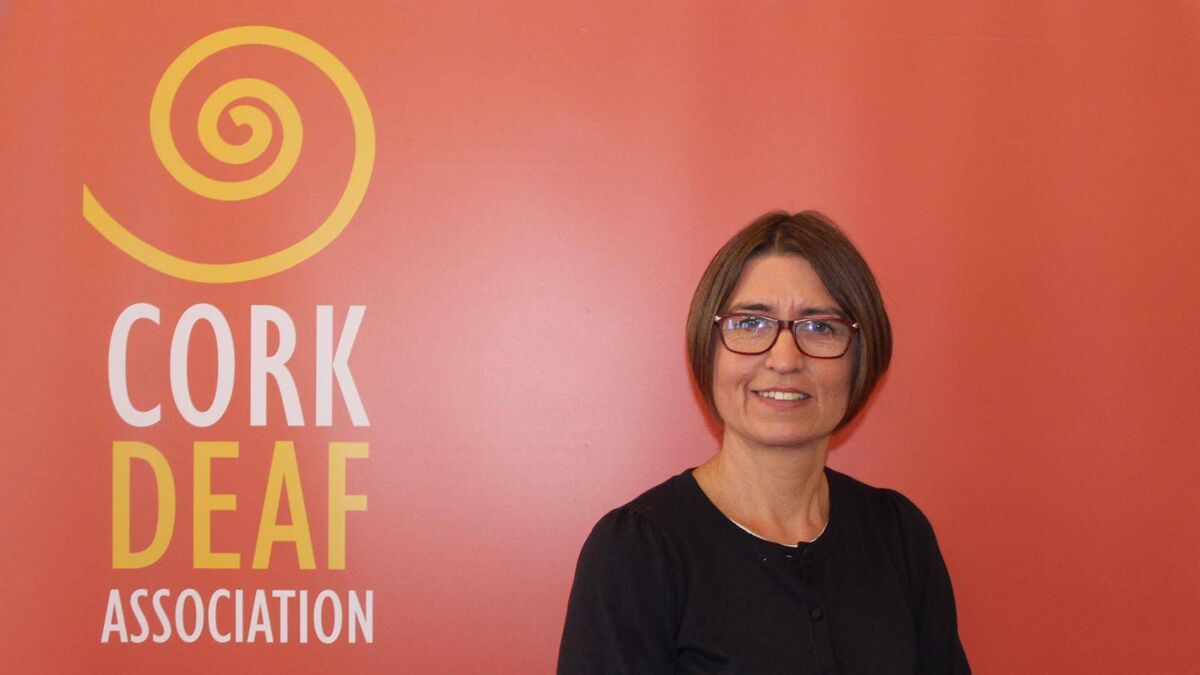
Susan O'Callaghan first started working with the Cork Deaf Association 25 years ago.
Name: Susan O’ Callaghan
Age: 48
Lives: Cork
Job title: Advocacy Officer with Cork Deaf Association
Education background: Completed Diploma in Business Studies & Accounting; Qualified Deaf Interpreter; Certificate in Equality Studies; Irish Sign Language; Leadership, Train the Trainer qualification.
Hobbies: Walking, jogging, and cycling.
Describe your job in five words: Supporting, empowering, advocating, interpreting, organising.
Describe yourself in five words: Dedicated, approachable, reliable, motivated, supportive.
Personality needed for this kind of work? respectful, trustworthy, good sense of self-worth, committed and supportive attitude.
How long are you doing this job? 25 years this year (since January, 2001).
How did you get this job?
Cork Association for the Deaf (as it was formerly known) advertised a position for a Community Resource Officer. I applied, attended the interview, and was fortunate to be offered the role. I believe my strong involvement in the Deaf community and my close connections within the community helped me secure the position.
When I started, there were limited social groups for Deaf adults, children, or families. Over the years, I took the initiative to establish various groups and activities, helping to build a stronger sense of community support. I worked to create inclusive events and opportunities where people could connect, share experiences, and support one another.
At times, working within a close-knit community can feel challenging because everyone knows each other, and there can be criticism. However, I have learned to stay focused, resilient, and committed to the bigger goal of community development.
I believe I was the first Deaf person employed by the organisation. Being part of this change has been a significant achievement for me, and I am proud to contribute to the growth and empowerment of the Deaf community.
Do you need particular qualifications or experience?
Yes and no.
I have a Diploma in Business Studies. It is important to have strong Irish Sign Language (ISL) skills so you can communicate effectively within the Deaf community. Knowledge of advocacy, equality, and social inclusion is also very important in this role.
In terms of qualifications, I am a Qualified Deaf Interpreter and have a Certificate in Equality Studies. I have completed training in Irish Sign Language, Leadership, and Train the Trainer for teaching or delivering Deaf Awareness. These qualifications have supported me in delivering workshops, advocacy work, and community development.
However, experience is just as important as formal qualifications. Much of my knowledge and confidence has developed through hands-on work within the community.
I have attended various workshops and training courses over the years to improve my skills, gain certificates, and continue my professional development.
My qualifications are helpful, but practical experience, community involvement, and a genuine understanding of Deaf culture are equally important for this type of work.
Describe a day at work:
As a native Irish Sign Language user, I can communicate fluently and naturally with the Deaf community, which enhances my advocacy and community work. I work in a world where many people communicate differently. Some use their hands instead of their voices, and my job is to make sure they are included, respected, and supported.
Each day is different. I support Deaf clients one-to-one and sometimes in groups, including Deaf elderly / men’s groups and Deafblind individuals. I help make sure they can access the services they need — for example, helping them book interpreters or showing them how to book one themselves. I support them in understanding their rights and making sure their voices raise awareness.
I also organise activities and events for Deaf, Hard of Hearing (HOH), and CODA (Children of Deaf Adults) children, as well as their siblings and parents. This includes special events like Easter celebrations, Christmas parties, and summer camps for children.
For youth members, I organise regular social gatherings each term and plan day trips during the summer so they can connect, build friendships, and feel part of a strong community.
Part of my role is educating the wider public. I deliver Deaf awareness talks to schools and public sector organisations to help people better understand Deaf culture and communication.
I work closely with a dedicated team of volunteers to organise children’s events and community activities. Over the past few years, I have also organised workshops specifically for Deafblind individuals and CODA to raise awareness and address the lack of support and resources available in Ireland.
My job is to make sure Deaf people are supported, included, informed, and connected — and that the wider deaf community understands and respects them.
How many hours do you work a week? I work five days a week (approximately 35–40 hours). My role is flexible. If there are events at weekends or workshops/webinars in the evenings, I adjust my schedule to attend and support the community when needed.
Is your industry male or female dominated? In our organisation, there is a mix of both men and women.
Does this affect you in any particular way? It does not significantly affect my work, as the focus is on teamwork, inclusion, and supporting the community. Diversity in the team is always beneficial.
Is your job stressful? How? Rate it on a scale of 1-10: No, it can be stressful at times, especially when supporting vulnerable clients, organising large events, or managing limited resources. I would rate it around 5-6 out of 10, depending on the time of year.
Do you work with others or on your own? I work both independently and as part of a team. I collaborate closely with my colleagues and volunteers, but I also manage many tasks and advocacy cases on my own.
When do you plan to retire or give up working? I would love to continue working until I reach retirement age. When I move into semi-retirement, I hope to reduce my hours and possibly work part-time or volunteer.
I enjoy being involved in the community, attending social gatherings, and supporting Deaf people when they need communication support in public services. Staying connected keeps me motivated and active.
Best bits: The best part of my job is working directly with the Deaf community and seeing the positive impact of support and inclusion.
I enjoy organising events, bringing people together, and empowering individuals to access the services they need. Building relationships and seeing people grow in confidence is very rewarding.
Worst bits: One of the challenges is keeping up with advanced technology. When I started 25 years ago, things were very different. Now, technology changes quickly, and I do not always have time to learn everything new, as I prefer interacting with people face-to-face. I am also less interested in the deeper legal and policy side of the work, although I understand it is important and I continue to learn what I need to know as part of my role.
Advice to those who want your job? Have empathy and understand the barriers Deaf people face in everyday life. Always seek the best support you can provide. Work well as part of a team, stay organised to manage tasks efficiently, and be committed to continuous learning. Most importantly, be passionate about inclusion and equality.
Any other comments? It is very important to maintain a healthy work–life balance, as my role can be very busy at certain times of the year, depending on events and community activities.
Overall, it is very enjoyable and rewarding to work within the Deaf community. It gives me a strong sense of purpose to support, empower, and connect with people in meaningful ways.







 App?
App?


