‘I would die if my daughter had to go through what I’ve been through’
Dr Louise Collins first began experiencing symptoms of endometriosis when she was a teen, but it wasn’t until ten years ago that she was diagnosed with the condition. She tells DEIRDRE MCARDLE about her diagnosis and why she believes it is so important to raise awareness of endometriosis.
‘I would die if my daughter had to go through what I’ve been through’

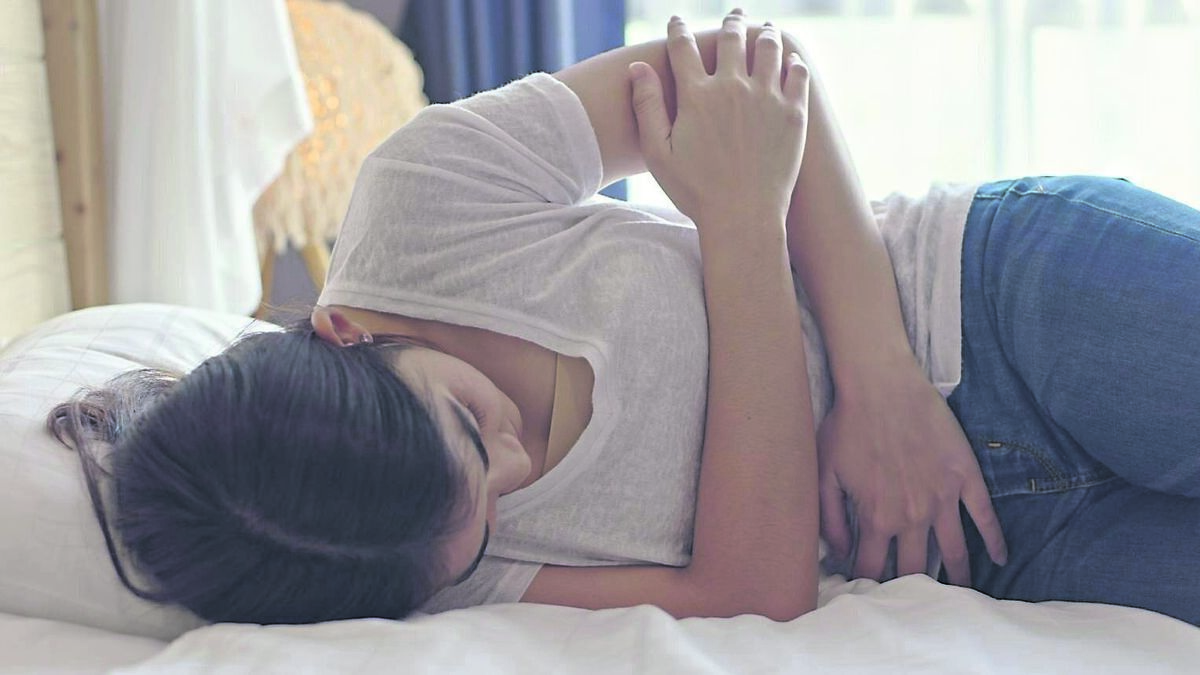
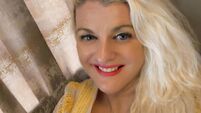
Louise says while endometriosis has been long dismissed as ‘bad period pain’, it goes way beyond that. File image.

After she had her daughter four years ago, Dr Louise Collins switched her research focus from neurodegenerative diseases to endometriosis.
Her own involvement with the chronic disease and knowing it can be passed down injected some urgency into her research.

“My background is in chronic inflammatory diseases and specifically Parkinson’s disease, but in the last two years I’ve moved into the endometriosis research field,” she said.

“I have stage four endometriosis myself, and it kind of came home for me after I had my daughter, knowing that it’s genetic. I started looking into it, mostly from a personal viewpoint.”

The Cork woman was diagnosed with stage four endometriosis 10 years ago, although she had experienced symptoms since she was a teenager. At that stage, though, like many women who experience endometriosis, she didn’t know her symptoms weren’t normal.

“Now I know, of course, that if you’re having to go to bed and you’re sick with pain and you’re nearly passing out with it, that’s not normal.”

Endometriosis is a chronic condition in which tissue that’s like the lining of the womb grows in other places, like the ovaries and the fallopian tubes. The lesions aren’t confined to the pelvic region, though, explains Louise.

“Even though it’s traditionally been described as a gynaecological disorder, we know now that it’s not confined to the pelvis. There’s been bowel involvement, bladder involvement, diaphragm involvement.

“We’re seeing endometriosis now being described as a whole-body disease.”

Endometriosis has long been dismissed as “bad period pain”, but Louise explains it goes way beyond that. “The lesions outside the uterus are biologically active, meaning they trigger chemical alarm signals that drive inflammation and pain. They also interact directly with nerve fibres which is why the pain is so intense and widespread.”

The condition is estimated to affect 10% of girls and women globally. There is no cure or prevention, and treatment simply focuses on managing the disease. Many patients are first put on the combined pill to “suppress ovulation and stabilise hormone fluctuations”, but Louise points out this “does nothing to remove the lesions.” Others are given progestins, which can “reduce pelvic pain” and even “shrink the size of your active lesions”.

Beyond hormones, there is surgery to excise lesions and sometimes remove damaged organs, but even expert surgery is “not a cure,” with the disease often recurring within a few years.

A combination of medical gaps and lack of awareness, as well as a cultural dismissal, also means diagnosis can take years.

“There’s no reliable blood test for endometriosis. Diagnosis is still largely dependent on laparoscopic surgery,” says Louise.

That’s how her endometriosis was diagnosed. “The gynaecologist brought me in for a laparoscopy, and I remember after he said, ‘it’s not the worst case of endometriosis I’ve seen, but it is the second worst case’. All my organs were stuck together. He did an excision surgery then which is when they remove the lesions, and I got my diagnosis.”

Louise underwent multiple tests before she received her diagnosis.

Although she now had a diagnosis, Louise was not given any “structured care pathway”. “
It was like, here’s your diagnosis, here’s your pain medication. There was no coordinated plan, no multi-disciplinary support, no long-term strategy. You have a flare-up, you go to A&E, and you do the whole rigmarole again, and again.”

Over the years, Louise had multiple tests, consultations, misdiagnoses, and visits to the emergency department. Throughout it all, she says her parents were her main advocates.

“I went for countless investigations. I had GI problems. I ended up in the emergency room loads of times, but no-one was looking at the whole picture. In the meantime, the pain got to the point where I couldn’t move from the bed for a week and I couldn’t eat.

“My parents started to advocate for me. And they persisted. I didn’t know any of this at the time, but they were ringing the GP constantly, looking for a referral to a gynaecologist. Once they got that referral, they rang that office daily to get me in and seen. When I finally got to see the gynaecologist, he said ‘your parents are so persistent - that’s why you’re here’.”

Today, 10 years after her diagnosis, Louise lives with ongoing, complex stage four endometriosis, chronic pain and repeated surgeries. 

Despite the difficulties, she continues to work as a researcher, raise her four-year-old daughter, and “wage a private war” against a disease that she says still shapes her daily life.

“In many ways, I think I’m lucky. I was told I wasn’t fertile, but we had a baby girl. I can get up, I can work. I mean, yes, I might be on pain medication, but I’m working. I’m beating it. In my head, I’m having a private war. And every time I get into work and I’m not taking a sick day, I think, ‘I beat you’.

“As much as I have a smile on my face for myself, I would die if my daughter had to go through what I’ve been through. Whatever we can do to raise awareness and to change the way that women are treated, it’s so important.”

More in this section

Mary G O'Brien: ‘The Society was one minute from folding... I was their last chance’ Mary G O'Brien: ‘The Society was one minute from folding... I was their last chance’
Dirty dishes no more Julie Helen: 'Having a clean kitchen is more about being able to control the small controllables'
Meet the first woman at the helm at Cork’s ‘Grand Dame’ Meet the first woman at the helm at Cork’s ‘Grand Dame’

Sponsored Content

Where tech meets care: At the forefront of IVF Where tech meets care: At the forefront of IVF
10 minutes with Shannon O’Sullivan of Corlann 10 minutes with Shannon O’Sullivan of Corlann
10 minutes with Jason Cooke of Cheshire Ireland 10 minutes with Jason Cooke of Cheshire Ireland
Contact Us Cookie Policy Privacy Policy Terms and Conditions

© Examiner Echo Group Limited

Add Echolive.ie to your home screen - easy access to Cork news, views, sport and more