Throwback Thursday: A 22-year-old letter.. and memories of theatre visit

In this week’s Throwback Thursday, JO KERRIGAN responds to a letter from 22 years ago, hears memories of Moby Dick being filmed in Youghal, a portable theatre, and finds out about the real border between Cork and Waterford.
Throwback Thursday: A 22-year-old letter.. and memories of theatre visit

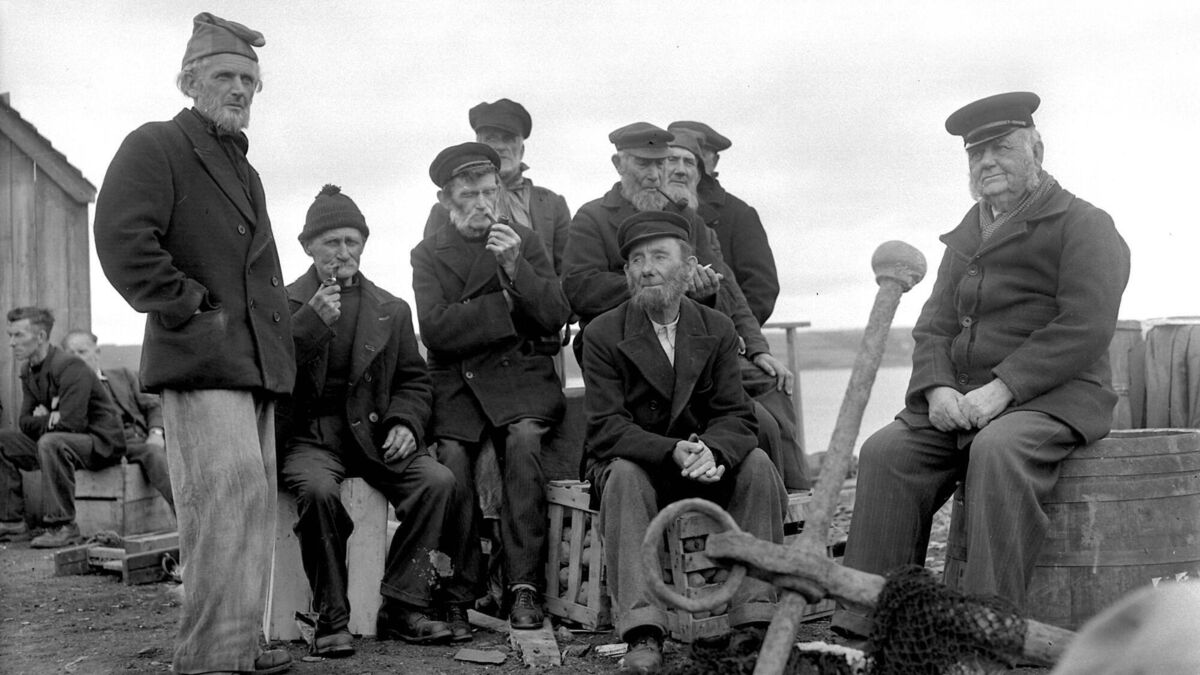
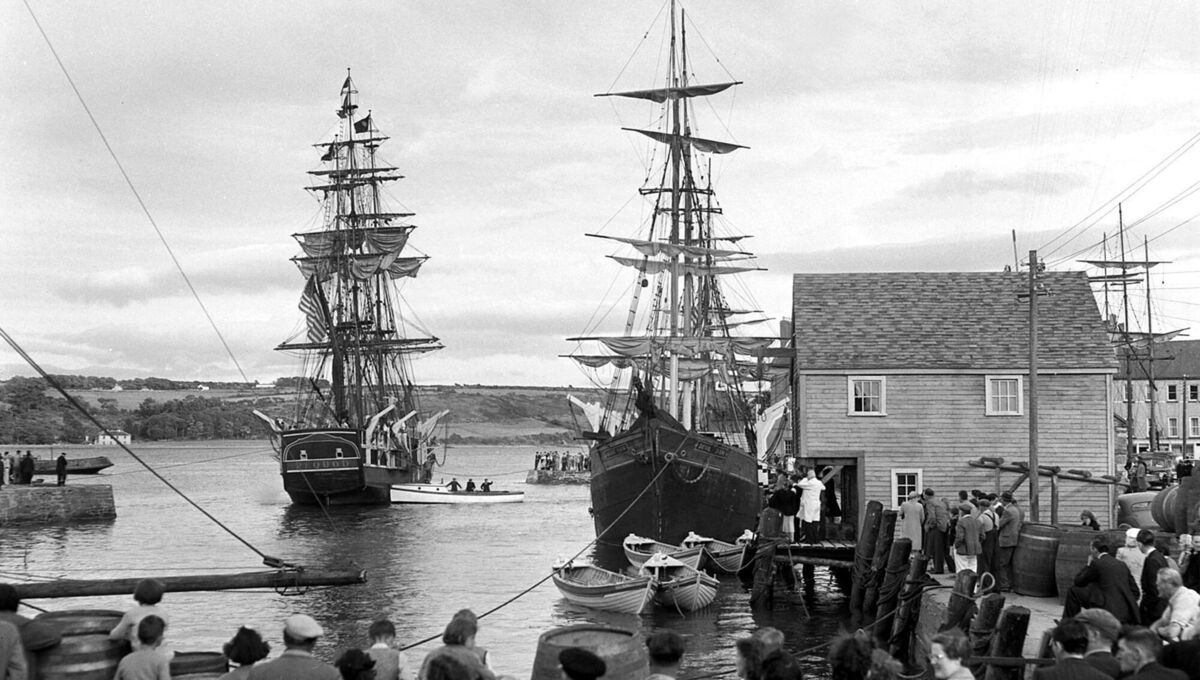
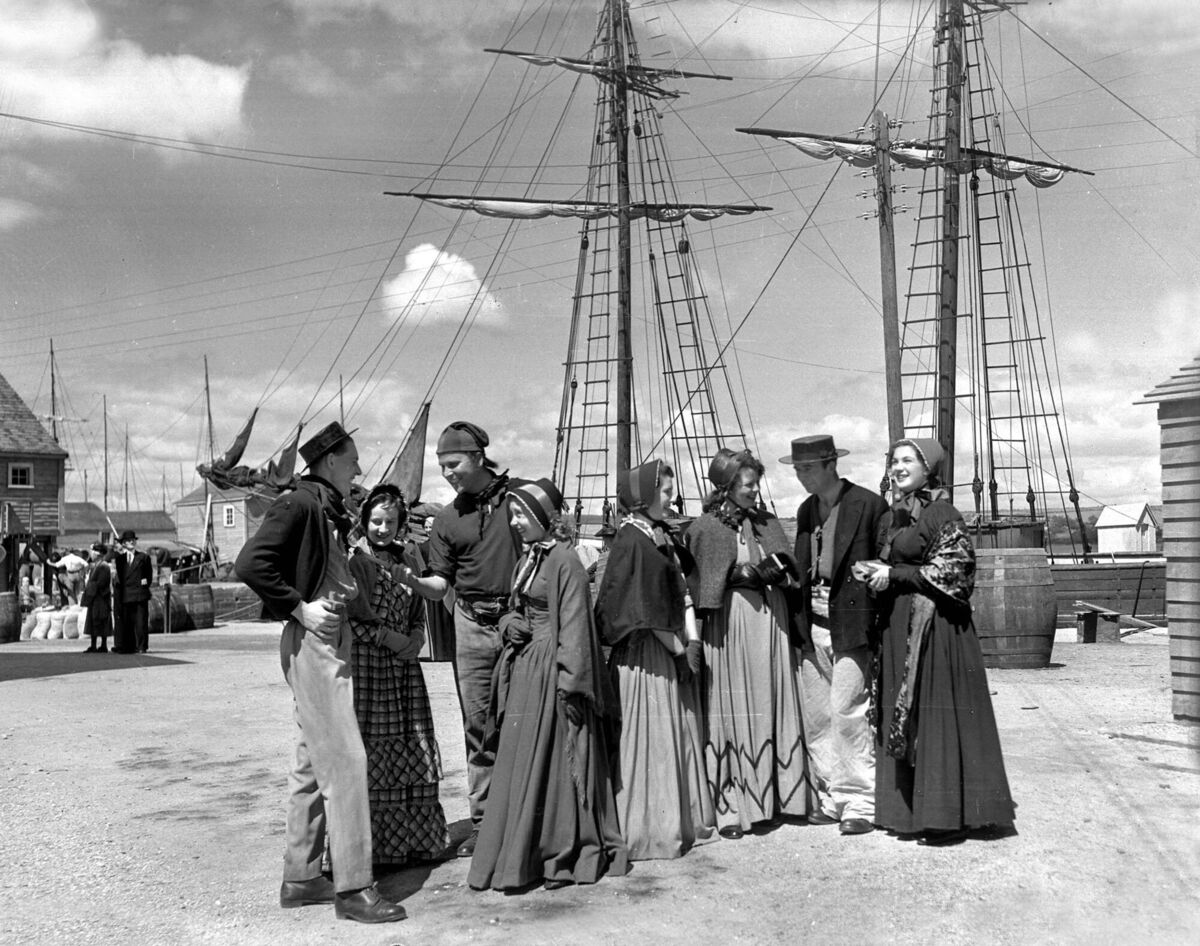
Extras pictured on the set of the film 'Moby Dick' at Youghal, Co. Cork 29/07/1954 Ref. 780G Old black and white

National Heritage Week begins this coming Saturday. Of interest to readers might be the Genealogy and Archives Day at the Archives building on Great William O’Brien St in Blackpool Wednesday next, August 19 from 10.30 to 4pm. There isn’t a charge for the event, but places are limited, so booking is essential. Email archivist@corkcity.ie. Just the thing if you wanted to know more about how to research your pet theme or interest.

And did you haunt your local library when you were a child? Then Cork County Council Library & Arts Service wants to hear from you (so do we, come to that!) In a project entitled Share Your Library Memory, you are invited to contribute treasured recollections to mark the service’s 100th anniversary. Whether it’s your first library card or favourite authors, study sessions or community events, they want to gather all of them and highlight the lasting effect our libraries have had over the past century.

How to go about it? Several ways. Visit any Cork County Library branch and write down a memory for display. Email a submission to corkcountylibrary@corkcoco.ie with the subject line “Library Memory.”

Complete an online submission form by visiting Library memory - Online Submission Form. Adults only. Submissions must relate to a memory of a Cork County library and should not exceed 300 words. The closing date is Saturday, August 29. A selection of these stories will be featured in a commemorative publication. Go on, get to it!

We are delighted to report that last week’s mention of the boundary between Cork and Waterford, and the query as to whether the Blackwater was not the historical border, brought all the swift reaction for which we had aimed! One of the first off the starting blocks was Dorothy Heaphy of Youghal, who wrote firmly: “I believe the River Tourig is the boundary, running under the stone bridge. I am sure the River Bride runs through Tallow. Have you been driving without due care and attention, Jo? It would never do to go astray!”

And this was followed up fairly sharply by a missive from Joe Collins: “I enjoyed your recent article about the dismantling of the old Youghal Bridge. I grew up in a house overlooking what is still called locally The New Bridge. After all, it is only 63 years old.

“I felt compelled to write because of your comments on the county boundary. I have had this conversation many times, but must state firmly that the Blackwater is not the border. The actual border is the Tourig river (you misnamed this as the Bride in your article). There is a stone bridge on that river on the way into Youghal where the tarmac changes halfway because that’s as far as each council will maintain.”

Oh that bridge with the tarmac changing colour in the middle, Joe! Brings me right back to childhood trips in the Kerrigan Bus, rattling down over the Cork-Kerry county bounds. We would hang out the windows to watch the road surface as we approached the summit, shouting Cork – Cork – Cork – KERRY! as the tarmacadam changed miraculously from blue-black to a definite green, where the Kingdom had taken over the surfacing, using its own sources of gravel and metalling. A great way to learn a bit of geology, I have since thought.

But back to you, Mr Collins: “The new sign you refer to [Welcome to Waterford] is on the bridge at the end of Youghal by pass. I can assure you that has always been part of Waterford. Former Waterford corner back Eoin Murphy is from that area, Knockanore, so I can’t give you more conclusive proof than that!”

Well, before the might of the ancient sport of hurling, we bow in acknowledgement. Except… except… But let Joe finish:

“Thank you again for a very interesting article. I’ll share it with my family who I’m sure will enjoy it. Except for the misplacing of the border. In fairness the bigger river would make more sense as a border but that’s county council’s logic for you.”

Ah, that’s what lit the spark. County council logic. Counties! Is there anyone out there who doesn’t know that our modern day counties were the imposition of the colonial settlers back a few hundred years ago? They felt we should be properly organised on the same method as they used back in England, and so divided us up into formal counties instead of kingdoms and townlands and the like. Before that, I would maintain, the mighty river Blackwater was the natural and normal boundary between two petty kingdoms. To use a little rivulet like the Tourig would have made no sense at all, especially at a time when it was considered far safer to travel by boat down a strong river border than tramp through the unfriendly lands of a neighbouring king. Of course this only happened after that great storm around 700AD or thereabouts, which caused the Blackwater to change its course entirely for this last stretch, abandoning what is now called Whiting Bay (but still retaining the old Irish name, Béal Abha, to show its history) and choosing to enter the sea at what would become Youghal.

Hey, maybe that means we in Cork can rightfully claim a chunk of Waterford back? Out as far as Whiting Bay? Must go peruse the ancient maps… (And I can just see the rest of you reaching for your phones or keyboard to shoot me down! Go ahead. That last try worked pretty well, didn’t it?)

Now, coincidentally, I came across a mislaid letter the other day, while endeavouring to clear up a mass of unfiled stuff (you know how it is). A certain Robert Desmond of Dunmore East had written (genuine letter, envelope, postage and all, but no phone number, no email) back in September 2004. How his letter got mislaid I do not know, but can only think it must have been at a particularly frantic time of getting a new book out, or something like that. Anyway, Mr Desmond, if you are still there in Dunmore East, or if members of your family are, my heartiest apologies. I never intended the delay in responding to span 22 years. But here at last is your wonderful story of childhood theatre visits back in the 1950s in the town of – where else – Youghal!

“Dear Madam.

“Some time ago you had an article in the Echo about fit-up theatres and asked your readers for their memories of these entertainments. I intended writing to you at the time, but as usual I did not get around to doing it. On Friday’s Newsnight there was an item about this week’s celebrations in Youghal of the 50th anniversary of the filming of Moby Dick. As my anecdote relates to that event, I think you may be interested in the following:
“As a teenager in Cork in the 1950s, with an interest in the theatre, I was not familiar with the term fit-ups. With the old Opera House and other venues available, there was no need of improvised structures to house visiting companies. During the summer months the Carl Clopet Repertory Company would put on a different play each week. For the rest of the year, in addition to performances by local groups, we would have had touring companies such as Anew McMaster, Edwards & MacLiammoir, Lord Longford, and the Abbey. In the revue mode there were the O’Dea and Jack Cruise companies. I was a little surprised when I heard some of the performers in these companies refer to them as fit-ups in later years.

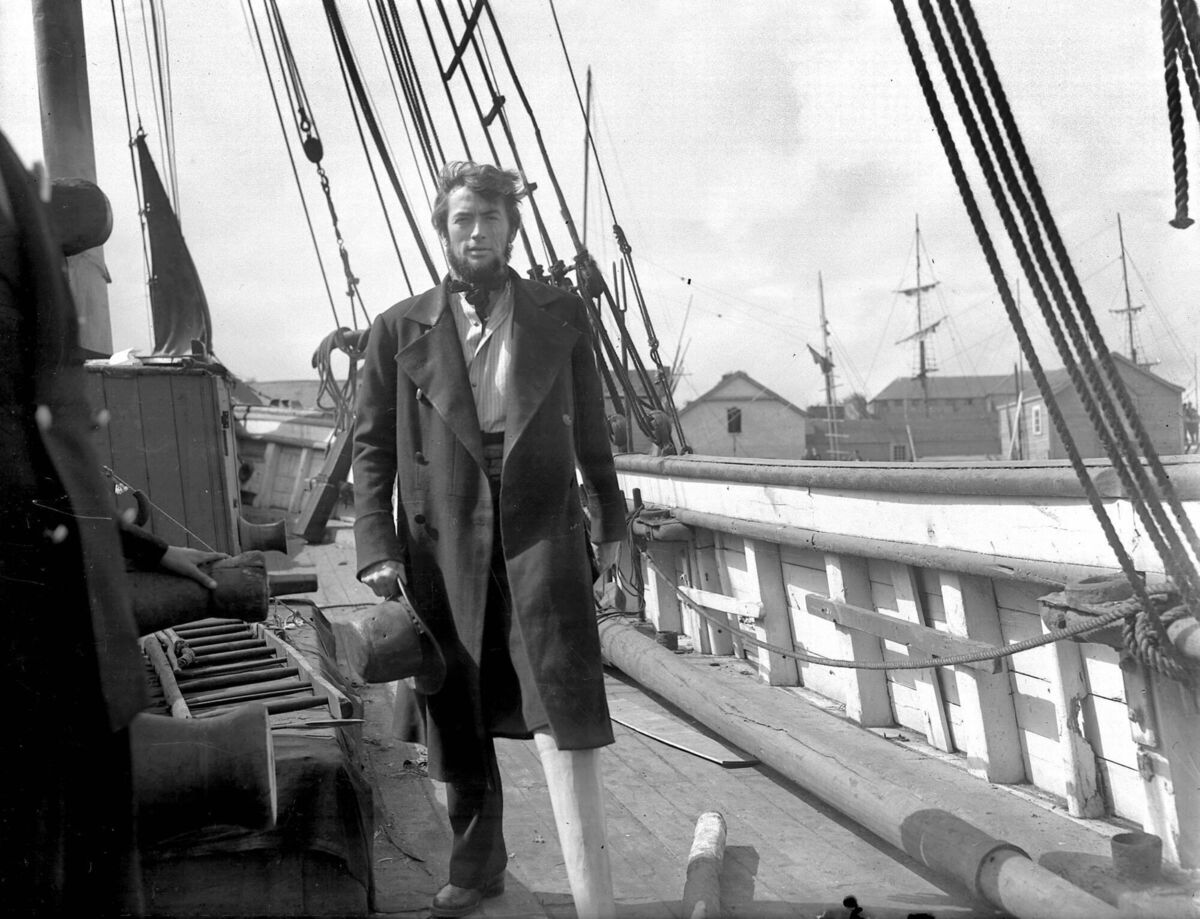
The blockbuster movie Moby Dick, starring Gregory Peck and Noel Purcell, filming at youghal , July 1954. 

Actor Gregory Peck on the set of the film 'Moby Dick' at Youghal, Co. Cork in 1954. 

“On the night I went, just before the curtain went up, a group of people were ushered down the aisle to the front row. Among them I recognised Noel Purcell who must have been in every film made about that time. The usherette told me that all of the group were involved in the film and were regular customers, the front row being reserved for them every night. Later, when I became familiar with the images of film personalities, I realised that the leader of the group was probably John Huston.
“While I have been to Youghal on numerous occasions – before 1954 and many times since – I have never again seen that fit-up theatre or anything similar. I have seen documentaries and articles about Ireland’s touring theatres, but there was no account of the company who were performing in Youghal in the summer of 1954. Perhaps somewhere in the Examiner files you may find some clue as to the name of the company and the performers who took part?”

Oh Robert, what wonderfully detailed memories! I can just picture that tent, and the stars of Moby Dick making an entrance just before curtain up! Research into the theatrical company will definitely be undertaken. And if you are around to read this (or indeed any member of your family) do get back in touch! Better late than never!

Extras on the set of the film 'Moby Dick' at Youghal in 1954. 

I am fascinated by your mention that it was actually a tent, not a show in an adapted building. That means it was a true ‘portable theatre’ rather than a fit-up. Fit-ups, as their name indicates, took over a handy hall or social room, and put up some sort of stage, got hold of local chairs for their time there. The great old portables, on the other hand, carried everything with them – in the old days on long wagons, in more recent years on the backs of lorries – and set up the entire thing in a field or suitable open space near to where they could expect eager audiences. After the run, they would simply take down the whole structure, fold or stack it back on to the transport, and head off again to the next destination. It’s something that circuses still do. But I had never heard of a true portable in Ireland, and I am delighted that you have furnished me with the first clue.
Any of the rest of you remember a portable or a fit-up? I have mentioned before, I think, my own mother attending what must have been a portable theatre in Annascaul in the 1930s (during an onion blight, she always recalled, with a distinct odour permeating everything in the village). Her chief memory of the show was that the stage was so tiny, “the villain had to die diagonally.” I never forgot that, and when, many decades later, I wrote a book on Victorian portable theatres, her words were enshrined therein.

Let us hear your memories. Email jokerrigan1@gmail.com or leave a comment on our Facebook page: www.facebook.com/echolivecork.

More in this section

Throwback Thursday: Memories of the Cork bridge you had to walk across Throwback Thursday: Memories of the Cork bridge you had to walk across
Throwback Thursday: My grandad, Michael Collins, and the Black and Tans Throwback Thursday: My grandad, Michael Collins, and the Black and Tans
Throwback Thursday: When the horse and cart ruled in Cork Throwback Thursday: When the horse and cart ruled in Cork

Sponsored Content

Keeping their house in order: How PSRA regulation has raised the bar for Ireland’s property services sector Keeping their house in order: How PSRA regulation has raised the bar for Ireland’s property services sector
"My master's at UL taught me that structured learning and a demanding career can coexist" "My master's at UL taught me that structured learning and a demanding career can coexist"
Three days of steam, music and heritage at the 62nd National Steam Rally Three days of steam, music and heritage at the 62nd National Steam Rally
Contact Us Cookie Policy Privacy Policy Terms and Conditions

© Examiner Echo Group Limited

Add Echolive.ie to your home screen - easy access to Cork news, views, sport and more