40 years on... remembering Black Friday in Cork when Ford plant shut
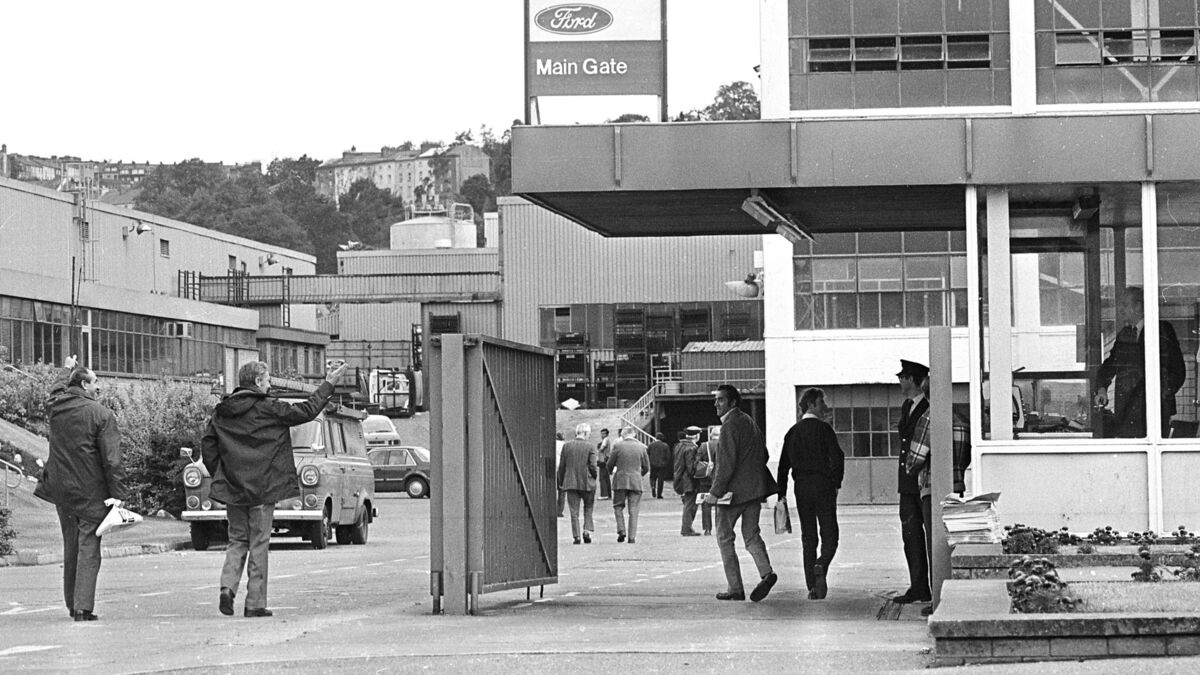
END OF AN ERA: Workers arriving for their last day at the Ford plant at the Marina in Cork city, on July 13, 1984
THEY called it Black Friday: 800 workers left the Ford Marina production plant in Cork city for the last time on Friday, July 13, 1984, bringing the curtain down on 67 years of vehicle assembly in the city.
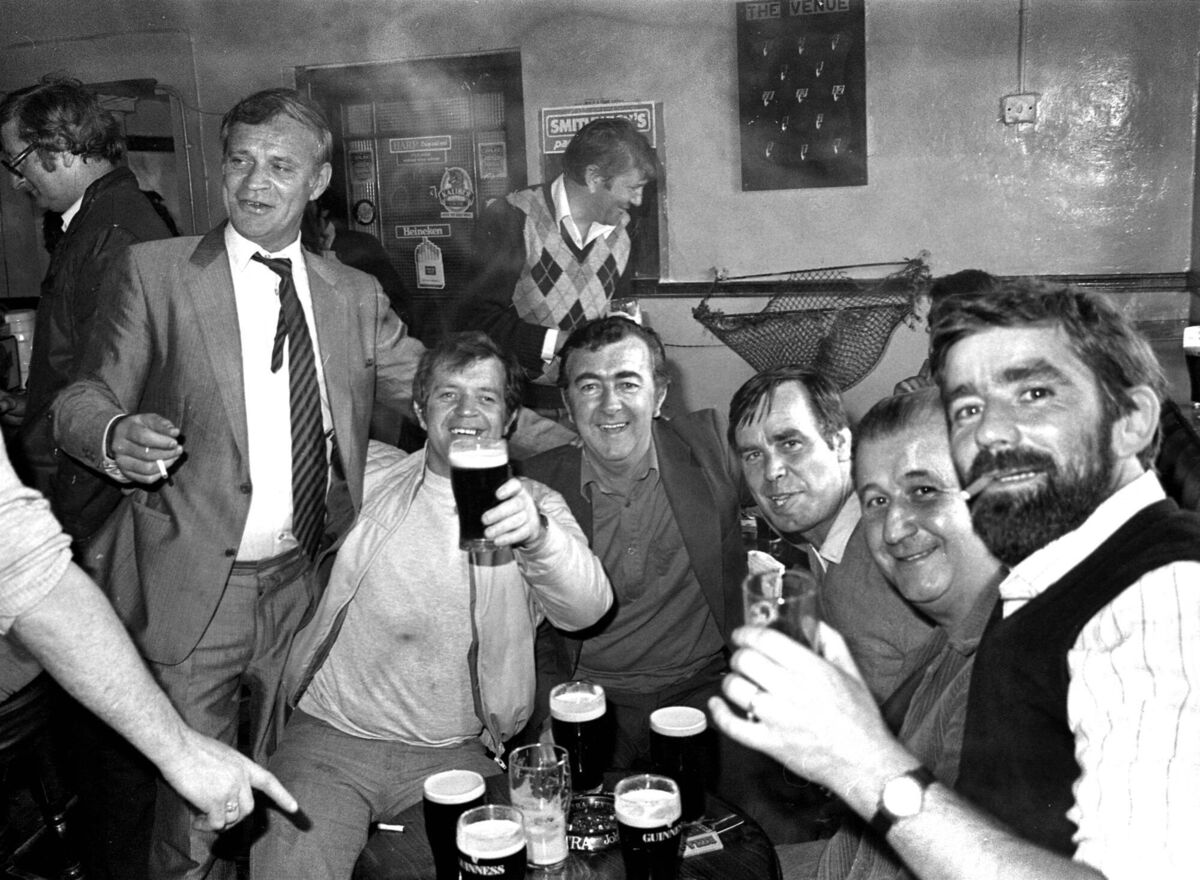
Economically, the closure was a devastating blow at a time when Cork was still reeling from the Dunlop closure ten months earlier, while further trauma was to follow before the end of the year, as the Verolme Dockyard shut.
The Ford closure had been announced in January, 1984, and Cork knew it had been coming. The company had been in a state of almost perpetual crisis in the early years of the decade, with difficulties caused by a downturn in European car sales compounded by industrial relations instability and concerns around competitiveness.
Work stoppages by members of the 12 different unions at the plant took place on several occasions in the years leading up to the closure, and for varying reasons.
In April, 1981, workers protested at the Fianna Fáil government’s decision to allow Dublin-based Talbot to import pre-assembled cars. This decision, it was maintained, was contrary to an EEC accession treaty clause promising to protect the domestic assembly industry.
When Dunlop shut in 1983, industrial action there cut off the steam supply and forced the Ford plant to close for three weeks. Lord Mayor John Dennehy pleaded with Dunlop workers not to put other jobs at risk. When work resumed, Ford Ireland chairman Patrick Hayes spoke ominously of the company’s need to make “difficult choices... sooner or later”.
Ford, which had opened on the Marina in 1917, thanks to founder Henry Ford’s links to the city and county, was wobbling. It emerged that the company had lost £8 million in Ireland in 1983, and were expecting similar in 1984.
When the closure announcement came on January 18, 1984, the Evening Echo calculated a total loss to the region of £24 million, broken down into £12 million in Ford wages and the same again for businesses relying on the plant.
In certain respects, the car company was a victim of circumstances. The recession that hit European car sales, inflation that crippled the company’s competitiveness (prices increased 52% in the three years to 1981), the consequences of the Talbot import deal, and the stoppage caused by the Dunlop strike were all beyond its control. However, there was another consideration, which had been flagged well in advance.
During Ireland’s EEC accession negotiations in 1971, Foreign Minister and future President of Ireland, Dr Patrick Hillery, negotiated a clause whereby time was given to prepare the country for the realities of free trade. Under the deal, the Irish car assembly industry would be protected after accession until 1985.

As that date loomed large, measures such as diversification grants were proposed, easing the transition, but the writing was on the wall..
After the workers left Ford for the last time on that Friday the 13th in July, it was estimated that 37 other companies also went out of business in the ripple effect.
The Lord Mayor that year, John Dennehy, whose father and brother worked at Ford, later said, in an interview in 2005: “It was awful for the suppliers. It was dreadful for everyone, but after the closure itself, we watched business after business go under for months afterwards. People did what they could to survive, but it just wasn’t on.
“It was the worst possible time. We lost three or four of the city’s traditional businesses, and Ford and Dunlop in particular went very close to each other. Personally, I had an emotional attachment to Ford, and in many ways I was reared and fed from there,” he said.
“These were top of the range jobs, way above white-collar. They were jobs for life, and in many cases served members of the same family across a couple of generations.
“People didn’t believe the bubble would burst, but it did, and I don’t think people of that generation after took anything for granted ever again. We realised in the most difficult way possible that nothing lasts forever.”
It was not clearly identifiable at the time, but the Irish economy was in a state of transition, moving away from heavy industry towards a situation where computer and pharmaceutical companies, for example, would become major job providers.
In the wake of the Ford closure, protracted and at times fractious negotiations took place on severance packages. After five months and 22 meetings, a deal saw management commit to a £25 million package, with some awarded as much as £50,000; the average pay-out was £30,000. However, it was reported that workers were facing tax bills as high as £20,000 in some cases, greatly hindering any post-Ford business plans workers may have had.
It should be noted that 170 jobs remained in Cork after the plant closure, and that the city has remained the hub of its Irish operation ever since. In December, 1986, it was announced that Ford had taken a long-term lease on office accommodation at Boreenmana Road, where its Cork base remains to this day.
Forty years on, it is possible to make the argument that the closure of the Ford plant marked a turning point, a watershed, in the city’s industrial history.
Although devastating for so many at the time, and the cause of much emigration, the dark days of the 1980s eventually gave way to a new, more vibrant and enterprising economy, based not on manufacturing, but on the service and tourist industry, and the introduction of different, hi-tech, global industries.
A lengthy chapter in Cork’s industrial history finally came to an end when the 14.5 acre Marina site was sold in 1987, with reports at the time revealing plans for a £1.75 million investment and the renaming of the plant as the Marina Commercial Park.
On that day in July, 1984, Cork turned for reassurance to a source who had offered it on many occasions in previous years.
Former Taoiseach Jack Lynch, who was born in 1917, the year Ford opened in the city, answered the call with an upbeat vision of the future which ran contrary to the pessimism of the day and was proven almost prophetic by subsequent events.
“Cork has a reputation for acumen and resilience in the commercial and industrial world. I believe this will be the most important factor in the economic resurgence of the area,” he predicted in a special piece, written for the people of Cork and printed in local media, at the time of the closure.