State body ordered to pay €40k for discriminating against deaf job applicant
Seán McCárthaigh
A State body established to improve education services for children with special needs has been ordered to pay €40,000 in compensation after discriminating against a job applicant who was deaf.
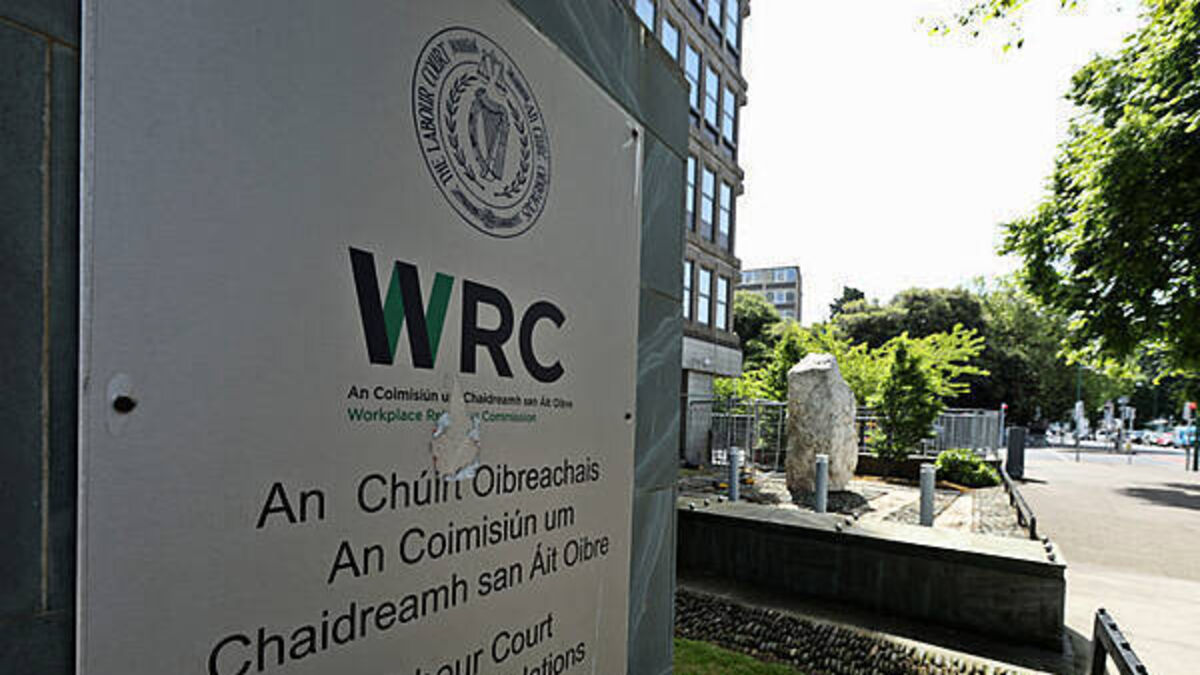
The Workplace Relations Commission ruled that the National Council for Special Education had indirectly discriminated against Noel O’Connell on grounds of his disability.
O’Connell, who unsuccessfully applied for the role of “advisor deaf/hard of hearing” advertised with the NCSE in March 2022, claimed the organisation had breached the Employment Equality Act over its requirement for candidates to have a qualification in Irish Sign Language (ISL).
He complained that the requirement was discriminatory as deaf people are far less likely to hold an academic qualification in ISL than other candidates.
O’Connell told the WRC that he had been deaf since childhood and holds a PhD in deaf education.
The WRC heard that O’Connell’s first language is ISL which he uses daily although, in common with most deaf people in Ireland, he does not have an academic qualification in the language.
Lawyers for O’Connell said he was well qualified for the role given his academic qualification in deaf education and being fluent in ISL.
However, the NCSE’s information booklet said the successful candidate would be required to have “a qualification in ISL based on the Common European Language Framework or equivalent.”
The WRC heard that O’Connell was informed on May 6th, 2022, that he had not been shortlisted for the role as he did not have an academic qualification in ISL.
Although the NCSE upheld a complaint he made that the requirement was discriminatory in June 2022, he was informed that he could not apply for the position as the recruitment process had closed.
O’Connell said he was surprised at being informed that he was not being offered a remedy.
His counsel, Michael Kinsley, said the complainant was uniquely qualified for the job and had suffered significant losses as a result of not being shortlisted and interviewed.
Kinsley said the requirement imposed by the NCSE could not be considered necessary and it had other means to assess O’Connell’s competence.
He also claimed O’Connell would have been successful in the absence of the discriminatory requirement – a view the NCSE claimed was “simply extraordinary.”
Counsel for the NCSE, M P Guinness, told the WRC that the internal decision which upheld O’Connell’s request for a review of the decision not to shortlist him was “fundamentally flawed” given the criteria set for the role.
The WRC heard the role of advisor deaf/hard of hearing was created to provide for the building of capacity of ISL across the school community, including teachers, SNAs and other school staff.
The NCSE said it required formal qualifications in ISL for several reasons including that they provided clear and objective evidence that candidates had the necessary language skills as well as a measure of quality assurance.
Guinness said it was “simply incorrect” for O’Connell to claim that the requirement effectively excluded deaf people as they could also obtain a formal qualification in ISL.
The NCSE also claimed it was necessary to not only have fluency in ISL but also to be equipped with the necessary theoretical knowledge, teaching methodologies and pedagogical skills crucial for effective guidance and support.
Guinness said there was clear objective justification for the requirement to have an academic qualification in ISL.
However, WRC adjudication officer, Jim Dolan, said he believed the NCSE had decided in O’Connell’s case to ignore the Code of Practice for appointments to the civil and public service which states a decision of a reviewer must be considered by the administrators of a selection process.
“No remedy was offered by the designated decision maker or the NSCE and the rejection of his application was not overturned,” said Dolan.
He ordered the NCSE to pay O’Connell compensation of €40,000 – the maximum permissible amount of compensation in such cases under the legislation – for indirect discrimination.
As part of a pilot project BreakingNews.ie has used AI to suggest headline options for this article. The final headline was chosen and edited by BreakingNews.ie journalists. Find out more