Explained: What is in the new Northern Ireland Protocol deal?
By Dominic McGrath, PA
After months of intense negotiations and years of tensions between the UK and the EU, Rishi Sunak has agreed a deal that he hopes can bring to an end the row over the Northern Ireland Protocol.
The PA news agency looks at what is in the deal and why it is so significant.
– What is the Northern Ireland Protocol and why has it been a source of tension?
It is a key part of Boris Johnson’s Brexit deal, signed by the then-prime minister in 2020, and was designed to prevent a hard border on the island of Ireland.
The Windsor Framework respects and protects our respective markets and legitimate interests.
Most importantly, it protects the very hard-earned gains of the Good Friday (Belfast) Agreement for the people of Northern Ireland, and across the island of Ireland. pic.twitter.com/fcwutUA0k0— Ursula von der Leyen (@vonderleyen) February 27, 2023
To keep the border free-flowing, London and Brussels essentially moved new regulatory and customs checks required by Brexit to the Irish Sea.
The move introduced red tape on trade between Great Britain and Northern Ireland, creating a headache for many businesses and enraging loyalists and unionists who claim the region’s place within the UK has been undermined.
The row has also left Northern Ireland without a functioning devolved government, after the Democratic Unionist Party used its veto to bring down devolution in protest at the protocol.
Its boycott means a ministerial executive cannot function and the legislative assembly cannot conduct any business.
We're introducing a new Stormont Brake.
The elected Assembly can pull the brake for changes to EU goods rules that would have significant and lasting effects on everyday lives.
When pulled, the UK government will have a veto.
This gives Northern Ireland a powerful safeguard. pic.twitter.com/HQucBDCVHv— Rishi Sunak (@RishiSunak) February 27, 2023
What is in the new deal on trade?
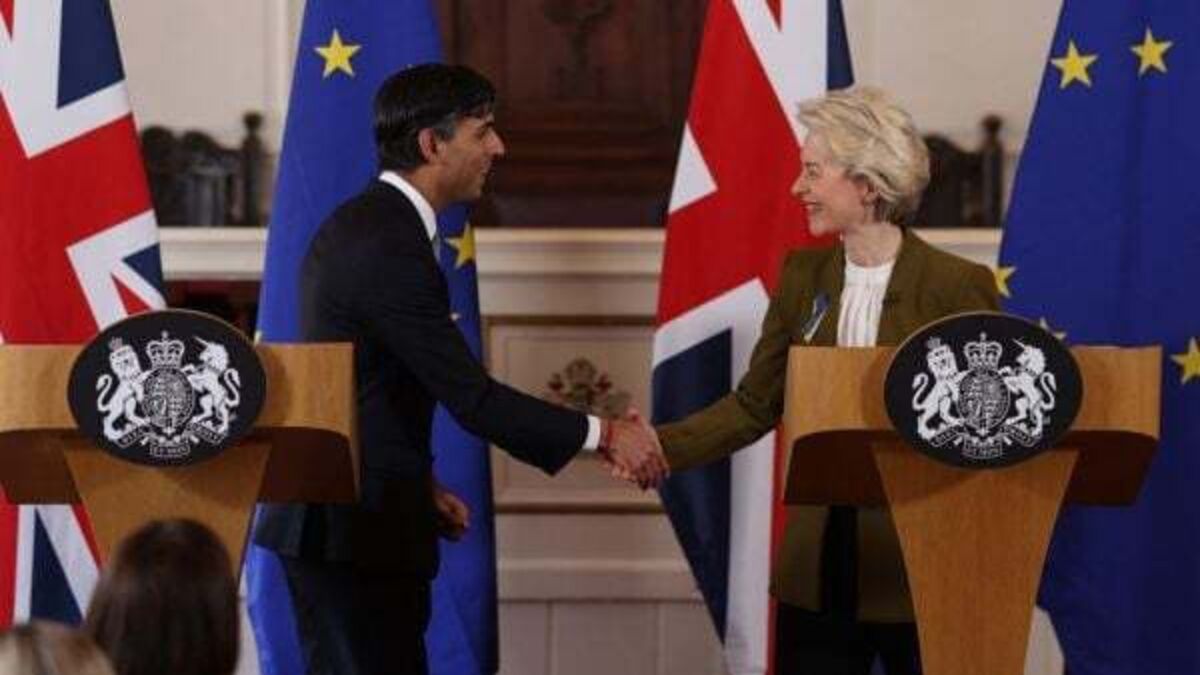
The new Windsor Framework was announced by Mr Sunak and European Commission president Ursula von der Leyen on Monday, with the Prime Minister claiming that the agreement “removes any sense of a border in the Irish Sea”.
The UK Prime Minister set out a wider array of planned changes and reforms, covering trade, VAT regulation and the role of Stormont in EU laws that apply to Northern Ireland.
At the core of the deal is the creation of a new system for the flow of goods.
Anything destined for Northern Ireland will travel there as part of a “green lane”, with significantly fewer checks. Anything that could cross the border and enter the EU’s single market will travel through a separate red lane.
Mr Sunak said that the changes to the protocol will scale back the number of certificates required for traders moving goods from Great Britain to Northern Ireland, with customs paperwork removed too for people sending parcels or buying goods online.
He indicated changes to the movement of food too, claiming that anything made to UK rules will now be clear to be “sent to and sold” in NI. That will include sausages, one of the foodstuffs hit by protocol changes and which grabbed the attention of politicians in Belfast and Westminster alike.
“If food is available on supermarket shelves in Great Britain, then it will be available on supermarket shelves in Northern Ireland,” Mr Sunak said.
As part of the deal, the legal text of the protocol has also been amended on VAT. Under current arrangements, EU VAT and excise rules for goods generally apply in Northern Ireland.
Mr Sunak said that would now change, with the legal text of the protocol amended to allow the UK Government to “make critical VAT and excise changes for the whole of the UK”.
Alcohol duty, for instance, was mentioned – with Mr Sunak suggesting that the cost of a pint in the pub could be cut for Northern Irish drinkers.
What is the role of the European Court of Justice?
It had been expected that both the UK and the EU would try to find a way around the difficult role of the European Court of Justice (ECJ). Concerns about the oversight role of the court have been raised by the DUP and some Tory backbenchers, with the issue less about trade and more about sovereignty.
The ECJ had been final arbitrator of EU law issues in the region, given the fact that Northern Ireland essentially remains within the single market for goods.
Details are not yet fully clear, but Mr Sunak said that a “Stormont brake” would be introduced to allow the Northern Ireland assembly to flag concerns about changes to EU rules that would have a “significant and lasting” effect.
He said that if pulled, the UK Government will have a “veto”.
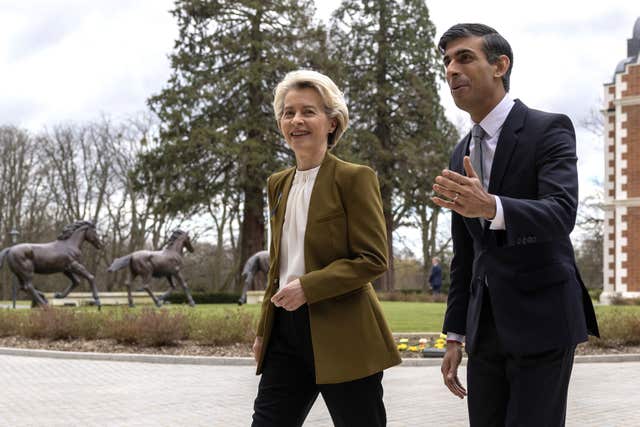
But speaking to reporters, Ms von der Leyen said the ECJ is the “sole and ultimate arbiter of EU law” and will have the “final say” on single market decisions.
She described the Stormont brake as something that would be an emergency mechanism that would hopefully not be needed.
What does the EU think of the new deal?
Ms von der Leyen spoke highly of the efforts to reach a deal, calling it “historic” and one that opened a “new chapter” in UK-EU relations.
When do the changes take effect?
The UK Prime Minister said that the new agreement would make a difference “almost immediately”, but beyond that we do not know the exact timeframe of the changes or whether we will see some form of transition to the new arrangements.