Films: Marching Powder is 'not the conventional love story'
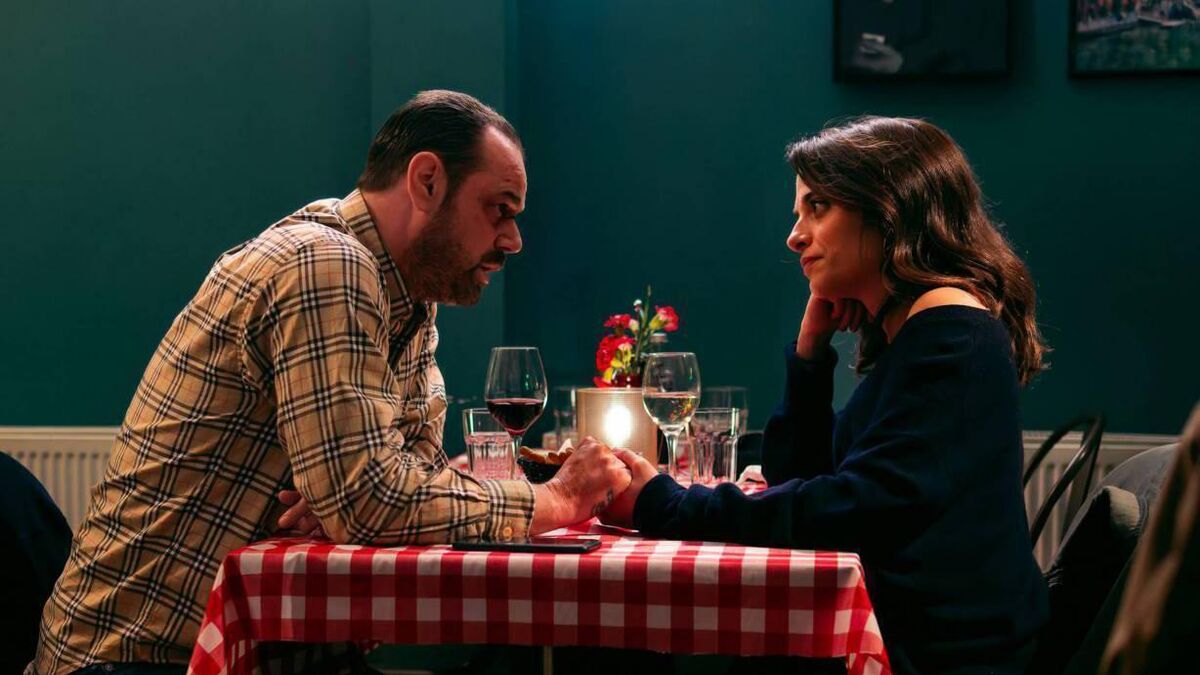
Danny Dyer as Jack and Stephanie Leonidas as Dani. Pictures: TRUE BRIT
In his mid-40s, he really should know better. But Jack Jones, the protagonist of Nick Love’s latest film Marching Powder, is still snorting lines and doing crimes, going on cocaine-fuelled benders and knocking the front teeth out of football rivals.
When Jack, played by EastEnders and The Football Factory star Danny Dyer, is arrested after some violent match-day exploits, he realises he really needs to turn his life around. The judge gives him just six weeks to get it together, or face a long spell behind bars.
The spiritual successor to Love’s 2004 film The Football Factory, which starred Dyer as violent Chelsea FC hooligan Tommy Johnson, Marching Powder follows a man staring down the barrel of middle age contending with a dangerous coke habit, a marriage on the brink of collapse, and a group of friends who’d rather spend an evening downing pints of cheap lager than make any meaningful use out of their lives.
“Why men want to go and meet up, and throw digs at each other because they support different football teams — it is tribalism, it’s sort of a lost youth, they want to feel like they belong to something in a way,” reflects Danny Dyer, 47, on football hooliganism. “It’s always been a thing since the dawn of time, and a man pushing 50, still at it, I mean, it’s ridiculous.”
While The Football Factory, which Dyer starred in in his mid-20s, was “really digging into these young geezers’ pent up violence and it was more of a serious look on it”, Dyer says that “this ain’t”.
Instead, beneath the drugs and scraps is something of a love story, as Jack fights for his wife Dani, played by Stephanie Leonidas, who is fed up with his hooligan ways — a story which Leonidas, who starred in the TV series Snatch, says is “something that I think a lot of people can relate to”.
“Not everybody lives the conventional love story, and we’re all flawed human beings, we all have our quirks,” says the London-born actress, 41.
“This is their love story, these are their quirks. And that’s something we spoke about with Nick very early on, is like, people need to understand that this is ultimately two people who are absolutely made for each other. They’re in love with each other. They’re not against each other in any way. This is just an insight into them and their life.”
It’s also a tale of addiction, and of toxic masculinity, as Jack confronts the barriers between his habits and a better way of living.
“He knows nothing else but this world. But he’s trying to do the next right thing.” Dyer reflects.

“Within this film he sort of turns to his mates, which is a disaster. You know, because masculinity... He’s stuck within this masculine world. And God forbid you try and open up to your mates. It’s going to backfire on you.
“It’s a shame, really, men should talk more.
“It’s weird with men, we’re not good at eye contact, with the sitting there,” the London-born actor adds.
“You know, with me, I’ve done a lot of therapy, I’ve done a lot of group therapy, but the one on ones with tissues on the table I struggled with.
“Men seem to open up when they’re playing pool, or they’re sitting in a car, so they’re not looking, so it’s not too heavy...
“We’re trying to change society a bit, and it should be changed, of course, but to just put the handbrake on it too soon, it just doesn’t work.
“I think it’s important this film, because we do highlight, actually, that men should actually find sometimes they need a cuddle, and it’s quite nice to have a cuddle off your mate.”
“Sometimes, I suppose the relief of just stepping outside of whatever the issue is and having a nice time with your friends, not having to actually talk about the issue itself
“Going to a football match or going and having a pint with your mates is just as therapeutic, as opposed to having to sit there and actually chat,” suggests Leonidas.
“Whereas maybe [women], we want to have a chat. We want to get to the bottom of things. We want it solved that night, bish bash bosh.”
“I think we’re tackling addiction within this film as well — Nick Love has been very open about it, he’s been in recovery for 37 years now.
“As long as I’ve known him, he’s always been in recovery,” adds Dyer of Marching Powder’s director, who was using hard drugs in his teens.
“He’s obsessed with that sort of drug taking thing, and the world that it inhabits and the stupid things you do while you’re on drugs.
“We’re not getting too heavy within the film about addiction; we’re highlighting it and the fact that once you start this spiral... because it’s insanity, addiction, and it’s doing the same stuff over and over again, expecting a different outcome. That’s basically what addiction is.
“And, you know, I’ve had a couple of spells in rehab, and I’ve come through the other side like, I said, it’s all about this up here. This is the most important muscle we’ve got,” he continues, finger to his forehead.
“You see all these geezers up in the gym, but actually, if you don’t look after this [your mind], it doesn’t matter how you look aesthetically, you’ve got to try and control this a little bit, or just try and understand it a little bit. We all get it. This thing here, it talks a lot of s****.”
- Marching Powder is now showing.